Get free shipping on your order, with any water filter subscription. Find my filter

Open Hamburger Menu
Sears Parts Direct
Tips to find your model number
Craftsman 358351440 chainsaw

Craftsman 358351440 chainsaw Parts

Here are the diagrams and repair parts for Craftsman 358351440 chainsaw, as well as links to manuals and error code tables, if available.

By Schematic
SELECT DIAGRAM
?

This is the number corresponding to the part on the diagram / schematic

Browse Parts for 358351440 Chainsaws

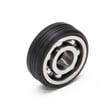
  • Craftsman Lawn & Garden Equipment Bearing for Craftsman 358351440 - Part 530056363

    None diagram

    Seal Assembly

    Part #530047827

    Replaced by #530056363

    Info Icon
    Manufacturer substitution
    This part replaces 530047827. Substitute parts can look different from the original.
    This item is not returnable
    In Stock
    $16.45
    11% OFF Phone Price : $18.45Info Icon
    Minus Item
    Qty
    Plus Item
  • Tractor Accessories Needle for Craftsman 358351440 - Part 530035295

    Carburetor assembly diagram

    Tractor Accessories Needle

    Part #530035295

    The manufacturer no longer makes this part, and there's no substitute part

  • Chainsaw Oil Pump Drive Worm Wheel for Craftsman 358351440 - Part 530037820

    None diagram

    Chainsaw Oil Pump Drive Worm Wheel

    Part #530037820

    The manufacturer no longer makes this part, and there's no substitute part

  • Craftsman Lawn & Garden Equipment Muffler Screw for Craftsman 358351440 - Part 530016132

    Craftsman Lawn & Garden Equipment Muffler Screw

    Part #530016132

    The manufacturer no longer makes this part, and there's no substitute part

  • Trigger Kit for Craftsman 358351440 - Part 530069724

    None diagram

    Trigger Kit

    Part #530069724

    The manufacturer no longer makes this part, and there's no substitute part

  • Lawn & Garden Equipment Carburetor Screw Limit Cap (red) for Craftsman 358351440 - Part 530038318

    Lawn & Garden Equipment Carburetor Screw Limit Cap (red)

    Part #530038318

    The manufacturer no longer makes this part, and there's no substitute part

  • Speed Needle for Craftsman 358351440 - Part 530035383

    Carburetor assembly diagram

    Speed Needle

    Part #530035383

    The manufacturer no longer makes this part, and there's no substitute part

  • Fan Housing for Craftsman 358351440 - Part 530049336

    None diagram

    Fan Housing

    Part #530049336

    The manufacturer no longer makes this part, and there's no substitute part

  • Dust Seal for Craftsman 358351440 - Part 530019231

    None diagram

    Dust Seal

    Part #530019231

    The manufacturer no longer makes this part, and there's no substitute part

  • Housing for Craftsman 358351440 - Part 530037804

    None diagram

    Housing

    Part #530037804

    The manufacturer no longer makes this part, and there's no substitute part

Craftsman Chainsaw 358351440 FAQs

For the Craftsman 358351440 gas chainsaw, we use fresh unleaded gasoline mixed with a good-quality 2-cycle air-cooled engine oil at a 40:1 ratio. Always mix fuel in an approved container, then fill the fuel tank and bar oil tank together as part of normal operation (see the 358351440 operator’s manual).

Fuel type and mix ratio (what to put in the tank)

Use:

  • Fresh unleaded gasoline
  • 2-cycle air-cooled engine oil (Craftsman oil is recommended)
  • A 40:1 gas-to-oil mix
Quick mix chart
Gasoline amount 40:1 oil amount Notes
1 gallon 3.2 fl oz Common “one can” mix
1/2 gallon 1.6 fl oz Good for small batches
1 quart 0.8 fl oz Useful for occasional use
How to fuel safely (best practice)
  • Mix and pour fuel outdoors, away from sparks or flames.
  • Wipe up spills before starting the saw.
  • Move at least 10 feet away from the fueling spot before starting.
  • Shut the engine off and let it cool before refueling.
  • Store fuel in a cool, dry, well-ventilated area.
Do not forget bar and chain oil

This model uses a separate bar oil tank; fill it whenever you fill the fuel tank. For best bar and chain life, we recommend chainsaw bar oil; SAE 30 oil works as a temporary substitute.

Why it matters

Correct 40:1 mix protects the 2-cycle engine from scoring and seizure, and proper bar oiling reduces chain and guide bar wear. Fueling and storage habits also reduce hard-start and rough-running problems.

Last updated: January 2026

For the Craftsman chainsaw model 358351440, 40:1 is the correct fuel mix; it is the ratio specified for this engine. Using 50:1 means less oil in the fuel, which reduces lubrication and can shorten engine life.

What 40:1 vs 50:1 really changes

The difference is not fuel “density”; it is how much 2-cycle oil is blended into the gasoline.

  • 40:1 = more oil per gallon, more lubrication for an engine designed for it
  • 50:1 = less oil per gallon, leaner on lubrication
  • Your 358351440 is designed to run on unleaded gas mixed with air-cooled 2-cycle oil at 40:1
  • Do not use automotive oil or marine (boat) 2-cycle oil; those can damage an air-cooled 2-cycle engine
Mix amounts (quick reference)
Ratio Oil per 1 gallon gas Oil per 1 quart gas
40:1 3.2 oz 0.8 oz
50:1 2.6 oz 0.64 oz
Best practice for this Craftsman 358351440

We recommend following the fuel instructions in the 358351440 owner's manual.

  • Use fresh unleaded gasoline
  • Use high-quality air-cooled 2-cycle oil (Craftsman oil is recommended for this model)
  • Mix in an approved fuel container, then shake to fully blend
  • Make only what you will use soon; old fuel can cause hard starting and rough running
  • If the saw will sit 30 days or longer, drain fuel or use stabilizer and run the engine briefly
Why it matters

The correct mix ratio protects the crankshaft bearings, piston, and cylinder from heat and friction. On a 2-cycle chainsaw, the oil in the fuel is the engine’s primary lubrication, so running less oil than specified increases wear.

Last updated: January 2026

On the Craftsman 358351440 chainsaw, L and H are the carburetor mixture adjustment screws: L controls the low-speed (idle to acceleration) fuel mixture, and H controls the high-speed (wide-open throttle) fuel mixture. They work with the T (idle speed) screw to tune how the engine runs.

Where to find L and H on this model

On model 358351440, the manual places the H, L, and T screws on the carburetor just above the primer bulb. For screw locations and the adjustment procedure, use the 358351440 owner's manual.

What each screw does (quick reference)
  • L (low-speed mixture): Affects starting, idle quality, and how the saw accelerates when you squeeze the throttle.
  • H (high-speed mixture): Affects top-end power while cutting and how the engine runs at full throttle.
  • T (idle speed): Sets idle RPM; it does not change the fuel mixture.
Screw Controls Most noticeable symptom when off
L Low-speed fuel mixture Hesitation, bogging, stalling on acceleration
H High-speed fuel mixture Loss of cutting power, poor full-throttle running
T Idle speed (throttle stop) Chain moves at idle or engine will not stay running
Safe, practical tuning tips

We recommend making small changes and checking results after each change.

  • Warm the engine before fine-tuning.
  • Turn screws in small increments (about 1/8 turn at a time).
  • If the chain moves at idle, adjust T first.
  • If it dies or hesitates when accelerating, adjust L.
  • If it has loss of cutting power, adjust H.
  • Do not force the limiter caps past their stops.
Why it matters

Correct L and H settings keep the air-fuel mixture right for smooth starting, strong cutting power, and reduced plug fouling. If the saw still runs rough after tuning, fuel delivery issues (like cracked lines) are common; the ayp lawn & garden equipment fuel line, large 530069216 is a frequent fix on older gas chainsaws.

Last updated: January 2026
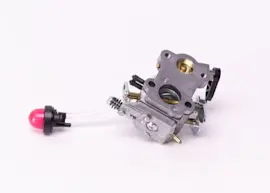
Most common symptoms to help you fix your chainsaws

Choose a symptom to see related chainsaw repairs.

Main causes: cracked fuel lines, leaky carburetor seals, damaged fuel tank cap, cracked fuel tank…

Main causes: stale gasoline, cracked fuel lines, dirty carburetor, damaged spark plug, worn piston rings…

Main causes: bad gas, engine needs tune up, cracked fuel lines, dirty carburetor…

Repair guides for gas chainsaws

These step-by-step repair guides will help you safely fix what’s broken on your chainsaw.

How to replace a chainsaw carburetor

How to replace a chainsaw carburetor

If the engine won't start even though there's fuel in the chainsaw, the carburetor could be the problem. Sometimes, it's…

Repair time and Difficulty

 15 minutes or less
How to replace chainsaw fuel lines

How to replace chainsaw fuel lines

The fuel line on a chainsaw becomes brittle over time and can crack. Replacing it doesn't require a lot of DYI experienc…

Repair time and Difficulty

 15 minutes or less
How to rebuild a chainsaw carburetor

How to rebuild a chainsaw carburetor

If your chainsaw isn't running well, a dirty carburetor could be the problem. You can take it apart, clean it and rebuil…

Repair time and Difficulty

 15 minutes or less

Effective articles & videos to help repair your chainsaws

Use the advice and tips in these articles and videos to get the most out of your chainsaw.

When to replace a chainsaw bar

When to replace a chainsaw bar

Chainsaw bar wear leads to crooked cuts and chain damage. Learn the signs of wear and how to choose the right replacemen…

How to tune-up a gas chainsaw

How to tune-up a gas chainsaw

Tuning up a chainsaw is easier than you think. Follow these steps to clean, inspect, and replace key parts to keep your …

Top questions about Sears and Sears PartsDirect

Top questions about Sears and Sears PartsDirect

Get answers to frequently asked questions about Sears and Sears PartsDirect.…

Parts & More

Bottom-Mount Refrigerator
Dishwasher
Dryer
Front-Engine Lawn Tractor
Gas Cooktop
Gas Range
Generator
Microwave/Hood Combo
Painting Power Tool
Parts
Power Drill
Side-By-Side Refrigerator
Trash Compactor
Washer