Error Codes


What is the average lifespan of a dryer?
A clothes dryer typically lasts 12 to 13 years. For a Kenmore electric dryer like model 11096573120, consistent airflow (clean lint screen and venting) and timely replacement of wear parts can help you reach that normal life expectancy.
| Appliance | Typical lifespan | What shortens it fastest |
|---|---|---|
| Electric dryer (like Kenmore 11096573120) | 12 to 13 years | Restricted venting, overheating, heavy daily loads |
| Dryer with neglected maintenance | 8 to 10 years | Lint buildup, worn belt/rollers, repeated thermal trips |
- Clean the lint screen before every load.
- Keep the exhaust vent and outside hood clear so the dryer does not overheat.
- Avoid overloading; heavy loads strain the drum support system and drive components.
- Listen for squealing, thumping, or scraping and address it early.
- Replace common wear items when symptoms show up, not after a breakdown.
If your dryer runs but struggles to dry, makes noise, or stops tumbling, these are common maintenance and repair items for Kenmore 11096573120:
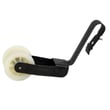
- Drum belt 341241 (broken belt or no tumble)
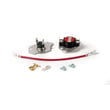
- Element 279838 (no heat or weak heat)
- Cut-off kit 279816 (overheating protection that can open if airflow is poor)
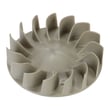
- Dryer blower wheel WP694089 (poor airflow, rattling, longer dry times)
Most “short lifespan” complaints come from heat and airflow problems. When airflow is restricted, temperatures rise, safety thermostats and thermal cutoffs trip more often, and the heating circuit and motor work harder. Keeping airflow strong is the simplest way to protect the heater, motor, and drum support parts.
Last updated: February 2026
What's the best month to buy a dryer?
The best time to buy a dryer is usually around major sale events rather than one single month. For a Kenmore electric dryer like model 11096573120, the biggest discounts commonly show up in late November (Black Friday) and around May (Memorial Day) and early September (Labor Day).
- Late November: Black Friday and Cyber Monday promotions
- May: Memorial Day sales
- Early September: Labor Day sales
- Late December into January: end-of-year clearance and model changeovers
- Holiday weekends in general: retailers often bundle washer and dryer discounts
If your Kenmore 11096573120 is down, replacing a common wear part is often faster and cheaper than waiting for a sale.
Common fixes we see for this model include:
- No tumble or squealing: replace the drum belt 341241
- No heat or overheating symptoms: check the element 279838 and the cut-off kit 279816
- Won’t start due to door not “clicking” closed: inspect the dryer door switch W10820036
| Option | Best when | Typical upside | Typical downside |
|---|---|---|---|
| Wait for a sale | Dryer still runs safely | Lower purchase price | You may wait weeks to months |
| Repair now | Dryer won’t run or dries poorly | Fast return to service | Requires diagnosis and install time |
Dryers are seasonal-promo items, so timing your purchase around predictable sale windows can save money. But if your current dryer is failing, a targeted repair (belt, heating circuit, door switch) can restore performance quickly and help you avoid emergency replacement shopping.
Last updated: February 2026
How much does it cost to run a dryer for 2 hours?
Running your Kenmore electric dryer model 11096573120 for 2 hours typically costs about $0.50 to $1.50, based on common electric-dryer energy use and average U.S. electricity rates. Your exact cost depends mostly on your local cents-per-kWh rate and the heat setting.
Use this simple formula:
- Cost = kW × hours × your electricity rate ($/kWh)
- Most electric dryers draw about 3 to 5 kW while heating (they cycle on and off during the run).
| Assumed average draw | Rate $0.12/kWh | Rate $0.20/kWh | Rate $0.30/kWh |
|---|---|---|---|
| 3.0 kW | $0.72 | $1.20 | $1.80 |
| 4.0 kW | $0.96 | $1.60 | $2.40 |
| 5.0 kW | $1.20 | $2.00 | $3.00 |
These factors have the biggest impact on how much electricity your dryer uses in a 2-hour run:
- Heat level (high heat costs more than low or air-dry)
- Load size and fabric type (towels and denim take longer)
- Vent restriction (long runs, crushed duct, lint buildup)
- Moisture sensor vs. timed dry (timed cycles often run longer than needed)
- Heating performance (a weak heater can extend dry time)
A 2-hour dry time is often a sign of airflow restriction or reduced heating, which increases energy cost and can overheat components. If drying times are getting longer, checking airflow and heat output usually saves more money than changing cycle settings.
If the dryer tumbles but takes too long to dry, these model-matched parts are often involved:
- Element 279838 (heating output)
- Cut-off kit 279816 (overheat protection that can interrupt heat)
- Dryer blower wheel WP694089 (moves air through the drum and vent)
- Dryer high-limit thermostat WP3390291 (controls temperature)
For a deeper overview of airflow and heating components, see what are the main parts of a clothes dryer.
Last updated: February 2026
Is 7.4 cubic feet big for a dryer?
Yes. A 7.4 cu. ft. dryer is considered large capacity; most standard dryers are roughly 5.0 to 7.0 cu. ft., so 7.4 cu. ft. gives you extra room for bulky loads in your Kenmore electric dryer model 11096573120.
A larger drum helps clothes tumble more freely, which improves airflow and can shorten dry times when the venting is in good shape.
Typical load examples that fit better in 7.4 cu. ft.:
- King or queen comforter (material and fill matter)
- Large towel loads
- Bulky sweatshirts and jeans
- Mixed family loads without overpacking
Even with 7.4 cu. ft., overfilling can cause long dry times and overheating.
Use these practical rules:
- Fill the drum loosely; clothes should lift and drop, not pack tight
- Leave some open space at the top of the load
- If items come out hot but still damp, reduce load size and check airflow
- Clean the lint screen every load (a clogged screen restricts airflow)
- If dry times suddenly increase, inspect the vent path and blower area
| Dryer capacity | Common label | Best for |
|---|---|---|
| 5.0 to 7.0 cu. ft. | Standard | Everyday loads, smaller households |
| Over 7.0 cu. ft. | Large capacity | Bulky items, larger loads, families |
Capacity is not just convenience; it affects airflow, drying performance, and wear on parts like the belt and motor. If your dryer struggles to tumble a full load, checking the drive system (belt, pulley, motor) is a smart next step.
Helpful parts for tumbling issues on model 11096573120 include the drum belt 341241 and drive motor 279827.
Last updated: February 2026