Installation guide
 Owner’s manual
 Error Codes



Are all 30 inch wall ovens the same size?
No. “30-inch” wall ovens are grouped by a nominal width, but the exact cabinet cutout and oven dimensions vary by brand and model. For Kenmore model 79048773901, the installation guide lists specific minimum and maximum cutout dimensions you should match before buying or swapping ovens.
What “30-inch” usually means (and what it does not)
A “30-inch” wall oven typically refers to the cabinet opening width class, not a guaranteed exact measurement of the oven frame, trim, height, or depth.
Common differences between 30-inch models include:
- Cutout width range (the cabinet opening can vary by fractions of an inch)
- Cutout height (single vs. double ovens differ a lot)
- Cutout depth (critical for trim to sit flush)
- Trim/face dimensions (decorative trim can be wider than the cutout)
- Electrical junction box location and cable routing
Kenmore 79048773901: typical 30-inch cutout numbers to compare
Use the dimensions in the installation guide as your go-to reference when measuring your cabinet.
| Measurement (30-inch class) | What to check | Typical spec shown in guide |
|---|---|---|
| Cutout width | Cabinet opening width | Minimum 30 1/8 in |
| Cutout depth (G) | Cabinet depth behind the oven | 28 1/2 to 29 in (minimum depth is critical) |
| Cutout height (single oven) | Opening height | 27 5/16 to 28 1/2 in |
How we recommend measuring before you buy
Measure the cabinet opening, not the old oven.
- Measure cutout width at the top, middle, and bottom
- Measure cutout height on both left and right sides
- Measure cutout depth from the front cabinet face to the back wall (dimension G)
- Confirm you have at least 21 inches of clearance in front for the door to open
- Verify the base/support can handle the oven weight (the guide calls out higher support needs for 30-inch models)
Why it matters
If the cutout depth is short, the decorative trim may not sit tight to the cabinet and convection models can develop vibration or noise. If the cutout is too small, the oven may not fit; if it is too large, you may end up with gaps or need trim solutions.
Last updated: January 2026
Are electric wall ovens 110 or 220?
Most electric wall ovens, including Kenmore model 79048773901, are hardwired to a dedicated 240-volt (often called 220V) circuit, not a standard 120-volt (110V) outlet. The installation instructions show a junction-box hardwire connection and call for a qualified installer; see the 79048773901 installation guide.
What to expect for power on a wall oven
- Typical supply: 240V, 60 Hz, dedicated circuit
- Connection type: hardwired to an electrical junction box (not a plug-in cord)
- 120V may still be present: some installations include a separate 120V grounded outlet in the cabinet area for an optional cooktop or accessories, but that is not the wall oven’s main power feed
- Grounding is required: the oven must be connected to a grounded, permanent wiring system
Quick check: 120V vs 240V (what it means)
| Item | 120V (110V) circuit | 240V (220V) circuit |
|---|---|---|
| Typical use | small appliances, some gas ranges | electric wall ovens, electric ranges, dryers |
| Wiring | usually 2 wires plus ground | usually 3 or 4 wires plus ground (per local code) |
| Connection | standard receptacle | hardwired junction box or 240V receptacle |
Installation and safety notes we follow
- Turn off power at the breaker before opening the junction box
- Use a proper strain relief where the armored cable enters the junction box
- Confirm the circuit size and wiring match the oven’s rating plate and local electrical code
- Do not use a gas line for grounding
- If wiring is damaged, stop and have it repaired before energizing the oven
Why it matters
Using 120V on a wall oven designed for 240V can cause no-heat conditions, weak heating, nuisance error codes, or wiring damage. Correct voltage and proper grounding help the control, bake, and broil systems operate safely and consistently.
Last updated: January 2026
What are the most common issues with 79048773901?
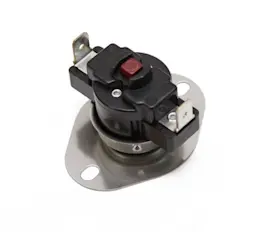
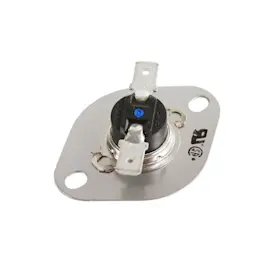
For Kenmore wall oven model 79048773901, the most common problems are no heat or uneven baking, an oven that will not power on, the oven light not working, and self-clean or door-lock issues. These symptoms usually trace to the temperature sensor, thermal fuse, door lock motor, or light components.
Common symptoms and what they usually point to
- Oven will not heat or heats unevenly: a failing sensor, wiring issue, or control problem
- Oven is completely dead (no display, no heat): a blown thermal fuse or power connection issue
- Oven light does not work: burned-out bulb, bad socket, or door light switch
- Self-clean will not start or door stays locked: door lock motor or related switch/controls
- Error code on the display: use the code to narrow the failure to a circuit or component
Quick checks we recommend first
- Confirm the oven is getting full power at the breaker (wall ovens typically use a 240-volt supply).
- If the oven is dead, inspect for overheating symptoms; a blown fuse often follows restricted airflow or high-heat events.
- If baking is off by 25 to 50 degrees, test the sensor circuit and then use the temperature offset feature if your control supports it.
- If the light is out, replace the bulb first; then check the socket and door switch.
Parts that commonly fix these issues (examples)
| Symptom | Common fix | Example part for this model |
|---|---|---|
| No heat or inaccurate temp | Temperature sensor | Range oven temperature sensor 5304504897 |
| Completely dead | Thermal fuse | Wall oven thermal fuse 5304506123 |
| Light not working | Bulb or socket | Appliance light bulb, 40-watt 316538904 |
| Door won’t lock/unlock | Door lock motor | Wall oven door lock motor 318261226 |
Why it matters
Catching the right failure early prevents repeat shutdowns, protects the control panel from heat damage, and restores accurate cooking temperatures so bake and broil perform normally.
For model-specific operating steps, error-code behavior, and settings, use the owner's manual. For code lookups by Kenmore wall oven family, use Kenmore 790 manual clean wall oven error codes.
Last updated: March 2026