Owner’s manual
 Error Codes





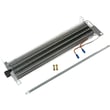
How to remove bottom grille on GE refrigerator?
On the GE GYE22HSKBSS bottom-mount refrigerator, the bottom grille (base grille) typically comes off by removing any retaining screws (if equipped) and then pulling the grille straight out to release the tabs or clips. Reinstall by aligning the tabs and pushing it back into place.
- Unplug the refrigerator or switch off power at the breaker.
- If your grille has screws, remove them with a Phillips screwdriver.
- Grip the grille near the left and right ends.
- Pull the grille straight toward you to release the retaining tabs/clips.
- Set the grille aside on a towel to avoid scratching the finish.
- Use a flashlight to spot screws or clip locations along the top edge.
- Pull evenly from both sides to avoid cracking the plastic.
- If it feels stuck, check again for hidden screws before pulling harder.
- Keep screws together so they go back into the same holes.
Align the grille with the opening, start one side first, then press along the length until it seats. If your model uses screws, reinstall them snugly (do not overtighten).
| What you see | What it usually means | What to do |
|---|---|---|
| Phillips screws at the ends or along the top | Screw-retained grille | Remove screws first, then pull out |
| No screws, grille feels springy | Clip or tab retained | Pull straight out with even pressure |
| Grille won’t sit flush after reinstall | Tabs not aligned | Remove and re-seat, starting one side first |
We remove the bottom grille to access and clean the condenser area, improve airflow, and reduce cooling problems. A grille that is not seated correctly can rattle and restrict ventilation.
For model-specific diagrams and access notes, use the owner's manual. If you need replacement parts for the GE GYE22HSKBSS, start with the parts list for this model or search by model number on Sears PartsDirect.
Last updated: February 2026
What is the life expectancy of a GE Monogram refrigerator?
GE Monogram refrigerators typically last 15 to 20 years with normal household use. Regular maintenance (cleaning condenser coils, keeping door seals tight, and changing filters on schedule) is what most often determines whether you reach the high end of that range.
Monogram is GE’s premium line, so it’s built to run longer than many standard refrigerators.
| Refrigerator type | Typical life expectancy | What most affects it |
|---|---|---|
| GE Monogram refrigerator | 15 to 20 years | Maintenance, airflow, water quality |
| Standard household refrigerator | 10 to 12 years | Usage, cleaning, repairs |
These are the highest-impact habits we recommend for long-term reliability:
- Clean the condenser coils regularly so the compressor does not run hot.
- Confirm doors close and seal fully; warm air leaks force longer run times.
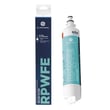
- Replace the water filter on schedule (many GE units use the RPWFE filter style); clogged filters can reduce dispenser flow and strain the water system.
- Keep vents clear inside the fresh food section so cold air circulates properly.
- Fix small issues early (unusual noises, frost buildup, temperature swings) to prevent bigger failures.
For model-specific care and filter guidance on GE bottom-freezer designs (including models that start with GYE), use the GYE22HSKBSS owner’s manual.
A refrigerator’s most expensive components (like the compressor and sealed system) last longer when the unit can shed heat efficiently and maintain stable temperatures. Simple upkeep reduces run time, prevents overheating, and helps protect food quality.
If you are troubleshooting alarms or common refrigerator symptoms while maintaining your unit, these guides help:
If you need to look up parts by model number, start with the parts list for GE GYE22HSKBSS, or search by model on Sears PartsDirect.
Last updated: February 2026
What is the most common problem with GE refrigerators?
The most common issue we see with GE refrigerators (including the GE GYE22HSKBSS bottom-mount) is a cooling complaint: the fresh food section gets warm, temperatures swing, or the unit runs too long. In many cases, the root cause is restricted airflow or heat not being released efficiently.
- Dirty condenser coils: Dust buildup makes it harder to shed heat, so the compressor runs longer.
- Air vents blocked by food: Overpacking can block return vents and reduce circulation.
- Evaporator fan problem: Weak or failed airflow from the evaporator can cause warm temps in the refrigerator section.
- Defrost system issue: Frost buildup on the evaporator restricts airflow and cooling.
- Temperature sensor or control issue: Can cause inconsistent cooling or incorrect cycling.
- Confirm controls are set to normal recommended temps (avoid the coldest setting as a first move).
- Make sure interior vents are not covered; leave space around vent openings.
- Clean the condenser area (unplug first); restore airflow around the cabinet.
- Listen for the evaporator fan when the doors are closed (you may hear airflow change when a door opens).
- Check door closing and gasket seal; warm air leaks can mimic a cooling failure.
| Symptom | Most likely cause | What to do next |
|---|---|---|
| Fridge warm, freezer OK | Airflow issue (fan, frost, blocked vents) | Check vents, listen for fan, look for frost patterns |
| Both sections warm | Condenser airflow, compressor/start issue | Clean coils, verify condenser fan airflow |
| Runs constantly | Dirty coils, warm air leak, heavy load | Clean coils, check gasket, reduce overpacking |
| Temps swing up and down | Sensor/control or airflow restriction | Verify vent clearance; review settings in the manual |
Cooling problems usually get worse over time; longer run times increase wear on the compressor and can lead to food spoilage. Addressing airflow and coil cleanliness early often prevents bigger repairs.
- Use the GYE22HSKBSS owner's manual for control settings, feature operation, and model-specific guidance.
- For common diagnostic codes and what they mean, use GE refrigerator error codes.
- If you need to locate diagrams and order replacement parts by model number, use Sears PartsDirect.
Last updated: February 2026