Owner’s manual
 View engine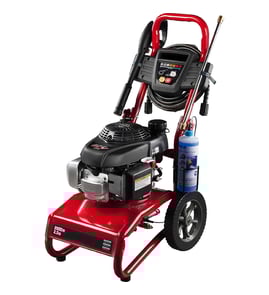




What is a good PSI for a gas pressure washer?
For typical home cleaning, a “good” PSI is usually in the 1,300 to 2,800 PSI range; for the Craftsman 580752211 specifically, the maximum outlet pressure is 3,000 PSI, which is strong enough for most driveway, siding, and deck jobs when you use the right spray tip and technique. See the 580752211 owner's manual for the rated specs and safe operating guidance.
Quick PSI guide for common jobs
- 1,300 to 2,000 PSI: cars, patio furniture, grills (use wider fan tips)
- 2,000 to 2,800 PSI: decks, fences, most home concrete
- 2,800 to 3,500 PSI: heavy concrete cleaning, stubborn stains (more risk of surface damage)
- Over 3,500 PSI: typically pro-grade work; easy to etch wood and concrete
Craftsman 580752211 specs that matter
Your model is rated to PWMA standards and lists these key performance numbers:
| Spec | Craftsman 580752211 rating | What it means for you |
|---|---|---|
| Max outlet pressure | 3,000 PSI | High cleaning force available at the pump |
| Max flow rate | 2.7 GPM | Faster rinsing and better “real-world” cleaning speed |
| Water supply requirement | At least 20 PSI at the washer | Prevents pump cavitation and damage |
| Max inlet water temp | 100°F | Hotter water can damage seals and pump components |
How to choose the “right” PSI in real use
Even with a 3,000 PSI washer, we recommend controlling cleaning power with the nozzle and distance instead of trying to “force” results.
- Start with a wider fan tip and step closer gradually
- Keep the spray moving; don’t dwell on one spot
- Use detergent only as directed for the surface you’re cleaning
- Confirm your garden hose supply is strong; low supply pressure reduces performance
Why it matters
Too little PSI wastes time; too much PSI can gouge wood, etch concrete, strip paint, and shorten pump life. Matching PSI to the job helps you clean faster while protecting surfaces and your pressure washer.
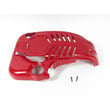
If you’re restoring the unit’s exterior protection after damage, the briggs & stratton pressure washer engine cover 792342 is a model-compatible replacement part we list for this pressure washer.
Last updated: February 2026
Where to find model number on Craftsman pressure washer?
On the Craftsman pressure washer model 580752211, the model and serial number are printed on an identification label located near the rear of the base plate. We recommend writing the numbers down before ordering parts or using troubleshooting steps in the 580752211 owner's manual.
Where to look on the machine
Check these common spots first (with the engine off and cool):
- Near the rear of the base plate (most common for this model)
- On the lower frame toward the back
- On the upper frame near the handle area
- Near the pump and hose connection area on the frame (label may face inward)
- Under dirt or overspray; wipe the frame tubing and base plate clean to reveal the label
What the label typically includes
The identification label is used to match the correct parts list and diagrams.
| Label item | What it’s used for | When you need it |
|---|---|---|
| Model number (example: 580752211) | Finds the correct parts breakdown | Ordering parts, looking up diagrams |
| Serial number | Identifies production run | Service history, confirming exact build |
| Brand name (Craftsman) | Confirms product family | Cross-checking manuals and parts |
Why it matters
Using the exact model number prevents ordering the wrong pump, hose, or engine-related components. Even small differences in a pressure washer series can change fittings, seals, and hardware.
Quick tip for parts ordering
Once you find the model number, you can order parts from the list for model 580752211. For example, if you need an external shroud, we carry the briggs & stratton pressure washer engine cover 792342. You can also search by model number on Sears PartsDirect.
Last updated: February 2026
What kind of gas goes in a Craftsman 3000 PSI pressure washer?
For the Craftsman pressure washer model 580752211 (3,000 PSI), we use clean, fresh unleaded gasoline; 87 octane (87 AKI) or higher is the correct choice for normal operation. Avoid old fuel and keep the fuel container clean to help prevent hard starting and surging.
What to use (and what to avoid)
- Use fresh unleaded gasoline, 87 octane (AKI) minimum
- Buy only what you will use in 30 days
- Store fuel in an approved, sealed container
- Do not use gasoline mixed with oil (this is a 4-cycle engine)
- Do not use stale fuel (varnish smell, dark color)
Quick fuel checklist for model 580752211
| Item | Recommended | Notes |
|---|---|---|
| Octane rating | 87 AKI or higher | Higher octane is fine; it does not increase PSI |
| Fuel type | Unleaded gasoline | Keep it clean and fresh |
| Fuel age | Under 30 days | Older fuel commonly causes no-start issues |
| Storage | Sealed, approved gas can | Keep away from heat and ignition sources |
If it will not start after fueling
Old fuel is one of the most common causes of a no-start on gas pressure washers. We follow these steps:
- Drain the tank and refill with fresh unleaded fuel
- Check the oil level (low oil can prevent starting on some engines)
- Confirm the water supply is on before starting
- Inspect the spark plug and air filter if it still will not start
For step-by-step troubleshooting, use pressure washer won't start.
Why it matters
Fresh, correct-octane fuel helps the engine run smoothly, which keeps pump speed consistent. Consistent engine speed is what helps your 580752211 maintain strong pressure and flow (rated up to 3,000 PSI and 2.7 GPM).
For model-specific operating and safety details, use the 580752211 owner's manual. If you need replacement parts for your Craftsman 580752211, order from the parts list for this model or search by model number on Sears PartsDirect.
Last updated: February 2026
Is it worth repairing a pressure washer?
Yes; repairing your Craftsman gas pressure washer model 580752211 is worth it when the issue is maintenance-related (clogged inlet screen, worn O-rings, minor leaks) and the engine and pump still run smoothly. Replacement makes sense when the pump or engine has major internal damage and repair cost is near half the price of a comparable new unit.
Quick repair vs. replace checklist
Repair usually makes sense when:
- The engine starts and runs but pressure is low or surging (often nozzle, inlet screen, or valve related).
- You have a small leak at the spray gun, hose connection, or detergent siphon line.
- Performance dropped after skipped basics (oil level, air filter, spark plug).
- The frame, handle, and wheels are solid and you want more seasons of use.
Replace usually makes sense when:
- The engine has internal mechanical damage (knocking, seizure, persistent heavy smoke).
- The pump will not build pressure after basic checks and valve service.
- Repair time and parts cost outweigh the machine’s value.
What we check first on model 580752211
The 580752211 owner's manual lists “before each use” items that often turn a “big repair” into a simple fix:
- Check engine oil level
- Check and clean the water inlet screen
- Check the high-pressure hose for leaks
- Check the spray gun/nozzle extension for leaks
- Purge air and contaminants from the pump
Cost drivers (what tends to get expensive)
| Area | Common symptom | Typical direction |
|---|---|---|
| Spray tip, inlet screen, hoses | Low pressure, leaks | Repair |
| Unloader/check valves/O-rings | Pressure spikes, no pressure | Repair |
| Pump internal wear | No pressure, loud pump | Replace pump or unit |
| Engine internal damage | Hard start, power loss | Replace unit |
Why it matters
Routine maintenance and keeping cooling openings clear helps prevent overheating and premature pump or engine wear, which is what turns an inexpensive fix into a costly failure.
Parts and resources
If your unit is missing a protective cover, replace it before operating; the pressure washer engine cover 792342 is a model-matched option when applicable. For additional parts lookup by model number, use Sears PartsDirect.
Last updated: February 2026
Are Craftsman gas pressure washers any good?
Yes. Craftsman gas pressure washers like model 580752211 are a good choice for typical home cleaning when they are maintained and operated correctly; they deliver strong cleaning power, and reliability depends most on fuel quality, routine engine care, and protecting the pump per the 580752211 owner's manual.
What “good” looks like in real use
A gas pressure washer is “good” when it starts consistently, holds steady pressure, and runs without leaks or overheating during normal jobs (driveways, siding, equipment).
Strengths most owners value
- Strong cleaning power compared to many electric units
- No extension cord limitations
- Fast setup once hose, gun, and tips are organized
- Good performance when used with the correct spray tip
Common issues that reduce durability
- Old fuel causing hard starting or stalling
- Dirty air filter causing the engine to lose power
- Pressure surging from an unloader or valve problem
- Leaks at hoses/fittings from worn seals or loose connections
Maintenance that makes the biggest difference
- Use fresh fuel; drain old fuel before long storage
- Keep engine oil at the correct level and change it on schedule
- Clean/replace the air filter when power drops
- Confirm water supply is on before starting (never run the pump dry)
- Inspect hoses, clamps, and fittings for leaks before each use
Symptom-to-cause quick guide
| Symptom | Likely cause | What we recommend |
|---|---|---|
| Won’t start | Old fuel, ignition/air issue | Refresh fuel, check plug wire, service air filter |
| Starts then dies | Out of fuel, fuel delivery issue | Refill; inspect fuel lines and tank cap venting |
| Low power | Dirty air filter | Clean/replace air filter; verify choke is off |
| Pressure surges | Unloader/valve issue | Use how to replace a pressure washer unloader valve |
Why it matters
High pressure spray and engine heat put stress on the pump, seals, and hoses. Following the operating and safety steps in the manual helps prevent premature pump wear and avoids surface damage from using the wrong nozzle.
Parts for this model
If a protective cover is missing or damaged, replace it before operating; the briggs & stratton pressure washer engine cover 792342 fits this model. You can also order parts from the diagrams for model 580752211 or search by model number on Sears PartsDirect.
Last updated: February 2026