Owner’s manual
 Error Codes


What is the average lifespan of a GE refrigerator?
Most GE refrigerators, including the GE GSH25JSBBSS side-by-side, typically last 12 to 15 years with normal household use. Regular maintenance (especially keeping airflow clear and doors sealing well) helps the compressor and cooling system run less and last longer; see the GSH25JSBBSS owner's manual.
Typical lifespan and what affects it
A refrigerator’s life is mostly determined by how hard the sealed system and fans have to work.
- Coil cleanliness and airflow: dirty coils and blocked vents increase run time
- Door seal condition: leaks cause longer cycles and temperature swings
- Room temperature and ventilation: hot kitchens and tight enclosures add stress
- Usage patterns: frequent door openings and overloading raise run time
- Defrost performance: frost buildup reduces cooling efficiency
Quick maintenance checklist (best ROI)
Use this as a simple routine to extend service life.
- Vacuum condenser area and keep rear/bottom airflow clear
- Confirm doors close fully and nothing is holding them open
- Keep interior vents unblocked by food packages
- Set temps to normal targets (fresh food about 37°F, freezer about 0°F)
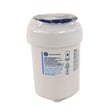
- Replace the water filter on schedule if you use the dispenser; use the GE refrigerator water filter MWFP
What “normal operation” looks like
Modern refrigerators often run longer and cycle more to maintain even temperatures. The manual notes that long run times and frequent cycling can be normal, especially after loading groceries, during hot weather, or with frequent door openings.
| What you notice | Usually normal | Often needs attention |
|---|---|---|
| Long run times | After restocking, hot days | Constant running with warm temps inside |
| Frost in freezer | Light frost in packages | Heavy frost on walls or blocked airflow |
| Temperature swings | Small changes after openings | Food spoiling or ice cream soft |
Why it matters
Knowing the expected lifespan helps you decide whether to maintain, repair, or plan for replacement. A few low-cost upkeep steps can prevent expensive failures in the cooling system and reduce energy use.
Last updated: February 2026
How to know GE refrigerator model?
To identify your GE refrigerator model, find the model and serial number tag on the cabinet inside the fresh food (refrigerator) compartment. For the GE GSH25JSBBSS, the exact tag location and format are shown in the GSH25JSBBSS owner's manual.
Where to look first (most common spots)
Check these areas in order; the tag is usually a white or silver label:
- Inside the fresh food compartment on a side wall
- Upper left wall inside the fresh food compartment
- Ceiling (top interior) of the fresh food compartment
- Behind the base grille area (less common on this style)
What to write down (and why)
Record both numbers exactly as printed:
- Model number: identifies the exact design and parts list (example: GSH25JSBBSS)
- Serial number: identifies production details used for service and some part variations
- Revision letters or suffixes (if shown): helps match the correct replacement part
Quick reference table
| Item on the tag | What it’s used for | When you need it |
|---|---|---|
| Model number | Correct parts diagrams and compatible parts | Ordering parts like a water filter or ice maker |
| Serial number | Service history and manufacturing run | Scheduling service, warranty, some part lookups |
| Suffix/revision | Confirms exact configuration | When parts look similar but do not interchange |
Why it matters
GE side-by-side refrigerators can look alike across multiple model families. Using the exact model number prevents ordering the wrong items, especially for fit-sensitive parts like the GE refrigerator water filter MWFP or an ice maker kit.
Last updated: February 2026
How wide is a 25.6 cubic foot refrigerator?
Most 25.6 cu. ft. side-by-side refrigerators are about 35 to 36 inches wide. For your GE GSH25JSBBSS, the exact cabinet width and required clearance are listed in the GSH25JSBBSS owner's manual.
Typical width and what to plan for
Even when two models share the same capacity, the width can vary slightly by brand and door style.
- Typical cabinet width: 35 to 36 in.
- Typical overall width with doors: about 36 in.
- Plan extra space for door swing and airflow
- Measure your opening at the top, middle, and bottom (walls are often not perfectly square)
- Confirm hinge-side clearance if the refrigerator sits next to a wall
Quick measuring checklist (before you buy or move it)
Use a tape measure and write down all three dimensions.
- Width: wall-to-wall opening
- Height: floor to cabinet/overhead trim
- Depth: from back wall to the front edge of counters
- Pathway: doorways and hallways the unit must pass through
Width vs. clearance: what is the difference?
The refrigerator’s width is the cabinet dimension; clearance is the extra space needed so it runs efficiently and doors open normally.
| What you are measuring | What it affects | What to do |
|---|---|---|
| Cabinet width | Fit in the opening | Compare to your cutout width |
| Side clearance | Door swing, airflow | Leave space on hinge side |
| Rear clearance | Air circulation, water line | Leave room for cord and tubing |
Why it matters
If the opening is too tight, doors may not open fully, the condenser area can run hotter, and you can end up with temperature issues that look like a cooling problem. Confirming the exact width in the manual helps prevent a bad fit.
Last updated: February 2026
What is the most common problem with a GE refrigerator?
The most common problem we see with GE refrigerators like model GSH25JSBBSS is a cooling complaint (fresh food too warm, freezer not holding temperature, or temperatures swinging). In most cases, the root cause is restricted airflow or a failed cooling-air component such as a fan motor or temperature sensor; the ice maker and water dispenser are also frequent trouble spots.
Most common causes (and what to check first)
- Dirty condenser area: Dust buildup reduces heat removal and causes warm temps.
- Blocked air vents: Overpacked shelves can stop cold air from circulating.
- Evaporator fan not running: Freezer may be cold but fresh food warms.
- Bad temperature sensing: The control can run the compressor/fans at the wrong times.
- Defrost system problems: Frost buildup blocks airflow and warms the refrigerator.
- Water/ice issues: Clogs, freezing in the dispenser path, or low water flow.
Quick troubleshooting steps for GSH25JSBBSS
- Set temps to typical targets: 0°F freezer, 37°F fresh food.
- Listen for the evaporator fan when the freezer door switch is held in.
- Check for heavy frost on the freezer back panel (points to a defrost issue).
- Clean the condenser area and confirm the condenser fan runs when the compressor runs.
- If water flow is weak or tastes off, replace the filter and purge air from the line.
Parts that commonly fix these symptoms
| Symptom | Common suspect part | Example model-matched part |
|---|---|---|
| Warm fresh food, freezer OK | Evaporator fan motor | Rca refrigerator evaporator fan motor WR60X10185 |
| Temps swing or read wrong | Temperature sensor | Refrigerator temperature sensor WR55X10025 |
| Frost buildup, poor airflow | Defrost heater or thermostat | Refrigerator defrost heater WR51X10055, refrigerator defrost bi-metal thermostat WR50X10065 |
| No water/ice or slow fill | Water valve or filter | Refrigerator water valve WR57X33326, GE refrigerator water filter MWFP |
Why it matters
Cooling problems usually get worse over time; restricted airflow and defrost failures can lead to food spoilage and extra wear on the compressor. Catching the cause early keeps temperatures stable and reduces repeat breakdowns.
For model-specific operating and care guidance (including cleaning and filter recommendations), use the GSH25JSBBSS owner’s manual.
Last updated: February 2026
Why is my GE side by side freezer freezing up?
Freezer frost and ice buildup in your GE GSH25JSBBSS side-by-side refrigerator almost always comes from warm, moist air getting into the freezer or from a defrost system problem. Start by checking door closing and gasket sealing first; then move to airflow and defrost components listed in the GSH25JSBBSS owner's manual.
Most common causes (and what to check first)
- Door not sealing: torn, warped, or dirty door gasket; door not fully closing.
- Door left open or held open by a package (a very common cause).
- Too frequent or long door openings, especially in hot or humid weather.
- Temperature set too cold: can increase frost and lead to ice buildup.
- Airflow blocked: items pushed against vents can cause cold spots and frost.
- Defrost system issue: frost keeps building until airflow is restricted.
Quick checks you can do in 10 minutes
- Inspect the gasket for gaps, rips, or areas that look flattened.
- Paper test: close the door on a sheet of paper; it should resist being pulled out all around.
- Look for obstructions: bins, shelves, or food packages preventing full closure.
- Check vent areas inside the freezer; move items away from vents.
- Confirm settings: set freezer to a normal mid-range setting, then give it 24 hours to stabilize.
Parts that commonly fix a “freezer freezing up” complaint
If the gasket and door closing check out, these parts are frequent culprits:
| Symptom you notice | Likely area | Example part for this model |
|---|---|---|
| Heavy frost on back wall, weak airflow | Defrost system | Refrigerator defrost heater WR51X10055 |
| Frost returns quickly after manual defrost | Defrost sensing/control | Refrigerator defrost bi-metal thermostat WR50X10065 |
| Temps swing, frosting seems inconsistent | Temperature sensing | Refrigerator temperature sensor WR55X10025 |
Why it matters
When frost builds up, it can block airflow through the evaporator area. That makes temperatures uneven, reduces cooling performance, and can lead to longer run times and more ice accumulation.
Last updated: February 2026