Owner’s manual
 Error Codes


Where is the model number on Kenmore Elite dryer?
On the Kenmore Elite dryer model 79682192900, the model number is printed on the identification plate inside the dryer door opening. Open the door and look around the inner door frame area for the label; it’s placed there for quick reference during service and parts lookup.
- Open the dryer door fully.
- Look on the cabinet frame just inside the door opening.
- Check the upper and side edges of the opening first.
- Look for an identification plate with both model and serial numbers.
- Use a flashlight; the print can be small.
The identification plate is the key to matching the correct Kenmore Elite dryer parts and documentation for your exact unit.
| You need to find | Why it matters | Where it’s used |
|---|---|---|
| Model number (example: 79682192900) | Ensures parts fit and diagrams match | Parts lookup and compatibility |
| Serial number | Identifies production details for service | Service history and troubleshooting |
| Purchase date (your records) | Helps with maintenance planning | Your records and scheduling |
Kenmore Elite dryers often share similar styling across multiple model families, so using the exact model number prevents ordering the wrong items (for example, a lint filter or drum belt that looks similar but mounts differently). For model-specific details and label examples, use the owner's manual.
Last updated: February 2026
Is 6.7 cubic feet a big dryer?
Yes. A 6.7 cu. ft. dryer is considered large capacity for most homes; it typically handles family-size loads and many bulky items more easily than compact models. For the Kenmore Elite 79682192900 specifically, the listed drying capacity is IEC 7.4 cu. ft. in the owner's manual.
Most full-size dryers fall roughly in the 7.0 to 9.0 cu. ft. range, so 6.7 cu. ft. sits right at the large end of standard capacity. That usually means:
- Fewer loads per week for families
- Better airflow around mixed loads (towels plus shirts)
- More room for bulky items (comforters, blankets, jackets)
- Less overdrying when you avoid packing the drum too tightly
Here is a simple way to compare the number you asked about to what we see for this model.
| Item | Capacity value | What it tells you |
|---|---|---|
| “Large capacity” example | 6.7 cu. ft. | Large for many households |
| Kenmore Elite 79682192900 (IEC) | 7.4 cu. ft. | Extra room compared to 6.7 cu. ft. |
Capacity affects more than “how much fits.” When the drum is overloaded, clothes tumble less, airflow drops, and drying times increase. Keeping the lint system clean also protects airflow and helps the dryer reach and hold proper temperature.
- Fill the drum loosely; leave space for items to tumble
- Dry heavy items (towels, jeans) separately from lightweight items
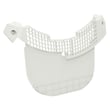
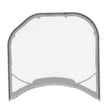
- Clean the lint screen every load; replace a damaged screen with the lint filter - dryer part by lg ADQ56656401
- If drying times suddenly increase, check venting and the lint screen housing for buildup
- Use sensor cycles for mixed loads to reduce overdrying
Last updated: February 2026
How to hard reset a Kenmore dryer?
To hard reset your Kenmore Elite dryer model 79682192900, unplug the dryer (or switch the breaker off) for about 1 to 5 minutes, then restore power and try starting a cycle again. This clears many temporary control glitches and restores normal operation.
- Press Power to turn the dryer off.
- Unplug the power cord (grip the plug, not the cord) or turn the breaker off.
- Wait 1 to 5 minutes.
- Restore power.
- Press Power, select a cycle, then press Start/Pause.
On this model, “CL” means the controls are locked, not that the dryer needs a reset. Unlocking it is the fix.
- Press and hold Control Lock for 5 seconds to toggle the lock off.
- Confirm the controls respond, then start a cycle.
| What you see | What it means | What to do |
|---|---|---|
| CL on the display | Control Lock is active | Hold Control Lock 5 seconds |
| Dryer won’t start after pausing | Cycle timed out after being stopped | Press Start/Pause again; restart cycle if it shut off |
If the dryer powers up but still will not run or heats poorly, the issue is usually airflow, a safety thermostat opening, or a sensor problem, not the control needing a reset.
- Clean the lint screen and check the lint screen area for buildup
- Verify strong airflow at the outside vent hood
- If the dryer overheats or shuts down, inspect venting for restrictions
- If drying is inconsistent, check moisture-sensing surfaces for residue
- If you suspect a failed part, match by model and symptom before ordering
- Lint filter - dryer part by lg ADQ56656401 (airflow and lint capture)
- Dryer thermistor AGM30045804 (temperature sensing)
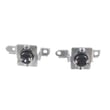
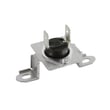
- Dryer high-limit thermostat 6931EL3001F (overheat protection)
- Dryer heating element 5301EL1001J (no-heat or weak-heat complaints)
A hard reset is a safe first step for an unresponsive control panel or a cycle that will not start, but “CL” lockouts and airflow-related overheating are more common causes of stoppages on electronic dryers. Using the correct unlock and maintenance steps prevents repeat shutdowns.
For control features, cycle behavior, and lock settings specific to this dryer, use the owner's manual.
Last updated: February 2026
What is the lifespan of a Kenmore dryer?
A Kenmore dryer typically lasts 10 to 13 years with normal household use. With consistent airflow maintenance (lint filter and venting) and timely replacement of wear parts, many Kenmore Elite dryers like model 79682192900 run longer.
Dryer life is mostly driven by heat stress, airflow restriction, and mechanical wear.
- Loads per week: more cycles equals faster wear on the belt, rollers, and motor
- Airflow: a clogged lint screen or vent overheats the heater and thermostats
- Moisture and steam features: extra components can add maintenance needs
- Installation quality: crushed or long duct runs increase heat and run time
- Routine cleaning: regular cleaning helps prevent overheating and premature shutdowns
The 79682192900 manual emphasizes regular cleaning; keeping lint and dust under control helps the dryer run cooler and more efficiently.
- Clean the lint screen every load; replace a damaged screen with the lint filter - dryer part by lg ADQ56656401
- Vacuum lint from the door opening and seals; wipe with a damp cloth (no abrasives)
- Check the exhaust duct for kinks, crushing, or heavy lint buildup
- Avoid overdrying; use sensor cycles when available to reduce heat time
- If drying times increase, address airflow first before replacing heat parts
When a dryer is “worn out,” it is often one or two serviceable parts.
| Symptom | Common wear area | Example part for 79682192900 |
|---|---|---|
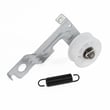
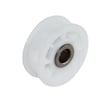
| Drum will not turn, motor runs | Belt or idler system | Dryer drum belt 4400EL2001F, dryer idler pulley 4560EL3001A |
| Long dry times, overheating | Thermostats, airflow restriction | Dryer high-limit thermostat 6931EL3001F |
| No heat (electric models) | Heating circuit | Dryer heating element 5301EL1001J |
A dryer that runs hot or takes too long to dry clothes wears out the heating system, thermostats, and motor faster. Good airflow maintenance is the simplest way to protect performance, energy use, and part life.
For model-specific care and cleaning intervals, follow the owner's manual.
Last updated: February 2026