Owner’s manual
 Error Codes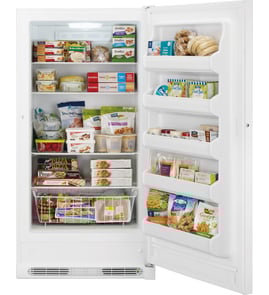


Is there a reset button on a Kenmore upright freezer?
On the Kenmore Elite upright freezer model 25328712804, there is not a dedicated “reset button” for the freezer’s electronics. Most resets are done by using the control panel (including the Alarm Reset button) or by power-cycling the unit; the exact steps depend on which control style your freezer has. See the 25328712804 use and care guide for your control panel layout.
Depending on the control panel style, you can typically reset or clear these conditions:
- Hi temp alarm buzzer: silence it using the Alarm Reset button
- Control lock: lock or unlock the temperature control using Alarm Reset (on standard electronic controls)
- Power loss or door ajar alarms: clear the alarm once conditions return to normal
- Temperature setting: adjust back to a normal setpoint after a power interruption
If your 25328712804 has the standard electronic temperature control, the manual describes these common “reset-like” actions:
- Silence the alarm: press Alarm Reset
- Lock the controls: press and hold Alarm Reset for about 3 seconds
- Unlock the controls: press and hold Alarm Reset for about 3 seconds again
| What you’re trying to do | What to press | What you should see/hear |
|---|---|---|
| Stop the buzzer during HI TEMP | Alarm Reset | Buzzer stops (light may stay on until temp drops) |
| Prevent accidental temp changes | Hold Alarm Reset ~3 sec | Lock indicator appears, then normal display |
| Restore temp adjustment ability | Hold Alarm Reset ~3 sec | Display returns to current temp |
A power cycle resets the control board logic and is the closest thing to a “reset button” on most upright freezers.
- Unplug the freezer (or switch the breaker off)
- Wait 5 minutes
- Restore power
- Allow several hours for temperatures to stabilize after any setting changes
Many “reset button” questions are really alarm or control-lock issues. Using Alarm Reset correctly can restore normal operation without replacing parts or changing the temperature setting.
Last updated: January 2026
What is the best temperature for a Kenmore Elite freezer?
For the Kenmore Elite freezer model 25328712804, the best everyday setting for safe long-term frozen food storage is 0°F (-18°C). This temperature keeps food solidly frozen while helping the sealed refrigeration system run efficiently; confirm control details in the 25328712804 use and care guide.
Most upright freezers perform best when you target 0°F at the center of the cabinet (not on the door).
- 0°F (-18°C): best all-around setting for long-term storage
- -5°F to -10°F: helpful if you frequently load warm groceries or want extra margin for long storage
- Warmer than 0°F: can increase risk of softening, freezer burn, and shorter storage times
- Colder than -10°F: usually wastes energy without improving food quality for most households
A control dial setting is not the same as the actual food temperature. We recommend verifying with a thermometer.
- Place a freezer thermometer in the middle shelf area
- Wait 24 hours after any adjustment before judging results
- Keep the freezer reasonably full for steadier temperatures
- Make sure the door closes and seals fully (a poor seal causes temperature swings and frost)
| Thermometer reading | What it means | What to do |
|---|---|---|
| Above 5°F | Too warm for safe storage | Turn the control colder; recheck in 24 hours |
| Around 0°F | Ideal | Leave the setting as-is |
| Below -10°F | Colder than needed | Turn the control slightly warmer to save energy |
Holding 0°F helps prevent partial thawing and refreezing (which damages texture), reduces frost buildup from temperature swings, and supports efficient compressor run time.
Last updated: January 2026
Why is my Kenmore Elite freezer not freezing?
If your Kenmore Elite upright freezer 25328712804 is running but not freezing, the most common causes are incorrect temperature control settings, poor airflow or a door that is not sealing, or a cooling-system/defrost problem that prevents the evaporator from getting cold. Start with the quick checks in the 25328712804 use and care guide.
- Confirm the temperature control is not set to OFF and give the freezer time to stabilize after changes.
- Make sure the freezer is fully plugged in and the outlet and breaker are good.
- Reduce door openings and verify the door closes and seals all the way.
- Check for warm room conditions and allow space around the cabinet for airflow.
- If the freezer was recently unplugged or loaded with warm food, allow several hours to recover.
| What you notice | What it usually points to | What to do next |
|---|---|---|
| Freezer does not run at all | Power issue or control set to OFF | Check outlet, breaker, and control setting |
| Runs “too much” but still warm | Door slightly open, gasket leak, hot room, airflow restriction | Inspect door seal, clear vents, improve airflow |
| Frost buildup on back wall or inside panel | Defrost system issue | Check for heavy frost; plan defrost-system testing |
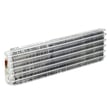
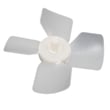
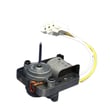
| Runs but little or no cold air movement | Evaporator fan problem | Listen for fan; inspect fan area for ice |
If basic checks do not restore freezing, these model-matched parts are common suspects:
- Freezer evaporator fan motor 297309000: circulates cold air through the cabinet.
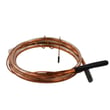
- Defrost heater 216730700: melts frost off the evaporator during defrost.
- Refrigeration appliance defrost bi-metal thermostat 297216600: helps control defrost heating based on temperature.
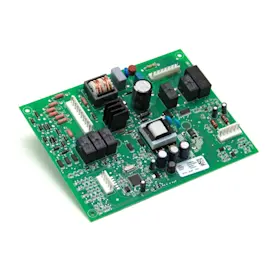
- Freezer electronic control board 297366203: manages cooling and defrost timing.
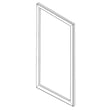
- Freezer door gasket 5304507200: restores an airtight seal to prevent warm air leaks.
A freezer that is not freezing is often caused by warm air leaks (door/gasket/leveling) or frost blocking airflow. Fixing the root cause prevents food loss, reduces run time, and helps protect the compressor and sealed system.
Last updated: January 2026