Error Codes


How do I get my dryer out of lock mode?
On the Kenmore 11087983810 gas dryer, lock mode (control lock/child lock) turns off by pressing and holding the lock-related button for about 3 to 5 seconds until the lock indicator clears. If the panel is unresponsive, a quick power reset often restores normal control operation.
Quick unlock steps
- Press and hold Control Lock or Child Lock (if labeled) for 3 to 5 seconds.
- If there is no dedicated lock button, press and hold Start/Pause for 3 to 5 seconds.
- Try holding the button until you hear a beep or the lock icon disappears.
- If the display stays locked, unplug the dryer (or switch off the breaker) for 1 minute, then restore power.
- After power is restored, try the lock button sequence again.
If the controls still will not unlock
A “stuck” lock condition is usually caused by a keypad issue, a door switch signal problem, or a control that needs a reset.
- Confirm the door is fully closed and the latch engages.
- Avoid pressing multiple keys at once; press and hold one key steadily.
- If the dryer starts and stops erratically, check for a loose or damaged door strike.
- If the panel seems dead or intermittent, inspect wiring connections to the console.
Common symptoms and what they point to
| What you notice | Most likely cause | What we do next |
|---|---|---|
| Lock icon stays on no matter what | Control needs reset or key not registering | Power reset; then press/hold lock key 3 to 5 seconds |
| Dryer will not start and door feels “not latched” | Door strike not engaging | Inspect/replace strike 279570 |
| Buttons respond inconsistently | Worn keypad or connection issue | Reseat console connections; check harness condition |
Why it matters
Control lock is designed to prevent accidental cycle changes. If it will not turn off, it can also block starting the motor and heat cycle, so restoring normal keypad and door-latch operation gets the dryer running safely and predictably.
Last updated: February 2026
How do I tell what model my Kenmore dryer is?
Your Kenmore dryer’s model number is printed on the appliance’s ID label; for Kenmore gas dryers like model 11087983810, it’s most often found around the door opening or on the cabinet. Once you have the full model number, we can match the correct parts and diagrams.
Where to find the model number label
Check these common locations on Kenmore dryers:
- Inside the dryer door opening on the front panel (around the rim)
- On the back panel of the dryer cabinet
- On the inside of the front panel (visible after opening the door)
- Near the lint screen housing area (depending on design)
- On the side or rear edge of the door opening
If you already see 11087983810 on the label, that is the complete model number you should use when ordering parts.
What to write down (so parts match the first time)
Record the information exactly as shown on the label:
- Model number (example: 11087983810)
- Serial number (helps with production variation)
- Type (gas dryer vs. electric dryer)
- Any suffixes or additional digits/letters printed with the model
Quick check: model number vs. part numbers
These numbers are easy to mix up; here is how we separate them.
| What it is | What it looks like | What it’s used for |
|---|---|---|
| Model number | 11087983810 | Identifies the exact dryer for diagrams and compatible parts |
| Part ID | WP3390719 | Identifies a specific replacement part listing |
| Part number | 3388342 | Manufacturer part reference used across models |
Why it matters
Kenmore model families can share similar styling, but internal components (like the igniter, thermal fuse, or drum support system) can differ. Using the exact model number prevents ordering the wrong gas dryer parts.
Related DIY help
If your dryer is showing a code or acting up after you identify the model family, use our Kenmore 110 series electronic control model dryer error codes guide to narrow the problem before replacing parts.
Last updated: February 2026
How to hard reset a Kenmore dryer?
To hard reset your Kenmore gas dryer model 11087983810, we recommend disconnecting power for a few minutes to fully reboot the electronic control. If the dryer is still unresponsive afterward, the issue is usually a door switch, airflow restriction, or a safety device such as the thermal fuse.
Hard reset steps (safe, works for most Kenmore dryers)
- Turn the dryer OFF.
- Unplug the power cord (or switch the breaker OFF).
- Wait 2 to 5 minutes.
- Restore power.
- Open and close the door once, then try a cycle.
If the control is still acting “stuck”
These quick checks often solve what looks like a control problem:
- Make sure the door closes firmly and the latch engages; a weak latch can prevent starting.
- Clean the lint screen and confirm strong airflow at the outside vent.
- Try a different cycle (Timed Dry vs. Auto) to rule out a cycle selection issue.
- If the drum light stays on or the dryer will not start, test the door switch and latch parts.
Parts that commonly cause “won’t start” symptoms
| Symptom after reset | Most common cause | Example part for this model |
|---|---|---|
| No start, no motor sound | Blown safety fuse from overheating/blocked vent | Thermal fuse WP3390719 |
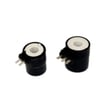
| Starts then stops, or intermittent heat | Weak gas ignition components | Dryer gas valve coil kit 279834 |
| Door won’t “catch” or start only when pushing door | Door strike/latch wear | Strike 279570 |
Why it matters
A hard reset clears temporary control glitches, but it does not fix the underlying reason a dryer shut down. On gas dryers like 11087983810, restricted venting can overheat the dryer and trip the thermal fuse, and a door-latch issue can mimic a failed control.
Helpful DIY reference
If your dryer is showing an error code or acting like the controls are locked, use our Kenmore 110 series electronic control model dryer error codes guide to match the code to the right checks.
Last updated: February 2026
How to tell if a dryer start switch is bad?
A bad start switch on your Kenmore gas dryer model 11087983810 usually shows up as a dryer that has power but will not start when you press Start. The most reliable check is a multimeter continuity test: the switch should read closed (continuity) only while you are pressing it.
Quick symptoms to look for
- Dryer has power (lights work) but motor never runs when Start is pressed
- Start button feels loose, sticky, or does not “click” consistently
- Dryer starts only if you press and hold Start in a certain spot
- Intermittent no-start that is not fixed by resetting the breaker
- No change after confirming the door is fully closed
How we test the start switch (basic continuity check)
- Unplug the dryer (or switch off the breaker). For a gas dryer, also shut off the gas if you will be opening the cabinet.
- Access the console area where the start switch is mounted.
- Label and remove the wires from the switch terminals.
- Set your multimeter to continuity (or the lowest ohms setting).
- Test the switch:
- Not pressed: meter should show open (no beep, OL/infinite)
- Pressed and held: meter should show closed (beep, near 0 ohms)
What the readings mean
| Switch position | Expected reading | What it tells us |
|---|---|---|
| Not pressed | Open (OL) | Normal at rest |
| Pressed | Closed (0 to 1 ohm) | Switch contacts are working |
| Pressed | Still open (OL) | Switch is bad |
| Not pressed | Closed (0 to 1 ohm) | Switch is stuck closed (bad) |
Rule out other common no-start causes first
A “won’t start” complaint is often caused by something other than the start switch. Check these items in this order:
- Confirm the door closes firmly; inspect the latch strike strike 279570
- Verify the outlet and breaker are good (gas dryers still need full electrical power)
- Check for a blown safety device such as the thermal fuse WP3390719
- Listen for a motor hum; a seized blower wheel or drum support issue can prevent starting
- If your model shows an error, use Kenmore 110 series electronic control model dryer error codes to interpret it
Why it matters
The start switch is a simple on-demand contact. If it fails open, the motor never gets the “start” signal; if it fails closed, it can create unsafe or confusing behavior. Testing it correctly prevents replacing good parts and speeds up a reliable repair.
Last updated: February 2026
What are common problems with Kenmore dryers?
Common problems we see on Kenmore dryers like model 11087983810 include no heat, long dry times, the drum not turning, and unusual noises. Most of these issues trace back to airflow restrictions (lint and venting), normal wear on drum support parts, or a failed safety or ignition component.
Most common symptoms and what usually causes them
- Dryer runs but won’t heat (gas dryer): failed igniter, gas valve coils, radiant sensor, or a blown thermal fuse
- Long drying times: clogged lint screen, restricted vent, weak airflow from a damaged blower wheel
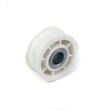
- Drum won’t turn: worn idler pulley, seized drum support rollers, or a failing drive motor
- Squealing, thumping, or rumbling: worn drum rollers, idler pulley wear, or a damaged drum support surface
- Stops mid-cycle: overheating from poor venting, which can open the thermal fuse
Parts that commonly fix these problems (for model 11087983810)
These are frequent repair parts for this Kenmore gas dryer when symptoms match:
| Symptom | Common part to check | Example part on this model |
|---|---|---|
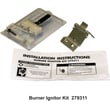
| No heat | Ignition system | Dryer igniter 279311 |
| No heat after it starts | Gas valve coils | Dryer gas valve coil kit 279834 |
| No heat, dryer overheated | Safety cutoff | Thermal fuse WP3390719 |
| Long dry times, weak airflow | Air movement | Dryer blower wheel WP697772 |
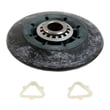
| Squeal or drum not turning smoothly | Drum support | Support WPW10314173 |
Quick checks we recommend before replacing parts
- Clean the lint screen and confirm the screen housing is clear
- Check the outside vent hood for a strong, steady airflow
- Inspect the vent duct for kinks, crushing, or heavy lint buildup
- Listen for a steady motor sound; grinding or humming points to a drive issue
- If you smell overheating, stop using the dryer and correct venting before running again
Why it matters
Airflow problems make a gas dryer run hotter and longer, which increases wear on the drum support roller, idler pulley, and drive motor, and can blow a safety device like the thermal fuse. Fixing venting first prevents repeat failures.
Related troubleshooting help: gas dryer wont heat troubleshooting video
Last updated: February 2026
What is the OEM part number 279838?
For Kenmore gas dryer model 11087983810, 279838 is commonly used as a dryer heating element part number on many electric dryer designs; it is not the correct heating part identifier for this gas dryer. For gas-heat problems on this model, we focus on ignition and gas valve components such as the dryer igniter 279311 and dryer gas valve coil kit 279834.
What to use on this model instead (gas heat system)
On a gas dryer, heat is produced by a burner assembly, not an electric heating element. If your dryer tumbles but will not heat, these parts are the most common fixes:
- Dryer igniter 279311 (glows to light the burner)
- Dryer gas valve coil kit 279834 (opens the gas valve when energized)
- Dryer radiant sensor WP338906 (confirms flame/heat at the burner)
- Thermal fuse WP3390719 (cuts power if the dryer overheats)
Quick symptom-to-part guide
| Symptom on 11087983810 | Most likely part to check | Why it fits |
|---|---|---|
| Tumbles, no heat, igniter never glows | Thermal fuse WP3390719 | Fuse can open and stop heat circuit |
| Igniter glows, then shuts off, no flame | Dryer gas valve coil kit 279834 | Weak coils often fail once warm |
| Flame lights briefly then goes out | Dryer radiant sensor WP338906 | Sensor may not signal flame properly |
| No glow, but dryer runs | Dryer igniter 279311 | Igniter can be open (no heat) |
Why it matters
Ordering 279838 for a gas dryer usually leads to a mismatch because gas dryers do not use an electric heating element to generate heat. Matching parts to the 11087983810 gas burner system gets you back to safe, consistent drying faster.
Last updated: February 2026
What is the capacity of the Kenmore dryer model 11087983810?
The Kenmore gas dryer model 11087983810 is a full-size dryer; most Kenmore 110-series dryers are typically about 6.5 to 7.4 cu. ft. capacity. For the exact capacity for your specific unit, match your model’s feature set and drum size when ordering parts or accessories.
Typical capacity range for this Kenmore model family
Most standard, full-size dryers in this style land in a narrow range, and the difference usually comes down to drum depth and rear bulkhead design.
- Typical full-size dryer capacity: 6.5 to 7.4 cu. ft.
- Best “real world” load fit: queen bedding, towels, mixed loads
- Larger capacity usually means fewer loads and better tumbling space
- Drying time still depends heavily on venting and airflow
How to estimate capacity using parts you can see
If you are trying to confirm capacity for accessories or load sizing, these parts help indicate you have a full-size drum platform:
- Drum support system (rollers and idler) indicates a standard drum layout
- Lint screen style and housing size often correlate with full-size airflow design
- Bulkhead and drum dimensions (when compared to common full-size platforms)
Helpful model-matched parts (for fit confirmation)
| What you’re checking | Model-matched part example | Why it helps |
|---|---|---|
| Drum support layout | Support WPW10314173 | Confirms the drum rides on standard rear/front support rollers |
| Drum size platform | Drum W10545924 | Drum platform is consistent with full-size Kenmore 110 builds |
| Airflow path | Dryer blower wheel WP697772 | Full-size blower wheel and housing typically match full-size capacity dryers |
Why it matters
Capacity affects how much laundry you can dry efficiently per cycle. Overloading a smaller drum reduces tumbling, traps moisture, and can increase wear on the idler pulley, drum supports, and drive motor.
Related DIY reference
If you’re comparing models or troubleshooting performance that feels like “low capacity” (long dry times, poor tumbling), use how to use your clothes dryer efficiently to optimize load size, cycle selection, and venting.
Last updated: February 2026