Owner’s manual


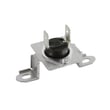
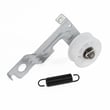
How do I tell what model my Kenmore dryer is?
To tell what model your Kenmore dryer is, we look for the model and serial number on the identification plate inside the dryer door opening. For Kenmore model 79688842800, that label is the fastest way to match the correct parts, manual, and specifications.
Where to find the model number label
Check these common spots first (starting with the most reliable):
- Inside the dryer door opening on the cabinet frame (identification plate)
- On the back panel of the dryer cabinet
- Near the lint screen housing area (varies by design)
- On your purchase paperwork or service receipt (if saved)
What to write down (and why)
Record both numbers exactly as shown on the label:
- Model number (example: 79688842800)
- Serial number (helps confirm production details)
- Date of purchase (useful for maintenance history)
The 79688842800 owner's manual also recommends recording the model and serial number for faster help when ordering parts or scheduling service.
Quick check: model number vs. serial number
| Item | What it does | Example format |
|---|---|---|
| Model number | Identifies the exact dryer design and parts | 79688842800 |
| Serial number | Identifies the specific unit built | Letters and numbers |
Why it matters
Kenmore dryers can look similar across different series; using the exact model number prevents ordering the wrong items like a drum belt, heating element, door switch, or moisture sensor.
Last updated: February 2026
How do I troubleshoot my 79688842800?
To troubleshoot your Kenmore dryer 79688842800, start by matching the symptom (no power, no heat, long dry times, noise, or error code) to a quick set of checks: power and door switch first, then airflow, then heating and drum-drive parts.
Quick symptom checklist
- Won’t start: verify outlet power and breaker, confirm the door fully latches, then test the door switch
- Runs but won’t heat: confirm correct cycle and temperature, then check airflow and heating components
- Takes too long to dry: clean lint screen and exhaust duct, check blower and moisture sensing
- Loud thumping/squealing: inspect belt, idler pulley, and drum support rollers
- Stops mid-cycle: look for overheating from restricted venting, then check thermostats
Step-by-step: the 10-minute basics
- Unplug the dryer (or switch off the breaker) before opening panels.
- Clean the lint screen and confirm strong airflow at the outside vent.
- Check the door latch and listen for a click; a failed switch can prevent starting.
- If drying is poor, inspect the blower area for lint buildup.
Parts that commonly solve these symptoms
| Symptom | Likely part to inspect | Example part for this model |
|---|---|---|
| Won’t start when door closes | Door switch | Dryer door switch EBF61496102 |
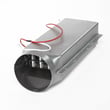
| No heat or weak heat | Heating element | Lg dryer heating element 5301EL1001H |
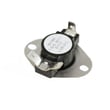
| Overheats or shuts off | High-limit thermostat | Dryer high-limit thermostat 6931EL3003D |
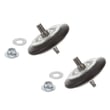
| Rumbling/thumping | Drum support rollers | Dryer drum support roller 4581EL2002L |
Error codes
If your display shows an error code, use the code list and reset steps in the Kenmore 796 model dryer error codes guide, then confirm the basics (airflow, door closure, and power) before replacing parts.
Why it matters
Most dryer problems trace back to airflow restriction or a small wearable part. Troubleshooting in a set order prevents unnecessary part replacement and helps restore safe, efficient drying.
For wiring diagrams, component locations, and model-specific procedures, use the 79688842800 owner's manual.
Last updated: March 2026
What is the average lifespan of 79688842800?
The average lifespan of a Kenmore dryer like model 79688842800 is about 13 years with normal household use and routine vent and lint maintenance. Keeping airflow strong and replacing worn drum-drive parts on time helps you reach that service life.
What affects lifespan most
- Vent restriction (long runs, crushed duct, lint buildup)
- Overloading and frequent heavy loads
- Heat stress from poor airflow (can shorten heater and thermostat life)
- Worn drum-drive components (belt, rollers, idler pulley)
- Moisture sensor and control issues that cause long run times
Maintenance that adds years
Use these habits to reduce heat and wear:
- Clean the lint screen every load; wash it periodically to remove residue
- Check and clean the exhaust duct regularly; confirm strong airflow outside
- Keep the dryer level to reduce drum and roller wear
- Avoid overloading; it strains the motor and drum support system
- If you hear thumping or squealing, service the drum support system early
Common wear items (and what they do)
| Part area | What you notice | Typical fix |
|---|---|---|
| Drum drive | Drum not turning, burning rubber smell | Replace belt or idler pulley |
| Drum support | Thumping, rumbling | Replace support rollers |
| Heating/temperature control | No heat, overheating, long dry times | Check heater, thermostats, thermistor |
If your drum stops turning, the dryer drum belt 4400EL2001F is a common replacement item for this model.
Why it matters
A dryer that runs hotter or longer than normal wears out the heating system, motor, and drum supports faster. Good airflow and early repair usually cost less than running the dryer until multiple parts fail.
For model-specific care and cleaning steps, follow the 79688842800 owner's manual.
Last updated: March 2026