 Installation guide
 Owner’s manual

How to do a hard reset on a Kenmore washer?
For Kenmore washer model 11026862503, the most reliable “hard reset” is a power reset: unplug the washer (or switch off the breaker) for 1 minute, then restore power and restart the cycle. This clears many temporary control and cycle issues without changing any mechanical settings.
Hard reset steps (power reset)
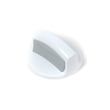
- Press the cycle control knob in to stop the washer.
- Unplug the washer (or turn the breaker off).
- Wait 60 seconds.
- Plug back in (or turn the breaker on).
- Close the lid and pull the cycle control knob out to start.
- If the washer was mid-cycle, reselect the cycle and water level before restarting.
For normal operation details (start, stop, restart), follow the owner's manual.
If the washer still will not run after a reset
These checks fix the most common “won’t start” complaints on this style of Kenmore top-load washer:
- Confirm the lid is fully closed; a failed lid switch can prevent agitation and spin.
- Make sure the cycle control knob is pulled out firmly (it must engage to run).
- Check that the washer is level; excessive vibration can interrupt operation.
- If it fills but will not drain, inspect the drain path and pump area.
- If it agitates poorly, inspect common drive items in the agitator.
Quick part match guide (symptom to likely part)
| Symptom | Common cause | Part to check |
|---|---|---|
| Won’t spin or stops when lid opens | Lid switch not closing circuit | Washer lid switch assembly WP8318084 |
| Won’t drain or drains slowly | Pump jammed or failing | Washer drain pump WP3363394 |
| Agitator “ratchets” or won’t move clothes well | Worn agitator dogs | Agitator dog 80040 |
Why it matters
A power reset clears temporary electrical or timer “hang-ups” so you do not replace parts unnecessarily. If the same symptom returns right away, the issue is usually a lid switch, drain problem, or a worn drive component rather than something a reset can fix.
Last updated: February 2026
What is the capacity of the Kenmore 11026862503 washer?
The Kenmore 11026862503 washer is a 3.6 cu. ft. capacity washer. For the most accurate confirmation for your exact configuration and cycle options, we recommend checking the specifications section in the owner's manual.
Quick specs at a glance
| Item | Spec |
|---|---|
| Washer model | Kenmore 11026862503 |
| Washer capacity | 3.6 cu. ft. |
| Type | Washer |
Why capacity matters
Capacity helps you match load size to the washer so you get better cleaning and fewer issues like out-of-balance spinning, long cycle times, and excess wear on the drive system.
Tips for using the full capacity without problems
- Load items loosely; do not pack clothes down into the basket.
- Mix large and small items to help balance the load.
- Avoid washing one heavy item by itself (add a few towels if needed).
- Use the correct water level or cycle selection for the fabric type.
- If the washer bangs or “walks,” re-level the feet and confirm the floor is solid and level.
When “capacity” feels smaller than expected
If loads are not moving well during agitation or the washer struggles to spin out, common causes on this style of Kenmore top-load washer include worn agitator components or a drive issue. These parts are commonly involved:
- Agitator dog 80040 (helps the agitator grip and move clothing)
- Washer motor coupling 285753A (connects the motor to the drive system)
- Clutch 285785 (helps the basket reach proper spin speed)
Last updated: February 2026
How to tell if a washing machine drain pump is bad?
If your Kenmore washer model 11026862503 will not drain or leaves water in the tub, a bad drain pump is likely when the drain hose is clear and correctly installed, the lid is closed, and you still hear abnormal grinding or the pump hums but water does not move. Use the owner's manual checks first.
Quick signs the drain pump is failing
- Washer will not drain; water remains in the basket at the end of the cycle.
- You hear loud grinding, rattling, or squealing during drain.
- You hear a steady hum but the water level does not drop.
- Draining is very slow even with a clear standpipe.
- Water leaks near the pump area (after ruling out hoses and clamps).
Rule out common non-pump causes first (model 11026862503)
The manual troubleshooting for this washer points to a few issues that can mimic a bad pump:
- Lid open: this washer will not spin (and may not complete draining properly) with the lid open; check the washer lid switch assembly WP8318084.
- Drain hose problems: a clogged hose, a hose pushed too far into the standpipe, or a sealed standpipe can prevent proper draining.
- Drain height: the top of the drain hose should be at least 39 in. (99 cm) above the floor; if the hose is too low, the cycle can seem stuck.
- Excess suds: too much detergent can slow draining and leave water behind.
Drain setup checks (fast)
| What to check | What “good” looks like | What it causes if wrong |
|---|---|---|
| Standpipe/tub flow | Can carry away about 17 gal. (64 L) per minute | Backup and “won’t drain” symptoms |
| Hose fit in standpipe | Secure but not taped/sealed; needs an air gap | Siphoning or slow/no drain |
| Hose height | 39 in. minimum above floor | Cycle appears stuck or poor drain |
When replacing the pump makes sense
Replace the pump when the drain path is correct and clear, the washer still will not drain, and the pump noise is abnormal (grinding) or it hums without moving water. For this model, the correct replacement is the washer drain pump WP3363394.
Why it matters
A weak or jammed drain pump can prevent spinning, leave clothes soaking wet, and cause repeated cycle interruptions. Fixing the drain issue also helps prevent leaks and reduces strain on the drive system.
Last updated: February 2026
How to unclog drain hose on Kenmore washer?
To unclog the drain hose on your Kenmore washer model 11026862503, we unplug the washer, remove standing water, then clear the blockage from the hose and the drain pump inlet. Afterward, we reinstall the hose so it fits securely but stays loose enough to keep an air gap.
Safety and prep
- Unplug the washer.
- Turn off both water taps.
- Keep towels and a shallow pan or bucket ready.
- Use gloves; check pockets for sharp items.
- If the tub is full, bail or siphon water out first.
Step-by-step: clear the clog
- Check the household drain first. A slow standpipe or laundry tub drain can mimic a washer clog.
- Inspect the external hose. Remove kinks, crushed spots, or lint buildup at the end.
- Remove and drain the hose. Pull it from the standpipe/tub and drain into a bucket.
- Flush the hose. Run water through it; use a small brush to push out lint, coins, or socks.
- Check the pump path. If the hose is clear but draining is still slow, debris is usually at the pump inlet or inside the pump housing.
If the pump is damaged or jammed and won’t clear, replace it with the exact match washer drain pump WP3363394.
Reinstall the drain hose correctly (prevents siphoning)
Use these installation rules for model 11026862503:
- Keep the hose loose yet secure in the standpipe; do not tape or seal it (it needs an air gap).
- Keep the top of the drain hose at least 39 in. (99 cm) above the floor.
- Do not route the drain outlet higher than 96 in. (244 cm) above the floor.
- Do not force excess corrugated hose back into the cabinet.
For the drain hose form and tie-strap method, follow the installation guide.
Quick symptom guide
| Symptom | Most likely cause | Best next step |
|---|---|---|
| Water remains in tub | Hose or pump restriction | Flush hose; check pump inlet |
| Cycle seems stuck draining | No air gap or bad hose height | Reinstall with air gap and correct height |
| Slow drain | Partial clog or kink | Straighten and flush hose |
Why it matters
A restricted drain hose or pump causes long drain times, water left in the basket, and “stuck” cycles. Correct hose height and an air gap also prevent siphoning that can make the washer drain or refill unexpectedly.
Last updated: February 2026







