Installation guide
 Owner’s manual
 Error Codes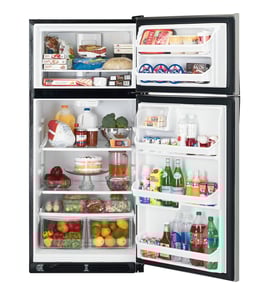


What's the average lifespan of a Kenmore refrigerator?
Most Kenmore refrigerators last 10 to 15 years. For your Kenmore 2537419440R top-mount refrigerator, regular maintenance (especially keeping airflow and seals in good shape) is what most directly determines whether it lands closer to 10 years or keeps running well beyond that; see the owner's manual for model-specific care and operating guidance.
Typical lifespan and what to expect
Kenmore refrigerator life varies by usage and upkeep, but these ranges are the most common:
- Average: 10 to 15 years
- Often achievable with good maintenance: 15+ years
- Shortened lifespan drivers: dirty condenser area, poor door sealing, frequent overloading, and delayed repairs
| Lifespan range | What it usually indicates | What to do next |
|---|---|---|
| 0 to 5 years | Installation, airflow, or early component issue | Verify power, leveling, and temperatures; follow the manual setup steps |
| 6 to 10 years | Wear items start showing up | Watch for fan noise, warm temps, and frost buildup |
| 10 to 15 years | Typical end-of-life window | Plan for repairs based on symptom and part cost |
| 15+ years | Well-maintained unit | Keep up cleaning and seal checks to avoid compressor strain |
Maintenance that extends refrigerator life
These actions reduce compressor run time and help stabilize temperatures:
- Keep door gaskets clean and sealing tightly; close gaps that let warm air in
- Maintain good airflow around the cabinet; do not block vents inside the compartments
- Keep the condenser area clean (dust and pet hair raise operating temperatures)
- Set stable temperatures and avoid frequent, large adjustments
- Address cooling changes early (warm fridge, soft ice, heavy frost) before they stress the sealed system
Why it matters
A refrigerator usually fails early from heat and airflow problems or air leaks. Both force longer run times, which increases wear on the compressor and other sealed-system components. Consistent maintenance is the simplest way to protect the most expensive systems.
Last updated: February 2026
Can you still get parts for Kenmore refrigerators?
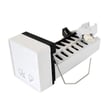
Yes. We still offer replacement parts for Kenmore refrigerators, including the Kenmore 2537419440R top-mount refrigerator. Use your model number to match parts correctly, then choose the exact replacement you need (like a gasket, light bulb, or ice maker) from the parts list.
How to make sure you get the right part
Using the full model number matters because Kenmore refrigerators can use different door gaskets, shelves, and ice maker components depending on the production run.
- Confirm the model number on the inside wall of the fresh food section (or on the cabinet frame)
- Compare your original part to the listing (shape, mounting points, color)
- Check for left vs. right orientation on rails and hangers
- Use the diagrams to verify where the part installs
- Keep your serial number handy in case multiple versions exist
For model-specific diagrams and part identification, use the 2537419440R owner's manual.
Common Kenmore 2537419440R parts customers replace
These are some frequently replaced items for cooling, sealing, and convenience features:
| What you are fixing | Common symptom | Example part on this model |
|---|---|---|
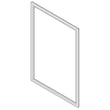
| Door not sealing | Frost, warm temps, sweating | Refrigerator gasket 241872512 |
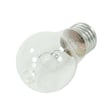
| Dim or no interior light | Light out when door opens | Refrigerator light bulb 316538904 |
| No ice or poor ice production | Small cubes, no harvest | Ice maker 5304458371 |
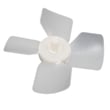
| Fan noise or warm fridge | Poor airflow, uneven temps | Refrigerator evaporator fan blade 5308000010 |
Why it matters
Using the correct, model-matched part helps restore proper temperatures, reduces frost buildup, and prevents the compressor from running longer than necessary. A good door seal and steady airflow are especially important on top-mount refrigerators.
Safety note when servicing
Before replacing electrical parts (like a light bulb or ice maker), unplug the refrigerator. On this model, turning the temperature control to “0” stops cooling but does not disconnect power to the lights and other components.
Last updated: February 2026
How do I tell what model Kenmore fridge I have?
Your Kenmore refrigerator’s model number is printed on the serial plate inside the fresh food (refrigerator) compartment. For model 2537419440R, the owner’s guide notes the serial plate is located inside the refrigerator compartment; once you find it, write down the full model number exactly as shown.
Where to look for the model tag
Check these common locations on Kenmore top-mount refrigerators:
- Inside the refrigerator compartment on a side wall (most common)
- On the ceiling of the refrigerator compartment near the light
- Inside the freezer compartment on a side wall
- Behind the lower crisper drawers on the back wall
- Behind the toe grille (kick plate) at the bottom front
For the exact location and what the label looks like on your unit, use the 2537419440R owner's manual.
What to write down (and why)
Record these items from the serial plate so we can match the correct Kenmore parts and diagrams:
- Model number (example format: 253.XXXXXXXX)
- Serial number
- Purchase date (if available)
Quick checklist
| Item on label | Example | Why it matters |
|---|---|---|
| Model number | 2537419440R | Ensures correct fit for parts like gaskets and shelves |
| Serial number | Varies | Helps identify production variations |
| Electrical info | 115V, 60 Hz | Confirms power requirements for safe installation |
Why it matters
Kenmore model numbers often look similar, but small differences can change door gaskets, shelving, ice maker components, and wiring. Using the exact model number prevents ordering the wrong replacement part and avoids repeat repairs.
Last updated: February 2026
How many cubic feet is my Kenmore refrigerator by model number?
For Kenmore model 2537419440R, the cubic-foot capacity is the refrigerator’s internal volume (fresh food plus freezer). The most accurate capacity for your exact model is listed on the model’s rating information and in the 2537419440R owner's manual.
How to find the cubic feet for your exact model
We recommend using one of these reliable methods:
- Check the specifications section in the 2537419440R owner's manual.
- Look for the model and serial label inside the refrigerator compartment; it often lists capacity or key specs.
- If you are measuring, measure the usable interior (not the outside cabinet) and subtract space taken by fixed components (like the evaporator cover and air ducts).
If you want to calculate it yourself (quick method)
Cubic feet is calculated from interior dimensions:
- Measure interior width (inches)
- Measure interior height (inches)
- Measure interior depth (inches)
- Multiply:
W x H x D = cubic inches - Divide by 1,728 to convert cubic inches to cubic feet
Example calculation (for illustration)
| Step | What to do | Example |
|---|---|---|
| 1 | Multiply interior dimensions | 28 x 60 x 28 = 47,040 in³ |
| 2 | Convert to cubic feet | 47,040 ÷ 1,728 = 27.2 ft³ |
Why “outside dimensions” give the wrong answer
Using cabinet measurements (like overall height and depth) overstates capacity because insulation, the liner, shelves, and the freezer divider take up space. That is why two top-mount refrigerators with similar outside size can have different cubic-foot ratings.
Related specs that matter when comparing capacity
- Top-mount layout: freezer volume is included in total capacity
- Shelf and bin design: affects usable storage more than the number on paper
- Airflow channels: reduce usable space but improve temperature control
Last updated: February 2026
What are the most common problems with Kenmore refrigerators?
The most common problems we see on Kenmore refrigerators like model 2537419440R are poor cooling (often airflow or defrost related), water leaks (usually a drain or door-seal issue), ice maker problems, and unusual noises or vibration. Your owner's manual also lists quick checks that solve many “no run” and temperature complaints.
Most common symptoms and what usually causes them
- Not cooling or warm temperatures: dirty condenser coils, blocked vents, evaporator fan issues, or frost buildup from a defrost problem
- Refrigerator will not run: temperature control set to “0”, unit in a defrost cycle (wait about 20 minutes), loose plug, or a tripped breaker
- Water on the floor or puddles: clogged defrost drain, door left ajar, or a leaking water supply line (if equipped)
- Ice maker not working (some models): wire signal arm stuck in the UP position, water supply turned off, or ice maker component failure
- Noises or vibration: cabinet not level, weak floor, or normal operating sounds
Quick checks we recommend first (fast, no parts)
- Confirm the refrigerator is plugged firmly into a dedicated outlet (no extension cord).
- Make sure the temperature control is not set to “0”.
- If it just stopped, wait 20 minutes to rule out the defrost cycle.
- Level the cabinet to reduce vibration and improve door sealing.
- Check door gaskets for gaps, tears, or areas that do not grip a dollar bill.
Common fixes and the parts that match the symptom
| Symptom | What to inspect | Part that may help (if failed) |
|---|---|---|
| Warm fridge, fan noise changes, poor airflow | Evaporator fan area for ice or damage | Refrigerator evaporator fan blade 5308000010 |
| Frost buildup, warming, intermittent cooling | Defrost system components | Refrigerator defrost bi-metal thermostat 5303918202 |
| Ice maker not producing | Signal arm position, water supply, ice maker module | Ice maker 5304458371 |
| Light out | Bulb and door switch operation | Refrigerator light bulb 316538904 |
Why it matters
Cooling, leaks, and ice maker issues usually trace back to airflow, defrost performance, or door sealing. Fixing the root cause protects food temperatures, reduces compressor run time, and prevents repeat icing or puddles.
Last updated: February 2026