Installation guide
 Owner’s manual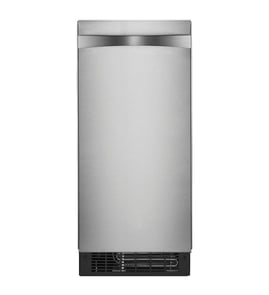





How to reset a Whirlpool refrigerator ice maker?
For the Whirlpool GI15NDXZS2 freestanding ice maker, the most reliable “reset” is a power reset: turn the unit OFF or unplug it for about 5 minutes, then restore power and allow time for a new harvest cycle. Use the GI15NDXZS2 owner's manual for the exact control locations and normal cycle timing.
Quick reset steps (safe and effective)
- Turn the ice maker OFF at the control, or unplug the power cord.
- Wait 5 minutes (this clears many control glitches).
- Restore power and turn the unit back ON.
- Confirm the water supply valve is fully open.
- Wait for production to resume; the first batch can take longer after a reset.
If it still will not make ice
These checks solve most “no ice after reset” complaints:
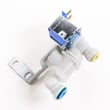
- Water flow issue: Kinked supply line, closed shutoff valve, or low household water pressure.
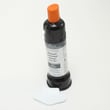
- Restricted filtration: Replace the refrigerator water filter F2WC9I1 if flow is slow or ice is hollow.
- Drain problem: Standing water in the bin area can point to a drain restriction or a failing pump.
- Recirculation problem: Weak water movement over the evaporator can indicate a pump issue.
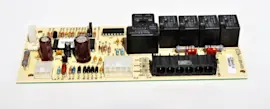
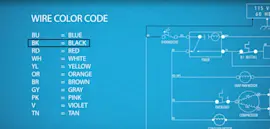
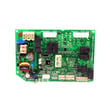
- Control issue: Intermittent operation can be caused by a failing control board or loose wiring.
What to expect after a reset
| What you see | What it usually means | What to do |
|---|---|---|
| Unit runs but no water sound | Water supply not reaching unit | Verify shutoff valve, line, filter |
| Water present but no ice slab | Cooling or circulation issue | Clean condenser area; check pump function |
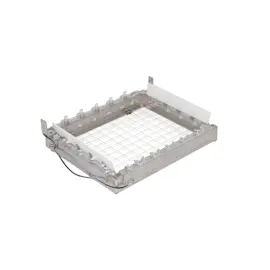
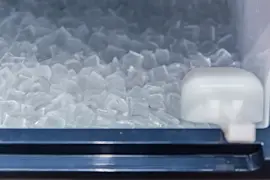
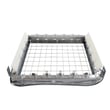
| Ice slab forms but will not cut/drop | Cutter grid or harvest issue | Inspect cutter grid and bin area |
Why it matters
Resetting clears minor electronic lockups, but ice makers still need steady water flow, proper circulation, and correct draining to complete the freeze and harvest cycle. A quick reset plus basic water-flow checks prevents unnecessary part replacement.
Last updated: January 2026
What is the average lifespan of an ice maker?
Most freestanding ice makers like the Whirlpool GI15NDXZS2 last about 7 to 10 years with normal use. With clean, filtered water and routine cleaning, it’s common to reach 10 to 15 years; poor water quality and skipped maintenance can shorten life significantly.
Typical lifespan ranges
Ice maker life depends on whether it’s a built-in style unit, how hard the water is, and how often it runs.
- 7 to 10 years: typical for many residential freestanding ice makers
- 10 to 15 years: common with consistent cleaning and good water quality
- 5 to 7 years: common when water is hard, ventilation is poor, or the unit runs nonstop
| Usage and care level | What we typically see | What usually wears first |
|---|---|---|
| Light use, filtered water, regular cleaning | 10 to 15 years | Water system parts, sensors |
| Average use, basic cleaning | 7 to 10 years | Pumps, control board |
| Hard water, little cleaning | 5 to 7 years | Scale-related clogs, pumps |
What shortens an ice maker’s life
These are the most common life-reducers we see on freestanding ice makers:
- Hard water scale buildup (mineral deposits)
- Dirty condenser area and restricted airflow
- Running with low water flow or a partially clogged filter
- Drain issues that leave standing water in the sump
- Power surges affecting electronics
Maintenance that extends lifespan
Follow the cleaning and care intervals in the GI15NDXZS2 owner’s manual. For many owners, these habits make the biggest difference:
- Replace the water filter on schedule (a clogged filter strains the water system); use the refrigerator water filter F2WC9I1 when applicable
- Clean and descale the water system regularly
- Keep the unit level so water flows and drains correctly
- Maintain airflow around the cabinet and keep the condenser area clean
- Address slow draining early (a weak drain pump can cause repeated cycle problems)
Why it matters
Ice makers fail early most often from water quality and heat. Clean, filtered water reduces scale and clogs, and good ventilation reduces compressor and pump run time, which directly impacts long-term reliability.
Last updated: January 2026
Is it worth replacing the ice maker on a refrigerator?
Yes, replacing a refrigerator ice maker is worth it when the refrigerator is in good overall condition and the fix is limited to a serviceable part (like a pump, control, or water filter). If the refrigerator is near end-of-life or has sealed-system issues, replacement usually makes more sense. For Whirlpool GI15NDXZS2, we focus on targeted repairs using the correct parts and procedures in the GI15NDXZS2 owner’s manual.
Quick decision checklist
- The refrigerator cools normally and holds safe temperatures.
- The ice maker problem is isolated (no widespread electrical or cooling failures).
- You can confirm water supply is on and the inlet line is not kinked.
- The repair is a common wear item (filter, pump) rather than a major system.
- The unit is under about 10 years old (typical refrigerator lifespan).
- The repair cost is well under half the cost of replacing the appliance.
Common “replace the part” scenarios (often worth it)
Many ice issues come from water flow, circulation, or controls. On GI15NDXZS2, these parts are commonly involved:
- Refrigerator water filter F2WC9I1 if ice is small, hollow, cloudy, or production is slow.
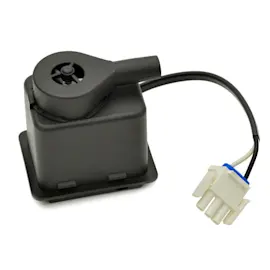
- Ice maker recirculation pump W11542867 if water is not moving across the evaporator/grid properly.
- Ice maker drain pump W11542868 if the unit will not drain or you see standing water.
- Ice maker electronic control board W11034363 if the unit is dead, erratic, or not cycling correctly.
When replacement is usually the better value
| Situation | What it usually means | Typical best choice |
|---|---|---|
| Refrigerator is not cooling reliably | Bigger system problem than ice | Replace refrigerator or repair cooling first |
| Multiple major failures at once | Costs add up fast | Replace appliance |
| Frequent repeat ice maker failures | Underlying water quality or installation issue | Fix root cause, then decide |
Why it matters
An ice maker depends on stable cooling, correct water flow, and proper drainage. Replacing only the failed component restores ice production without paying for a full appliance replacement, but only when the rest of the system is healthy.
Last updated: January 2026
Why is my free standing ice maker not making ice?
If your Whirlpool GI15NDXZS2 freestanding ice maker runs but doesn’t make ice, the most common causes are no water supply, a water circulation problem, or a freeze issue at the evaporator plate. Start by confirming water is reaching the unit, then check circulation and drainage.
Quick checks (most fixes start here)
- Make sure the ice maker is turned on and not in a cleaning or standby mode.
- Confirm the water supply valve is fully open and the supply line is not kinked.
- Check that the water reservoir has water.
- Look at the evaporator plate: a dry plate with a full reservoir points to a circulation problem.
- Verify the drain is not backing up (a drain issue can interrupt normal operation).
What the symptoms usually mean
| What you see | What it points to | What to do next |
|---|---|---|
| Reservoir empty | No water coming in | Check shutoff valve, line kinks, inlet screen, and household water pressure |
| Reservoir full, evaporator plate dry | Water not recirculating | Inspect/replace the ice maker recirculation pump W11542867 |
| Water present, but cubes never form or are very thin | Poor freezing or poor water flow | Clean condenser area, confirm airflow, descale if needed, then recheck circulation |
| Unit makes ice but stops with water in bin area | Drain problem | Inspect/replace the ice maker drain pump W11542868 if it’s not pumping |
Step-by-step troubleshooting we recommend
- Check water supply first: verify the shutoff valve is open and the line is not pinched.
- Confirm reservoir fill: if it stays empty, focus on the supply side.
- Check circulation: if the reservoir is full but the evaporator plate stays dry, the recirculation pump is the lead suspect.
- Check drainage: standing water or slow draining can prevent normal cycling.
- Review model-specific operating checks in the GI15NDXZS2 owner's manual (startup, cleaning mode, and normal cycle behavior).
Why it matters
An ice maker that runs without making ice is usually protecting itself from running dry, overheating, or cycling with poor water movement. Fixing the water supply, recirculation, or drain issue restores normal cube formation and helps prevent pump and control problems.
Last updated: January 2026