Error Codes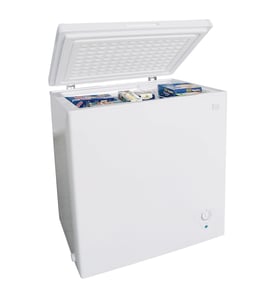



How do I reset a chest freezer?
To reset your Kenmore chest freezer model 2539187110, unplug it (or switch the breaker off) for 30 seconds, then restore power and let it run. If the power light or alarm keeps blinking after the reset, the freezer likely has an electrical or sealed-system issue that needs diagnosis.
Quick reset steps (safe and effective)
- Move food to another freezer or keep the lid closed to hold temperature.
- Turn the temperature control to a mid setting.
- Disconnect power for 30 seconds.
- Restore power and listen for the compressor to start within a few minutes.
- Allow 4 to 24 hours for temperatures to stabilize after any power interruption.
If lights keep blinking after the reset
A blinking light or alarm usually means the freezer is not reaching temperature or a component is not starting reliably.
Common causes to check first:
- Warm cabinet from a recent outage, lid left open, or heavy warm food load
- Poor airflow around the cabinet (blocked vents, pushed tight to a wall)
- Dirty condenser area (if accessible) causing poor heat release
- Weak start components or compressor protection tripping (clicking on and off)
What you can test next
Use these checks to narrow it down before replacing parts:
| What you notice | What it often means | What to do |
|---|---|---|
| Compressor hums, then clicks off | Overload tripping or hard start | Unplug 10 minutes, retry; if repeats, test start circuit |
| Runs constantly, still warm | Cooling system problem or airflow issue | Verify lid seal, clear airflow, allow 24 hours |
| No sound at all | Power/control issue | Check outlet, breaker, cord, control setting |
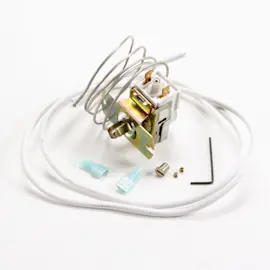
For electrical testing, we recommend using a meter correctly and safely; see how to use a multimeter to test electrical parts video.
Why it matters
A proper reset clears temporary control glitches after a power surge or outage. If the freezer still alarms or blinks, continuing to run it can lead to food loss and can point to a failing start circuit, wiring issue, or cooling-system problem.
Last updated: January 2026
How many cubic feet is a Kenmore model 2539187110 freezer?
The Kenmore chest freezer model 2539187110 has a fixed cubic-foot capacity, but the capacity value is not included in the model parts information we use for parts lookup. The most reliable way to get the exact number is to calculate the interior volume and adjust for unusable space.
Get an accurate cubic-foot estimate (10 minutes)
Measure the inside of the freezer cabinet (not the outside).
- Measure interior length, width, and average height in inches
- Multiply:
L × W × Hto get cubic inches - Convert to cubic feet: divide by 1,728
- Subtract 10% to 20% for the compressor hump, walls, and air space
- If you use a hanging basket, subtract a little more for the space it occupies (see basket 216848200)
Quick reference: what the numbers mean
Use this to sanity-check your calculation for a Kenmore chest freezer.
| Capacity (cu. ft.) | Typical use | What it feels like |
|---|---|---|
| 5 to 9 | Small overflow | A few grocery bags at a time |
| 10 to 14 | Family storage | Weekly bulk shopping |
| 15 to 20 | Large storage | Big batches, seasonal meat |
Why it matters
Cubic feet is about storage planning, not just footprint. A freezer with baskets and a compressor hump can have less usable space than the raw interior measurements suggest.
Parts that affect usable space and organization
These parts do not change the rated capacity, but they change how you use the space day to day.
- Basket 216848200 for sorting and quick access
- Freezer out panel 216113121 if the exterior panel is damaged and affecting lid alignment
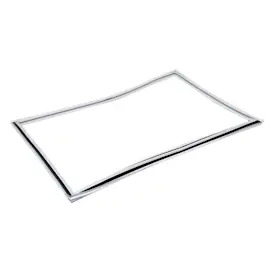
- Molding 216117700 if trim damage is interfering with the lid seal
Last updated: January 2026
What are the most common issues with 2539187110?
The most common issues we see with the Kenmore 2539187110 chest freezer are warm temperatures or no cooling, excessive frost buildup, and power or start problems. Many of these trace back to airflow and lid sealing, temperature control settings, or compressor start components.
Most common symptoms and what they usually mean
- Not cold enough or thawing: lid not sealing, thermostat set too warm, heavy frost restricting heat transfer, or a sealed-system/compressor issue
- Runs constantly: warm room location, frequent lid openings, overpacked cabinet, dirty condenser area (if equipped), or low refrigerant
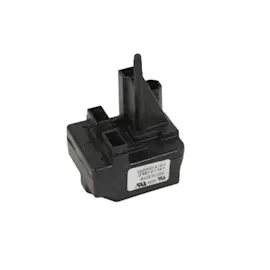
- Clicking but not running: compressor start/overload problem such as a failed overload protector 216100113
- Heavy frost on walls: lid gasket leak, humid air entering, or lid left ajar
- No power or intermittent power: outlet/cord issue, control issue, or wiring connection problem
Quick checks we recommend first (no parts needed)
- Confirm the freezer is on a dedicated, working outlet; reset any tripped breaker.
- Set the control colder and give it 24 hours to stabilize.
- Check the lid closes squarely; look for gaps, torn gasket areas, or ice preventing closure.
- Reduce load and improve air circulation; avoid packing items tightly against the walls.
- If frost is heavy, unplug and fully defrost; then restart and monitor temperatures.
Parts that commonly relate to these problems
| Symptom | Likely area | Example part on this model |
|---|---|---|
| Clicking, won’t start | Compressor start protection | Overload protector 216100113 |
| Warm temps with long run time | Sealed system | Compressor 5304443412, filter drier 5303305677 |
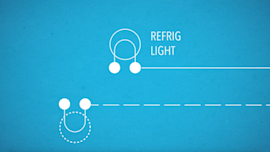
| Light/indicator concerns | Indicator circuit | Signal light 216598300 |
Why it matters
Catching a lid-seal or start-component problem early prevents food loss and reduces compressor strain, which is the most expensive repair area on a chest freezer.
Last updated: March 2026