Owner’s manual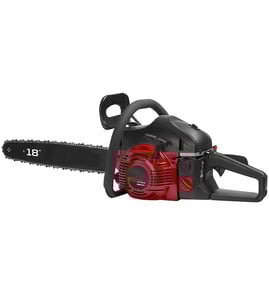









How do I find out what Craftsman chainsaw I have?
To find out which Craftsman chainsaw you have, locate the model number tag on the saw and match it to the parts listing. For this page, the model is Craftsman 358351700; once you confirm that number on your tag, you can choose the correct parts and diagrams using the 358351700 owner's manual.
Where to look for the model number tag
On most Craftsman gas chainsaws, the model number is printed on a label or stamped into the housing. Check these common spots:
- Side of the engine/motor casing (near the starter cover)
- Rear handle area (back side of the saw)
- Bottom of the saw body (underside near the oil and fuel tanks)
- Near the bar mount area (behind the clutch cover on some versions)
How to record the model number correctly
Write the model number exactly as shown so you get the right chainsaw parts (fuel system, ignition, clutch, and oiling components can vary by model).
- Copy every digit and letter in order (no spaces added)
- Look for extra suffixes or revision numbers on the same label
- If the label is dirty, wipe it clean and use a flashlight at an angle
- Take a photo before ordering parts
Quick check: model number vs. what it affects
| What you’re doing | Why the exact model number matters |
|---|---|
| Ordering a chain or bar parts | Pitch, gauge, and drive link count can differ |
| Fixing a fuel leak | Fuel line routing and fittings vary |
| Troubleshooting hard starting | Carburetor and ignition parts can be model-specific |
Why it matters
Using the exact model number prevents ordering the wrong chainsaw parts and helps you follow the correct diagrams and service steps for your Craftsman saw.
If your saw is hard to identify because the tag is missing or unreadable, our DIY article chainsaw common questions covers other ways to narrow it down by features and symptoms.
Last updated: February 2026
How to adjust a Craftsman chainsaw?
To adjust your Craftsman gas chainsaw model 358351700, we focus on two common adjustments: chain tension (so the chain runs safely on the bar) and carburetor idle/mixture (so the engine runs smoothly). Start with chain tension first, then fine-tune idle if needed using the 358351700 owner's manual.
Adjust chain tension (most common “adjustment”)
- Turn the engine off and let the bar and chain cool.
- Loosen the bar nuts slightly so the bar can move.
- Turn the chain tension screw until the chain is snug on the bar but still moves freely by hand (with gloves).
- Lift the bar nose up, hold it up, then tighten the bar nuts.
- Recheck tension; a properly tensioned chain should not sag under the bar, and the drive links should stay engaged in the bar groove.
Quick checks
- Chain should pull around the bar smoothly by hand.
- Chain should not hang below the bar.
- After tightening the bar nuts, tension often changes slightly; recheck.
If the saw won’t idle right after tensioning
If the chain creeps at idle or the engine stalls, adjust the idle speed screw (and mixture screws if equipped) in small increments.
- If the chain moves at idle, lower idle speed slightly.
- If the engine dies at idle, raise idle speed slightly.
- If it runs rough even with a stable idle, clean the air filter and inspect the fuel system.
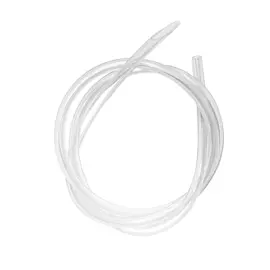
A dirty air filter or restricted fuel delivery can mimic a “needs adjustment” problem. For this model, common service parts include the engine air filter 530057925 and fuel line components such as the fuel line, large 530069216.
Troubleshooting guide: what you see vs what to adjust
| Symptom | Most likely adjustment/action | What to check next |
|---|---|---|
| Chain sags under bar | Increase chain tension | Bar nuts tight, bar nose held up |
| Chain binds, won’t move by hand | Decrease chain tension | Bar groove debris, chain condition |
| Chain spins at idle | Lower idle speed | Clutch condition, correct idle |
| Stalls at idle | Raise idle speed | Air filter, fuel flow |
Why it matters
Correct chain tension helps prevent derailment, poor cutting, and premature wear on the bar, chain, and clutch. A stable idle keeps the saw safer to handle and reduces clutch and chain brake stress.
Last updated: February 2026
Should I use 40 1 or 50 1 fuel for a chainsaw?
For the Craftsman 358351700 gas chainsaw, use the fuel-to-oil ratio specified in the 358351700 owner's manual. If you do not have that spec handy, 50:1 is the most common modern baseline when using quality 2-cycle oil, while 40:1 adds extra lubrication but can increase smoke and carbon buildup.
Quick comparison: 40:1 vs 50:1
| Mix ratio | Oil per 1 gallon of gas | What you’ll notice | Best use case |
|---|---|---|---|
| 40:1 | 3.2 oz | More lubrication; more smoke and deposits | Older engines, heavy cutting, extra margin |
| 50:1 | 2.6 oz | Cleaner running; less smoke | Most newer 2-cycle designs and oils |
What we recommend for reliable starting and long engine life
- Follow the ratio in the 358351700 owner's manual first; that is the target for carburetor tuning and lubrication.
- Use fresh, ethanol-free gas when possible and a name-brand 2-cycle oil rated for air-cooled engines.
- Mix only what you will use in 30 days (or use a fuel stabilizer if you must store it longer).
- Measure oil accurately; “a little extra” can foul the spark plug and spark arrestor.
- If the saw smokes heavily, loads up at idle, or loses power, switch back to the manual’s ratio and service the air filter.
Why it matters
The mix ratio controls lubrication for the piston and crank bearings and also affects combustion temperature and carbon buildup. Too little oil risks scoring the cylinder; too much oil can cause hard starting, plug fouling, and a clogged muffler screen.
If your chainsaw is hard to start after changing fuel mix
Use these fast checks before adjusting anything:
- Drain old fuel and refill with a correctly measured mix.
- Clean or replace the air filter.
- Inspect fuel lines for cracking or softness; replace if leaking (example part: ayp lawn & garden equipment fuel line, large 530069216).
For more step-by-step help, see tips for a hard to start chainsaw.
Last updated: February 2026