Installation guide
 Owner’s manual
 Error Codes


How to reset a Whirlpool WDF760SADM1 dishwasher?
To reset your Whirlpool WDF760SADM1 dishwasher, we recommend canceling the current cycle and letting the unit drain. On this model family, the most reliable reset is using the CANCEL/DRAIN function, then restarting the cycle with START/RESUME.
Quick reset (most common)
- Press CANCEL/DRAIN.
- Close the door firmly.
- Let the dishwasher run the drain (typically about 2 minutes).
- Select your cycle again.
- Press START/RESUME to begin.
If the dishwasher won’t resume after you open the door
This model requires START/RESUME any time the door is opened during a cycle (including during a delay countdown).
- Close the door fully (latch engaged).
- Press START/RESUME.
- If START/RESUME is on the top of the door, close the door firmly within 3 seconds after pressing it.
Control lock can look like a “stuck” dishwasher
If the controls are locked, the dishwasher may ignore button presses.
- Press and hold SANI RINSE/CONTROL LOCK (or DELAY, depending on your console) for 3 seconds to toggle Control Lock.
- Try starting a cycle again.
Reset options at a glance
| Situation | What to do | What you should see |
|---|---|---|
| Cycle is acting up or you want to restart | Press CANCEL/DRAIN, let it drain, then START/RESUME | Drain runs, then you can restart |
| Door opened mid-cycle | Close door, press START/RESUME | Cycle resumes |
| Buttons don’t respond | Turn Control Lock off (hold 3 sec) | Lock light turns off |
Why it matters
A proper reset clears a stalled cycle and forces the dishwasher to drain safely. It also prevents “no start” issues caused by the door not being latched or START/RESUME not being pressed after an interruption.
For model-specific button locations and control-lock labeling, use the owner's manual.
Last updated: February 2026
Is the WDF760SADM1 a good dishwasher?
Yes. The Whirlpool WDF760SADM1 is a solid, dependable dishwasher for most households because it uses a modern filtration system designed to optimize water and energy use while still delivering strong cleaning performance when the filters are installed correctly. See the owner's manual for cycle and feature details.
What “good” means for this model
A dishwasher is “good” when it cleans consistently, dries well, runs reliably, and is easy to maintain. For the WDF760SADM1, the manual highlights features that directly support those goals:
- A filtration system designed to minimize sound and optimize water and energy conservation
- Filters that must be properly installed and locked for best cleaning
- Rinse aid support for improved drying performance
- Cycle-end indicators (Clean, and Sanitized on models with Sani Rinse)
Quick checklist to get the best performance
These steps make the biggest difference in real-world results:
- Confirm the upper filter assembly is locked in place (it should not spin freely)
- Keep the lower filter seated securely before running a cycle
- Use rinse aid for noticeably better drying, especially on plastics
- Use a quality detergent tablet or pack for everyday loads
- Clean the dishwasher monthly to reduce hard-water filming and odors
Common “good vs. not good” symptoms and what they usually mean
| What you notice | Most common cause | What to do first |
|---|---|---|
| Dishes still gritty | Filter not seated or clogged | Remove, rinse, and reinstall filters correctly |
| Wet dishes after cycle | No rinse aid or poor venting | Fill rinse aid dispenser; use heated dry options if available |
| Sanitized light flashes (if equipped) | Cycle interrupted or water not heated enough | Rerun cycle; avoid opening door mid-cycle |
| Not draining well | Kinked hose, disposer plug, or air gap clog | Check hose routing and clean air gap |
Why it matters
Dishwashers like the Whirlpool WDF760SADM1 are designed to save water and energy, but that efficiency depends on proper filtration and correct detergent and rinse aid use. When those basics are right, cleaning and drying results improve dramatically.
Last updated: February 2026
What's the most common problem with a Whirlpool dishwasher?
For a Whirlpool dishwasher like model WDF760SADM1, the most common problems we see are not draining, poor cleaning, and leaks. Many of these start with loading, detergent, and basic checks (power, door latch, water supply) outlined in the owner's manual.
Most common issues (and what usually causes them)
- Not draining: kinked drain hose, disposer knockout plug still in place, or a clog in the drain path
- Poor cleaning: dishes blocking spray, overlapping items, or detergent issues (old detergent or wrong type)
- Leaks: worn door seals, loose hoses, or over-sudsing from incorrect soap
- Won’t start or stops mid-cycle: door not fully latched, power interruption, or a paused cycle needing START/RESUME
- Excess suds/foam: using hand soap or too much detergent; can prevent proper filling and washing
Quick checks we recommend first
- Confirm the door closes and latches fully; nothing should block the detergent dispenser.
- Verify power: check the breaker or fuse if the dishwasher is dead or stops.
- Make sure water is on: the shutoff valve must be open, especially after installation.
- Check the overfill protection float: it should move freely up and down; press down to release it.
- Look for drain restrictions: check for kinks and clogs; if connected to a disposer, confirm the knockout plug was removed.
Parts that commonly solve these symptoms on WDF760SADM1
| Symptom | Common part to inspect/replace | What it affects |
|---|---|---|
| Water on floor at the door | Dishwasher door seal W11177741 | Seals the tub to the door to prevent leaks |
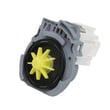
| Standing water in tub | Dishwasher drain pump WPW10348269 | Pushes water out through the drain hose |
| Poor drying or cool water | Element assembly W10703867 | Heats water and supports drying performance |
| Not filling or fills slowly | Dishwasher water inlet valve WPW10327249 | Controls water entering the dishwasher |
Why it matters
Drain, wash, and leak problems often get worse over time. A small clog, a loading issue, or the wrong detergent can lead to dirty dishes, odors, or water damage. Following the loading and detergent guidance in the manual helps prevent repeat failures.
Helpful DIY guidance
- Use our how to reset a Whirlpool dishwasher steps if the control seems stuck or a cycle won’t resume.
- If you’re seeing flashing lights or a code, match it using Whirlpool dishwasher error codes.
Last updated: February 2026
How to fix f7 E1 Whirlpool dishwasher?
On a Whirlpool WDF760SADM1 dishwasher, an F7 E1 error is typically tied to a wash performance or water sensing issue. We fix it by resetting the control, confirming proper water supply and drainage, then checking the wash system components (filters, spray arm, and sensors) for blockage or failure.
Quick reset and basic checks (start here)
- Turn off power at the breaker for 1 minute, then restore power.
- Start a short cycle; after about 2 minutes, open the door and confirm there is water in the bottom of the tub.
- Confirm the door closes tightly and latches.
- Confirm the water supply valve to the dishwasher is fully open.
- Check the drain hose for kinks and make sure the disposer inlet knockout plug is removed (if connected).
Clean-out steps that clear many F7 E1 situations
A restricted wash path can trigger performance-related errors.
- Remove and clean the filter area (rinse debris off under running water).
- Inspect the lower spray arm for clogged jets and clear them.
- Check for standing water and remove any food obstruction near the sump.
Helpful model-specific parts to consider if cleaning does not help:
- Dishwasher drain pump WPW10348269
- Dishwasher water inlet valve WPW10327249
- Lower sa w/ WPW10491331
- Dishwasher turbidity sensor WPW10705575
What to test next (symptom-based)
| What you notice | Most likely area to check | Common fix |
|---|---|---|
| Little or no water entering | Fill system | Verify supply; replace inlet valve if weak |
| Water remains in tub | Drain system | Clear hose/air gap; replace drain pump if not pumping |
| Dishes not clean, odd wash sound | Wash circulation/spray | Clean spray arm and filters; inspect pump/sump |
| Error returns after reset | Sensor/control feedback | Check turbidity sensor and wiring connections |
Why it matters
F7 E1 often shows up when the dishwasher cannot maintain normal wash action. Fixing restrictions (filters, spray arm) and confirming correct fill and drain protects the circulation system and helps restore normal cycle performance.
For cycle checks and operating steps specific to this model, use the owner's manual. For installation-related drain and power checks, use the installation guide.
Last updated: February 2026