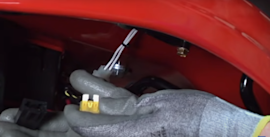
Installation guide
 Owner’s manual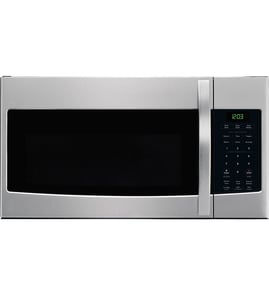


What is the average lifespan of a GE microwave?
A GE microwave, including the GE JVM3160RF3SS microwave/hood combo, typically lasts 7 to 10 years with normal household use. Lifespan depends most on how often it runs, how clean the cavity and venting stay, and whether the door and controls are treated gently.
These are the biggest factors we see that shorten or extend microwave life:
- Heavy daily use (multiple long cook cycles per day) wears components faster
- Running the microwave empty can damage internal components
- Grease buildup in an over-the-range unit can stress the venting and internal cooling
- Door slamming or misalignment can wear door latches and safety interlocks
- Power issues (surges, loose outlet, shared circuit overload) can stress the control board
For model-specific operating and cleaning guidance, follow the JVM3160RF3SS owner’s manual.
- Wipe spills quickly; grease and sugar splatter can bake onto surfaces
- Keep the reusable vent filters clean (monthly is a good target for most kitchens)
- Use microwave-safe cookware; avoid metal trim that can cause arcing
- Close the door gently so the interlock system stays aligned
- If you notice arcing or burn marks, stop using it until the cause is corrected
If you need safety reminders and common misuse to avoid, see never do these things with a microwave.
| Microwave age | Typical recommendation | Why |
|---|---|---|
| 0 to 5 years | Repair is often worthwhile | Parts and labor usually make sense |
| 6 to 10 years | Depends on the failure | Higher chance of multiple worn parts |
| 10+ years | Replace is often the better value | Efficiency and reliability typically drop |
A microwave/hood combo like the GE JVM3160RF3SS does double duty: cooking plus ventilation. Keeping the cavity clean and the venting system maintained helps prevent overheating, nuisance shutdowns, and premature part wear.
Last updated: January 2026
What kind of ventilation does JVM3160RFSS need?
The GE JVM3160RF3SS microwave/hood combo can be installed in any of three ventilation setups: recirculating (ductless), outside top exhaust (vertical duct), or outside back exhaust (horizontal duct). The right choice depends on whether you have existing ductwork and where it runs. See the JVM3160RF3SS installation guide for the exact configuration steps.
- Recirculating (ductless): air is filtered and returned to the kitchen; no exterior duct needed.
- Outside top exhaust: vents upward through the cabinet above into a vertical duct.
- Outside back exhaust: vents straight out the back into a horizontal duct through the wall.
- Grease filters are used in all setups to capture grease from cooktop cooking.
- A charcoal filter is used only for recirculating setups to help reduce odors.
| Venting setup | Duct required | Where air goes | Typical best use |
|---|---|---|---|
| Recirculating | No | Back into room (front/top discharge depending on design) | No exterior duct available |
| Outside top exhaust | Yes | Up through cabinet to duct | Duct runs upward to roof/attic |
| Outside back exhaust | Yes | Out through rear wall | Duct runs straight through wall |
If you are setting up (or maintaining) a recirculating installation, the charcoal filter is the key wear item.
Correct venting improves smoke and odor removal, helps protect cabinets from grease buildup, and supports proper airflow around the vent fan. Choosing the wrong vent direction can also create noisy airflow, poor performance, or installation fit issues.
Last updated: January 2026
What type of appliance is a JVM3160RFSS?
The GE JVM3160RF3SS is a microwave/hood combo (an over-the-range microwave oven with a built-in vent fan and cooktop light). “JVM3160RFSS” is typically a shortened way people refer to this same JVM3160 series unit.
Because GE model numbers can be very similar, we recommend confirming the full model tag before ordering parts or looking up specs.
- Open the microwave door and look for the model/serial label inside the oven
- Match the full model number character-for-character (for example, JVM3160RF3SS)
- Use the full model number when checking diagrams, troubleshooting, or installation details
- If your tag ends in different letters/numbers than “RF3SS,” treat it as a different model
For model-specific identification details and feature basics, use the JVM3160RF3SS owner’s manual.
This appliance does two jobs in one unit: it heats food like a countertop microwave and it also works like a range hood to move air, steam, and odors.
| Feature | What it does | Where you use it |
|---|---|---|
| Microwave cooking | Heats/defrosts food | Inside the oven cavity |
| Vent fan | Pulls steam/smoke from the cooktop area | Under the microwave |
| Surface light | Lights the cooktop | Under the microwave |
| Filters | Trap grease (and odors if recirculating) | Bottom/top grille area |
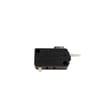
If your issue is related to the door not closing, not starting, or acting like it is “open,” common door-safety components include switches and latches. For example, the microwave door interlock switch WB24X10146 is one of the door interlock switches used on this model.
Using the correct appliance type and full model number helps ensure you get compatible GE microwave/hood combo parts (filters, switches, bulbs, control components) and the right installation clearances.
Last updated: January 2026