 Owner’s manual
 Error Codes

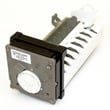


What model Kenmore refrigerator do I have?
Your Kenmore Elite refrigerator’s model number is printed on the model and serial number sticker inside the fresh food (refrigerator) section. For model 59672283201, the sticker is typically on the left interior wall; match that number exactly when looking up parts and diagrams in the owner's manual.
Where to find the model number sticker
Check these common locations first (fresh food section unless noted):
- Left side wall (most common for this Kenmore Elite style)
- Upper side wall near the control housing
- Behind or beside the crisper drawers
- Ceiling area near the light cover
- Freezer compartment side wall (less common)
How to read the number (and why it matters)
Kenmore model numbers are the key to getting the right replacement parts (ice maker, water valve, shelves) and the correct troubleshooting steps.
What to record
- Model number (use all digits, no spaces)
- Serial number (helps identify production run)
- Purchase date (useful for warranty and service history)
Quick check: does your sticker match this page?
If your sticker shows the same model number below, you are on the right parts list.
| Item | What you should see |
|---|---|
| Brand | Kenmore |
| Model number | 59672283201 |
| Refrigerator type | Bottom-mount |
If the sticker is hard to read
Use a flashlight and take a close-up photo; then compare characters one by one. If a digit is unclear, avoid ordering parts until the full model number is confirmed because similar Kenmore models can use different shelves, switches, and ice maker assemblies.
Why it matters
A one-digit mismatch can lead to a part that does not fit, such as the wrong door switch or ice maker mounting style.
Last updated: February 2026
What is the average lifespan of a Kenmore 59672283201 Elite refrigerator?
A Kenmore Elite bottom-mount refrigerator like model 59672283201 typically lasts 10 to 15 years. Regular maintenance (cleaning condenser coils, keeping door seals tight, and maintaining proper temperatures) helps you reach the high end of that range and reduces major failures such as sealed-system or compressor problems.
Typical lifespan and what affects it
Most refrigerators in this class land in the 10 to 15 year window; how long yours lasts depends mainly on heat load, airflow, and how hard the sealed system has to work.
- Keep condenser coils clean to reduce compressor run time
- Make sure doors close and seal fully (no warm-air leaks)
- Avoid overpacking; blocked vents cause uneven cooling and longer run times
- Set stable temperatures (about 37°F fresh food, 0°F freezer)
- Fix water leaks or ice maker issues early to prevent secondary damage
Repair vs. replace: a quick way to decide
Use this simple comparison to decide whether a repair is worth it as the unit ages.
| Refrigerator age | What we typically recommend | Why |
|---|---|---|
| 0 to 5 years | Repair is usually worthwhile | You are early in the service life |
| 6 to 10 years | Repair if the issue is isolated | Many parts repairs still make sense |
| 11 to 15 years | Compare repair cost to replacement value | Higher chance of multiple wear items |
| 16+ years | Replace unless it is a minor fix | Efficiency and reliability drop |
Model-specific notes from the manual
Your owner's manual for the 596.7228 series emphasizes operating and maintaining the refrigerator according to the instructions. It also outlines warranty coverage (including a longer sealed-system warranty period), which is useful when you are evaluating a cooling or compressor-related failure.
Why it matters
Lifespan is mostly about protecting the sealed refrigeration system (compressor, refrigerant, and tubing). When airflow is restricted or seals leak, the compressor runs hotter and longer, which shortens overall life and increases the chance of expensive repairs.
Last updated: February 2026
How to tell cubic feet of Kenmore refrigerator by model number?
For Kenmore Elite model 59672283201, the model number by itself usually does not state the exact cubic-foot capacity. The most reliable way is to look up the capacity in the specifications section of the owner's manual, or calculate an approximate capacity by measuring the interior compartments.
Fast ways to find capacity
- Check the specs in the manual: Look for “capacity” or “product specifications” in the owner's manual.
- Find the model/serial label: For this refrigerator family, the label is inside the fresh food section on the left wall.
- Measure and calculate (approximate): Measure usable interior space and convert cubic inches to cubic feet.
- Use compartment totals: Add fresh food and freezer volumes if your spec sheet lists them separately.
- Ignore “number hints”: Some model numbers contain digits that look like capacity, but they are not a dependable rule.
How to calculate cubic feet (approximate)
Use this formula for each compartment (refrigerator and freezer), then add them:
| What to do | What to measure | Formula |
|---|---|---|
| Measure interior space | Height, width, depth (inches) of usable space | H x W x D = cubic inches |
| Convert to cubic feet | Use the conversion factor | cubic inches ÷ 1728 = cubic feet |
| Total capacity | Add compartments | fresh food + freezer |
Measuring tips
- Measure usable space, not the outside cabinet size.
- Subtract areas taken up by fixed components (air ducts, light housing, ice maker housing).
- Use the same units (inches) for all measurements.
Why it matters
Capacity helps you compare refrigerator sizes, choose the right storage layout, and confirm fit for accessories such as shelves and bins. For accurate specs tied to 59672283201, the owner's manual is the best reference.
Last updated: February 2026
What are the common problems with Kenmore 59672283201 Elite refrigerators?
Common issues on the Kenmore Elite 59672283201 bottom-mount refrigerator are warm temperatures from airflow or defrost problems, water leaks tied to the water supply/valve or low water pressure, ice maker troubles, and “new” noises that are often normal compressor or defrost sounds. Use the owner's manual troubleshooting chart to match symptoms to the most likely cause.
Most common symptoms and what usually causes them
- Food too warm: dirty condenser coils, blocked rear air grille, door not sealing, controls set too warm, frequent door openings.
- Runs too often: dirty coils, door not closing, controls need adjustment, warm room conditions.
- Water leaking: water connection issues (plastic tubing is more leak-prone), low water pressure, or a valve problem.
- Ice maker not working well: low water pressure, ice maker turned on with no water supply, inlet tube icing.
- Noises seem louder than normal: compressor hum/pulsing, air rushing (fans), gurgling/boiling (refrigerant), defrost heater sizzling or popping.
Quick checks we recommend first (no parts needed)
- Confirm door seal and closure: remove obstructions (bins, drawers, oversized containers) and check gasket contact.
- Clean condenser coils: dirty coils are a top cause of warm temps and long run times.
- Check airflow: keep the rear air grille clear and avoid overpacking.
- Verify control settings: adjust temperatures per the manual and allow 24 hours to stabilize.
- For ice and water: confirm household water pressure is adequate; reverse osmosis systems can reduce pressure and cause hollow cubes or slow dispensing.
When a part is commonly involved
| Symptom | Common part area | Example part for this model |
|---|---|---|
| Ice maker not making ice | Ice maker assembly | Refrigerator ice maker D7824706Q |
| Slow water flow or no fill | Water inlet valve / supply | Refrigerator valve WP12544002 |
| Cooling issues that persist after cleaning and settings | Sealed system / compressor start components | Refrigerator compressor W10160407 |
Why it matters
Catching airflow, coil-cleaning, and door-seal issues early prevents temperature swings that spoil food and reduces compressor run time, which also helps control noise and energy use.
Last updated: February 2026
Why is my Kenmore 59672283201 Elite refrigerator leaking water out of the bottom?
Water leaking from the bottom of your Kenmore 59672283201 Elite refrigerator is usually caused by a defrost drain that is clogged and overflowing into the fresh food section, or a leak in the ice maker or water supply connection. We focus first on the drain, then the water line and inlet valve.
Quick checks (fastest way to narrow it down)
- Look for ice or a sheet of frost on the freezer floor; that points to a defrost drain issue.
- Check the water supply connection behind the refrigerator for drips and mineral tracks.
- Inspect the tubing to the ice maker/dispenser for cracks, loose fittings, or rubbing points.
- Confirm water pressure is in the correct range (typically 20 to 100 psi; 35 psi minimum if a water filter is installed).
- If plastic tubing was used for the hookup, plan to replace it with 1/4-inch copper tubing (plastic is more likely to leak).
Most common causes and what to do
| What you notice | Most likely cause | What we recommend |
|---|---|---|
| Water appears after a defrost cycle; ice on freezer bottom | Clogged/iced defrost drain | Thaw the drain area, then flush the drain with hot water until it flows freely |
| Slow drip at the back near the wall | Loose compression nut or kinked line | Re-seat the line, hand-tighten first, then snug with a wrench (do not overtighten) |
| Leak only when ice maker fills | Water inlet valve or ice maker fill tube leak | Inspect valve outlet tubing and fittings; replace the valve if it seeps |
| Puddle under front after door openings | Door not sealing, excess condensation | Clean and inspect door gaskets; reduce humidity and limit door-open time |
Parts that commonly relate to bottom leaks on this model
If the leak is tied to the water system, these model-matched parts are common suspects:
- Refrigerator valve WP12544002 (water inlet valve that feeds the ice maker and dispenser)
- Refrigerator tube WP2300868 (water line tubing used in the water circuit)
- Refrigerator water tank W11361728 (can crack or leak at fittings in some water systems)
Why it matters
A bottom leak can turn into floor damage and can also lead to ice buildup that blocks airflow, which makes temperatures unstable. Fixing the source quickly helps protect the sealed system and keeps ice maker and dispenser performance consistent.
For model-specific leveling, water hookup guidance, and leak checks after moving the refrigerator, follow the steps in the owner's manual.
Last updated: February 2026





