Owner’s manual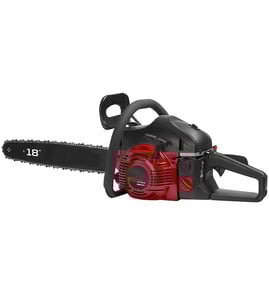



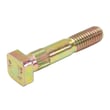
What do the H and L mean on a chainsaw?
On the Craftsman 358351143 gas chainsaw, H and L are the carburetor mixture adjustment screws: L controls the fuel mixture at low speed (idle and acceleration), and H controls the fuel mixture at high speed (wide-open throttle). Correct settings help the saw start easily, accelerate cleanly, and avoid engine damage.
What each screw does
- L (low-speed mixture): Affects idle quality and how the saw responds when you squeeze the throttle.
- H (high-speed mixture): Affects power at full throttle and how hot the engine runs.
- Idle speed screw (often marked T or S): Sets how fast the engine idles; it does not change the fuel mixture.
Quick symptoms guide (what you notice vs. what it often means)
| What you notice | More likely related screw | Common direction (general) |
|---|---|---|
| Bogging or hesitation when accelerating | L | Slightly richer (counterclockwise) |
| Chain creeps at idle | Idle speed screw | Lower idle (counterclockwise) |
| Saws screams, runs very hot at full throttle | H | Richer (counterclockwise) |
| Smokes heavily, lacks power at full throttle | H | Leaner (clockwise) |
Safe adjustment basics
Because carburetor tuning is done with the engine running, we follow the safety rules and adjustment procedure in the 358351143 operator's manual.
- Wear eye protection, gloves, hearing protection, and snug-fitting clothing.
- Keep bystanders at least 30 feet away.
- Make adjustments in small steps (about 1/8 turn at a time).
- Recheck chain tension before testing cuts; a new chain can stretch during early use.
- Stop and correct any fuel leaks before running the saw.
Why it matters
A mixture that is too lean (especially on the H screw) can overheat the engine and reduce engine life. A mixture that is too rich can cause poor performance, plug fouling, and heavy exhaust smoke.
Last updated: January 2026
Should I use 40 1 or 50 1 fuel for a chainsaw?
For the Craftsman 358351143 gas chainsaw, we recommend a 40:1 fuel mix because the owner’s manual specifies mixing 3.2 oz of quality 2-cycle air-cooled engine oil per 1 gallon of unleaded gasoline. Follow the mixing and fuel-handling steps in the 358351143 owner's manual to protect the engine and keep it running correctly.
Recommended mix ratio for this model
Use 40:1 for normal operation.
- Mix unleaded gasoline with 2-cycle air-cooled engine oil
- Use 3.2 oz oil per 1 gallon gas (this equals 40:1)
- Do not use automotive oil or boat oil
- Shake the fuel container after adding oil so the mix is thoroughly blended
- Mix and pour fuel outdoors; wipe up spills before starting
Quick mix chart
| Mix ratio | Oil per 1 gallon gas | What it means |
|---|---|---|
| 40:1 | 3.2 oz | Manual-specified mix for the 358351143 |
| 50:1 | 2.6 oz | Less oil than specified; not the target for this model |
Why 40:1 vs 50:1 matters
The oil in the mix lubricates internal engine parts. Running less oil than specified can increase wear and shorten engine life, especially under heavy cutting loads or hot conditions. Using the manual’s 40:1 ratio keeps lubrication where this Craftsman engine expects it.
Fuel tips that prevent hard starting and fuel system problems
These practices help avoid common chainsaw issues like hard starting, rough running, and fuel leaks.
- Use fresh fuel; don’t store mixed fuel for long periods
- Avoid alcohol-blended fuel sitting in the tank during storage (it can attract moisture and contribute to fuel system damage over time)
- Move at least 10 feet from the fueling spot before starting
- Keep the fuel cap tight and handles clean and dry
- If the saw is hard to start after sitting, follow the priming and choke steps in the manual
If you’re troubleshooting starting or fuel delivery problems, our tips for a hard to start chainsaw guide pairs well with the manual’s starting procedure.
Last updated: January 2026
Why does my chainsaw bog down when I give it gas?
On a Craftsman 358351143 gas chainsaw, bogging when you squeeze the throttle usually means the engine is not getting the right fuel-air mix under load. The most common causes are a dirty air filter, stale/incorrect fuel mix, or a carburetor that needs adjustment or service; the 358351143 owner's manual points to carburetor adjustment and basic maintenance checks.
Quick checks that fix most bogging
- Use fresh, correctly mixed fuel (old mix often causes hesitation and bogging).
- Clean or replace the air filter (a restricted filter reduces power and makes the saw stumble).
- Make sure the chain is sharp and properly tensioned; a dull or too-tight chain overloads the engine.
- Warm the engine, then verify it accelerates cleanly; if it only bogs in the cut, focus on chain sharpness and bar oiling.
- If it bogs even with no cutting load, focus on fuel delivery and carburetor settings.
Fuel, air, and carburetor: what to inspect
A bog on throttle is typically a lean condition (not enough fuel) or an airflow restriction.
| What you notice | Most likely area | What to do next |
|---|---|---|
| Bogs only when cutting | Chain sharpness, chain tension, bar oiling | Sharpen/replace chain, set tension, confirm oiling |
| Bogs even free-revving | Fuel mix, air filter, carburetor | Fresh fuel, clean filter, carb service/adjustment |
| Runs hot or surges at high speed | Carb set too lean, exhaust restriction | Follow carb adjustment guidance; inspect muffler outlet |
Parts that commonly solve fuel-delivery bogging
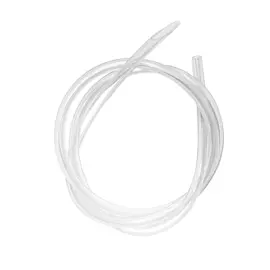
If you find cracked, loose, or hardened fuel lines, replace them; air leaks in the fuel line can cause a lean bog when you open the throttle.
- Ayp lawn & garden equipment fuel line, large 530069216
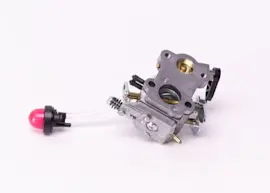
- Primer assembly 530071835 (if the primer bulb is cracked or won’t fill properly)
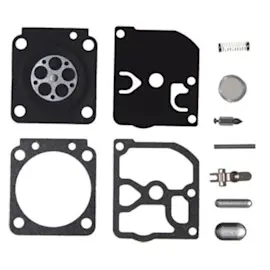
- Husqvarna lawn & garden equipment engine carburetor diaphragm and gasket kit 530069844 (for a carb refresh)
Why it matters
Running a chainsaw that bogs can push you to over-throttle and force the cut. The manual recommends letting the chain cut with light pressure and keeping the engine at full speed during the cut; when the saw is tuned and the chain is sharp, it cuts cleaner and reduces unnecessary wear.
Last updated: January 2026
Is a 16 or 18 inch chainsaw better?
A 16-inch chainsaw is better for most homeowners because it’s lighter, easier to control, and handles typical limbing and firewood work well. An 18-inch saw is better when you regularly cut larger-diameter wood and want extra reach, accepting added weight and kickback risk. For your Craftsman 358351143, confirm the recommended bar and chain sizes in the 358351143 owner’s manual.
How to choose the right bar length
- Choose 16-inch for pruning, storm cleanup, and cutting smaller logs with less fatigue.
- Choose 18-inch if you often buck thicker rounds and want more reach per cut.
- Prioritize control and safe handling over maximum length.
- Match the chain pitch, gauge, and drive link count to the bar and sprocket.
- Use only the low-kickback replacement chain specified for your saw.
Quick comparison
| Feature | 16-inch bar | 18-inch bar |
|---|---|---|
| Best for | Limbing, trimming, general firewood | Larger firewood, small tree felling, more reach |
| Handling | More maneuverable | Heavier, more tiring |
| Cutting capacity | Great for most homeowner jobs | Better for thicker wood |
| Safety margin | Typically easier to control | More leverage; higher kickback potential |
What matters most on the Craftsman 358351143
Your saw is designed around a specific guide bar and chain combination. The manual notes that the correct replacement bar and chain are specified in the repair parts list and on the bar/chain decal; using the correct match helps cutting performance and reduces premature wear.
Why it matters
Bar length affects balance, chain speed under load, and how easily you can keep the saw stable. A bar that’s too long for the saw’s power can cut slowly, encourage forcing the cut, and increase control issues.
Last updated: January 2026