Installation guide
 Owner’s manual
 Error Codes


How to clear whirlpool dishwasher error code?
To clear an error code on your Whirlpool WDF750SAYB0 dishwasher, we recommend canceling the cycle to force a drain, then restoring power to reset the control. If the code returns and water is left in the bottom, focus on the drain path (hose, pump, and connections) because the dishwasher is detecting a drain problem.
- Press Cancel/Drain and let the dishwasher run the drain portion until it stops.
- Turn power OFF at the breaker for 1 minute, then turn it back ON.
- Start a Rinse or Quick cycle and listen for the drain pump at the beginning.
- If the same code pops up again, stop the cycle and move to the drain checks below.
Standing water after a failed cycle usually means the dishwasher could not move water out fast enough. On the WDF750SAYB0, check the drain hose routing and connections first, then the drain pump.
- Make sure the drain hose is routed to minimize vibration and does not rub the motor, springs, cabinet, flooring, or the cabinet hole edge.
- Confirm the hose is fully seated into the drain connector up to the stop and the clamp is positioned between the stops.
- Check for a kinked, crushed, or sagging hose under the sink.
- Clean the filter area so debris cannot restrict flow.
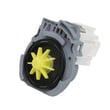
- If the hose and filter are clear, suspect a weak or jammed drain pump.
| Symptom | Most likely area | Example part for WDF750SAYB0 |
|---|---|---|
| Hums but drains slowly or not at all | Drain pump | Dishwasher drain pump WPW10348269 |
| Drains sometimes, then errors again | Drain hose routing or restriction | Dishwasher drain hose 8269144A |
| Water backs up or siphons | Drain loop/installation routing | WDF750SAYB0 installation guide |
When the dishwasher cannot drain, it may stop mid-cycle to prevent overflow and protect the motor and control. Fixing the drain restriction or failed pump typically stops the error code from returning.
For model-specific button sequences, cycle behavior, and any stored error indicators, follow the WDF750SAYB0 manual.
Last updated: January 2026
What are the measurements of a Whirlpool dishwasher?
For the Whirlpool WDF750SAYB0 undercounter dishwasher, the cabinet opening height is typically 34 inches (86.4 cm) minimum, and it can be adjusted to fit openings up to about 34 1/2 inches (87.6 cm) using the leveling legs and wheel positions. Standard built-in dishwashers are usually about 24 inches wide and 24 inches deep.
Use these installation targets when measuring your opening:
- Minimum opening height: 34" (86.4 cm)
- Lower minimum height option: about 33 7/8" (86.0 cm) if rear wheels are removed
- Adjustable height range: roughly 34" to 34 1/2" depending on wheel position and front leg turns
- Corner clearance: allow 2" (5.1 cm) minimum between the side of the door and a wall/cabinet
For the exact diagram and shaded utility-connection zones, follow the WDF750SAYB0 installation guide.
Measure before you order parts or schedule installation:
- Measure width at the front and back of the opening (confirm it is square)
- Measure height from the lowest point under the countertop to the highest point on the floor
- Measure depth to confirm the dishwasher can sit flush without pinching hoses/wiring
- Check the floor for level; plan for shims if the floor slopes
- Confirm water line, drain hose, and power are within the allowed routing area
This is the typical relationship between opening height and wheel/leg adjustment:
| Cabinet opening height | Wheel position | Front leg turns |
|---|---|---|
| 33 7/8" (86.0 cm) | Removed | All the way up |
| 34" (86.4 cm) | 1 | 10 |
| 34 1/4" (87.0 cm) | 2 | 5 |
| 34 1/2" (87.6 cm) | 3 | 0 |
Correct measurements prevent installation problems like a door that rubs cabinets, a unit that will not slide in, or hoses and wiring that kink behind the dishwasher. A properly sized opening also helps the dishwasher stay level for better washing and draining performance.
Last updated: January 2026
What's the most common problem with a whirlpool dishwasher?
For the Whirlpool WDF750SAYB0 dishwasher, the most common problems we see are poor cleaning and draining issues. In many cases, the root cause is simple maintenance (a dirty filter or blocked spray paths) or a drain restriction; less often it is a failing pump, motor, or heater. See the WDF750SAYB0 owner's manual for model-specific care and cycle guidance.
- Dirty dishes or film left behind: clogged filter, blocked spray arms, overloaded racks, low water temperature, or detergent issues
- Water left in the bottom: drain hose restriction, sink/disposer blockage, or a weak drain pump
- Not starting: door not fully latched, power supply issue, or cycle not set correctly
- Leaking: door seal wear, loose hose connections, or installation alignment issues
- Poor drying: heater or rinse aid issues, or opening the door too soon
- Confirm the door closes tightly and latches.
- Verify the water supply is turned on.
- Run a short cycle and check for water in the tub after the first couple of minutes.
- Clean the filter and remove debris from the sump area.
- Inspect the drain hose routing for kinks and make sure it is routed with a proper high loop.
If basic cleaning and hose checks do not help, these are frequent repair paths on this model:
| Symptom | Common part to inspect | Example part for WDF750SAYB0 |
|---|---|---|
| Water not draining | Drain pump | Dishwasher drain pump WPW10348269 |
| Standing water, slow drain | Drain hose | Dishwasher drain hose 8269144A |
| Poor wash pressure | Motor | Motor W10537869 |
| Poor drying, cool water | Heater | Dishwasher heater W10703867 |
| Cloudy water, soil redeposits | Filter | Dishwasher filter W10872845 |
Most “dishwasher not cleaning” and “dishwasher not draining” calls come down to water flow: the dishwasher has to fill correctly, spray with enough pressure, then drain freely. A clean filter and an unrestricted drain path prevent repeat clogs and protect the pump and motor.
Last updated: January 2026