 Installation guide
 Owner’s manual
 Error Codes



What size is a Kenmore Model 11066112501 dryer?
The Kenmore dryer model 11066112501 is a 29-inch wide electric dryer. For planning space, the installation instructions show an overall height of about 43 3/8 inches and a cabinet depth around 26 inches, with additional room typically needed behind the dryer for the exhaust vent. See the installation guide for the full dimension diagram and clearance notes.
Use these as your starting point when measuring your laundry area:
- Width: 29 inches (73.7 cm)
- Height: about 43 3/8 inches (110 cm)
- Cabinet depth: about 26 inches (66 cm)
- Recommended side clearance: about 1 inch on each side (helps reduce noise transfer)
- Typical rear clearance: at least 5 1/2 inches behind the dryer for the vent elbow
| Measurement | What to measure | What to allow for model 11066112501 |
|---|---|---|
| Width | Side-to-side footprint | 29 inches plus side clearance |
| Height | Floor to top | About 43 3/8 inches |
| Depth | Front to back | About 26 inches plus vent space |
| Rear clearance | Space behind dryer | Minimum about 5 1/2 inches (vent elbow) |
Even though the cabinet depth is about 26 inches, most installations need extra space because:
- The exhaust duct and elbow sit behind the dryer
- The vent needs a smooth path to reduce drying time
- Tight venting can increase heat and cause overheating issues
- Extra space makes servicing easier (belt, motor, heater box)
- Measure the space opening, not just the wall-to-wall distance at floor level.
- Check for baseboards, trim, and door swing that can steal an inch or two.
- If installing in a closet, plan for required ventilation openings in the door.
- Confirm your vent route and count elbows; longer or more complex venting needs more planning.
Last updated: February 2026
How do I tell what model my Kenmore dryer is?
Your Kenmore dryer’s model number is printed on the model and serial number label on the appliance. For Kenmore model 11066112501, you’ll use that exact model number to match the correct parts list, diagrams, and repair instructions in the owner's manual.
Check these common locations on Kenmore dryers:
- Along the door opening on the cabinet (door frame area)
- On the inside edge of the dryer door
- On the back panel of the dryer cabinet
- On a side panel near the rear (less common)
If you find multiple numbers, use the one labeled Model (not the serial number).
Kenmore model numbers often start with a 3-digit prefix that points to the manufacturer family. For example, many Kenmore dryers that start with 110 are Whirlpool-built. The full model number (like 11066112501) is what ensures the right fit for parts such as a belt, heating element, timer, or door latch.
- Model number: used to find the correct parts and diagrams
- Serial number: used to identify production details and can help when comparing revisions
- Type: electric vs. gas affects key parts (heating system, wiring, venting requirements)
Once you confirm the model number, match parts by that model to avoid wrong-fit issues.
| Common symptom | Often-related part (examples for this model) |
|---|---|
| Drum not turning | Dryer drum belt 341241, dryer repair kit 4392065 |
| No heat or weak heat | Dryer element 279838, dryer thermal cut-off fuse kit 279816 |
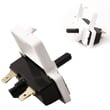
| Won’t start | Dryer push-to-start switch WP3977456 |
Using the exact model number prevents ordering the wrong Kenmore-compatible part. Small design changes across similar-looking dryers can affect belt length, heater style, wiring harness connections, and even door switch mounting.
Last updated: February 2026
What are common problems with Kenmore dryers?
Common problems with the Kenmore 11066112501 dryer include not starting, no heat, long dry times, unusual noises, and the drum not turning. Most of these issues trace back to power supply problems, restricted airflow (lint or venting), or worn moving parts like the belt and drum support components; see the owner's manual.
- Dryer will not run: tripped breaker or blown fuse (many electric dryers use two), door not fully closed, Start not pressed firmly, or cycle not set correctly
- Drum turns but no heat: one side of the 240V supply is out (one fuse or breaker tripped), or a failed heating or safety component
- Clothes take too long to dry: clogged lint screen, crushed or long vent run, too many elbows, or improper vent material
- Loud thumping/squealing/grinding: small items caught at drum edges, worn rollers/idler parts (often addressed with a kit)
- Stops mid-cycle or feels too hot: overheating from poor airflow; safety devices can open to protect the dryer
- Clean the lint screen before every load; confirm strong airflow at the outside vent hood
- Check both household fuses or breakers for an electric dryer (the drum can run with no heat)
- Confirm the door closes and latches consistently; replace the strike if it is loose or worn
- Verify you are not using an air-only cycle when you expect heat
- Make sure the vent is 4-inch diameter and made of heavy metal (not plastic or foil)
| Symptom | Common fix | Example part for this model |
|---|---|---|
| Drum not turning | Broken belt | Dryer drum belt 341241 |
| No heat or overheating | Failed safety cutoff | Dryer thermal cut-off fuse kit 279816 |
| No heat | Failed heater | Dryer element 279838 |
| Squealing or rumbling | Worn drum support parts | Dryer repair kit 4392065 |
Airflow and heat problems do more than slow drying; they can overheat the dryer and trigger safety shutoffs. Keeping the lint path and venting clear protects the heating system, improves performance, and helps prevent repeat failures.
Last updated: February 2026







