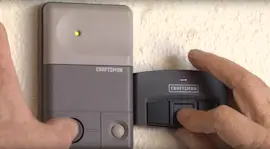
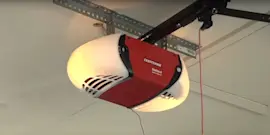
Owner’s manual
 Error Codes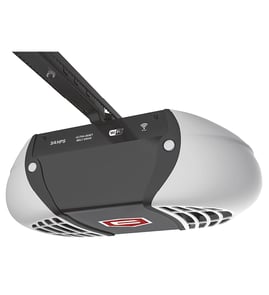

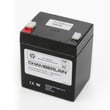

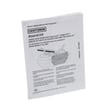
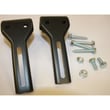
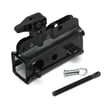
What model number is my garage door opener?
Your garage door opener’s model number is printed on an ID label on the power head (the main motor unit mounted to the garage ceiling). On many Craftsman openers, the label is on the side or back of the housing, sometimes behind the light lens or inside a small cover; confirm the exact format in the owner's manual.
- Check the side panels of the motor unit (power head)
- Check the back panel near the wiring terminals
- Look behind the light lens (remove the lens cover if needed)
- Look inside a flip-down cover or under a small access door
- If there are two labels, use the one that says Model (not the remote model)
Most Craftsman garage door opener ID labels list several items. Use the opener’s model number, not the remote or keypad number.
| Label item | What it means | Use it for |
|---|---|---|
| Model number | Identifies the opener power head | Finding correct parts and manuals |
| Serial number | Unique ID for your unit | Recordkeeping and service history |
| Electrical rating | Voltage/amps | Verifying power requirements |
| Date code | Manufacturing info | Estimating age and compatibility |
- Remote model number vs. opener model number: the remote’s number only identifies the handheld transmitter.
- Rail/chain/belt kit numbers: these can differ from the power head model.
- “139.” prefix confusion: many Craftsman openers use a 139-prefix family; always match the full model shown on the power head label.
The model number is how we match the correct safety sensor parts, logic board, wall control, and drive components to your exact Craftsman opener. It also ensures troubleshooting steps (like force and travel adjustments) match your unit.
- Use Craftsman error codes to interpret diagnostic flashes or error patterns before ordering parts.
- If you need to look up parts by model, start with the model-specific parts list, or search by model at Sears PartsDirect.
Last updated: February 2026
How to reset garage door opener from previous owner?
To reset a Craftsman garage door opener model 13954918 from a previous owner, we clear the opener’s receiver memory using the LEARN button on the motor unit, then immediately reprogram your remotes and keypad. This removes old transmitters so only your devices can operate the door.
- Locate the LEARN button on the motor unit (under a light lens or near the antenna wire).
- Press and hold LEARN until the indicator light turns off (commonly about 6 to 15 seconds).
- Release the button; the opener’s stored remote/keypad codes are now erased.
After the reset, program each device one at a time.
- Press and release LEARN (do not hold).
- Within about 30 seconds, press the button on the remote you want to use.
- Confirm the opener responds (light flash/click or door movement).
- Repeat for additional remotes.
- For a wireless keypad, enter your PIN and follow the pairing steps in the owner's manual.
- Replace the remote battery and retry programming.
- Stand 3 to 6 feet from the motor unit while pairing.
- Make sure the opener has power and the courtesy light works.
- If the door won’t close, check safety sensor alignment and wiring first.
- If you see diagnostic flashes or beeps, match them to the Craftsman error codes list.
| Item | After reset | What you do next |
|---|---|---|
| Remote controls | Erased | Reprogram each remote |
| Wireless keypad | Erased | Reprogram keypad PIN/pairing |
| Travel limits/force settings | Typically unchanged | Adjust only if door reverses or won’t close |
| Door hardware issues (rollers, springs) | Not affected | Repair door hardware if binding |
Resetting the memory is the security step that prevents a previous owner’s remote, keypad PIN, or a lost transmitter from opening your garage. Once reset, only devices you program will operate the Craftsman 13954918.
If you need to look up compatible replacement remotes, keypads, or other garage door opener parts by model number, we recommend searching by 13954918 on Sears PartsDirect.
Last updated: February 2026
What are the common problems with Craftsman garage door openers?
Common problems with the Craftsman 13954918 garage door opener are safety sensor issues (misalignment or blocked beam), drive system wear (chain/belt, sprocket, or gear wear), and control problems (wall control, remote, or logic board). These often show up as a door that reverses, won’t close, or makes grinding noises.
- Door won’t close and opener lights blink: safety sensors are blocked, misaligned, or have wiring issues.
- Door reverses while closing: force settings are too sensitive, door is binding, or sensors are intermittently losing signal.
- Grinding or clicking noise: worn drive gear, sprocket, or internal gear kit; sometimes a loose chain/belt.
- Remote/keypad works sometimes: weak battery, interference, or receiver/logic board issue.
- Wall control doesn’t respond: wiring problem, bad wall control, or logic board issue.
- Motor runs but door doesn’t move: trolley not engaged, broken drive component, or stripped gear.
- Check the photo eyes: confirm both sensor LEDs are on solid, lenses are clean, and brackets are aimed at each other.
- Try the wall control: if wall control works but remotes do not, focus on remote batteries, programming, and interference.
- Test the door by hand (with the opener disconnected): the door should move smoothly and stay about halfway open; a heavy or binding door overloads the opener.
- Inspect the rail and trolley: make sure the trolley is engaged and the rail is secure.
- Look for diagnostic blink patterns: match the flashes to troubleshooting steps in Craftsman error codes.
| Problem area | What you’ll notice | Typical fix |
|---|---|---|
| Safety sensors | Won’t close, blinking lights | Align sensors, clear obstruction, repair wiring |
| Force/travel settings | Reverses, stops short | Adjust force/travel, correct door binding |
| Drive system wear | Grinding, door won’t move | Replace worn gear/sprocket components |
| Controls/radio | Remotes intermittent | Reprogram remotes, replace batteries, check logic board |
Most “opener problems” are actually sensor alignment or a door that’s out of balance. Fixing those first prevents repeat failures like stripped gears and nuisance reversals.
For model-specific adjustment locations and safety steps, follow the owner's manual. If you need replacement components, search by model number 13954918 on Sears PartsDirect.
Last updated: February 2026
How to find out garage door opener type?
To identify the “type” of your Craftsman garage door opener, start by confirming the exact model number on the opener’s label (for this unit, 13954918). Then use the opener’s drive style (chain, belt, or screw) and the Learn/Program button color to determine the correct remote/control system and programming steps in the owner's manual.
- Model label: Look on the motor head (ceiling unit) for the model and serial label.
- Drive type: Look at the rail:
- Chain drive: metal chain like a bicycle chain
- Belt drive: rubber or reinforced belt
- Screw drive: long threaded steel rod
- Learn/Program button: Remove the light lens or access cover on the motor head and find the Learn button; note its color and any nearby LED.
- Wall control style: Basic push button vs. multi-function console can indicate the control platform.
- Safety sensors: Photo eyes at the bottom of the door tracks confirm a modern safety-sensor system.
Most customers mean one of these:
| What you mean by “type” | What to look for | Why it matters |
|---|---|---|
| Drive type | Chain, belt, or screw | Helps match mechanical parts and noise expectations |
| Remote/control system | Learn button color, logic board style | Determines remote compatibility and programming steps |
| Motor style | AC vs. DC (common on newer units) | Affects troubleshooting and error-code behavior |
Use the Learn button method for Craftsman openers:
- Press and release Learn on the motor head.
- Within 30 seconds, press the remote button you want to use.
- Confirm operation; then repeat for additional remotes.
For model-specific button locations, timing, and indicator-light behavior, follow the steps in the owner's manual.
If the opener flashes lights or shows diagnostic patterns, match them to Craftsman troubleshooting charts:
- Use Craftsman error codes to interpret blinking-light patterns and common causes.
- If the door reverses, stops, or won’t close, check sensor alignment and force settings before replacing parts.
Correctly identifying the opener type prevents buying the wrong remote, wall control, logic board, or drive components. It also ensures you use the right programming sequence and safety checks for your Craftsman 13954918.
To shop by model number and find compatible replacements, search using Sears PartsDirect.
Last updated: February 2026
Is it worth repairing a 20 year old garage door opener?
For a 20-year-old garage door opener, repairing is usually not worth it; most openers have a typical service life of 10 to 15 years, so replacement is the better long-term value for reliability, safety features, and parts availability. For a Craftsman 13954918, a small repair can make sense only when the fix is simple and low-cost.
A repair is worth doing when the opener is otherwise operating normally and you are fixing a single, common wear item.
- Worth repairing: loose wiring at the wall control, misaligned safety sensors, worn remote battery, minor limit/force adjustment
- Usually not worth repairing: repeated intermittent operation, loud grinding from the motor head, stripped drive gear symptoms, logic board issues, multiple parts failing at once
- Replace now if the door reverses unpredictably, won’t stop when it should, or the safety sensors cannot be kept aligned
Use this to decide in under 5 minutes:
- If the door is heavy or binds when moved by hand, fix the door hardware first (rollers, hinges, springs) before blaming the opener
- If the opener lights blink or you see diagnostic flashes, look up the pattern in Craftsman error codes
- If the opener runs but the door does not move, suspect internal drive components (common on older units)
- If the opener stops or reverses, check safety sensor alignment and do a force/travel check
- If you need more than one major part, replacement is the better investment
| Option | Best for | What to expect |
|---|---|---|
| Repair | One small, clear failure | Lower upfront cost, but more age-related failures likely |
| Replace | Multiple symptoms or major failure | Quieter operation, newer security features, better long-term reliability |
A garage door opener is a safety device as much as a convenience feature. As openers age, wear in the drive system, sensors, and control electronics can cause inconsistent closing behavior, which is exactly when upgrading becomes the safer, more dependable choice.
Start with the troubleshooting and adjustment procedures in the owner's manual. If you need to identify compatible replacement parts by model number, search using 13954918 on Sears PartsDirect.
Last updated: February 2026