Owner’s manual
 Error Codes



What is the advantage of a bottom mount fridge?
A bottom-mount refrigerator like the KitchenAid KFIS25XVMS9 puts the fresh-food compartment at eye level, so the items you use most are easier to see and reach. The freezer stays below, which reduces daily bending and makes organizing refrigerated foods more convenient.
Key advantages in everyday use
- Fresh food is easier to access: shelves, deli/pantry drawers, and crisper areas are higher up.
- Less bending for daily items: you typically open the refrigerator section more than the freezer.
- Better visibility: you can scan common foods quickly, which helps reduce forgotten items.
- Freezer storage is still roomy: bottom freezers often use pull-out baskets for bulk items.
- Good fit for meal-prep households: frequent access to produce, dairy, and leftovers is simpler.
Bottom-mount vs top-freezer: quick comparison
| Feature | Bottom-mount refrigerator | Top-freezer refrigerator |
|---|---|---|
| Most-used items | Easier to reach | Requires more bending |
| Freezer access | Lower, pull-out style | Higher, swing door |
| Organization style | Often drawer and basket focused | Often shelf focused |
Why it matters
Most households use the refrigerator compartment far more often than the freezer. A bottom-mount layout prioritizes comfort and speed for the tasks you repeat every day: grabbing drinks, prepping ingredients, and putting away groceries.
Helpful model-specific tip
For layout details and storage feature use on your KitchenAid KFIS25XVMS9, follow the compartment and control guidance in the KFIS25XVMS9 owner's manual.
Last updated: February 2026
What's the life expectancy of a KitchenAid refrigerator?
KitchenAid refrigerators typically last 14 years. With consistent maintenance (cleaning, good airflow, and tight door seals), many units run 10 to 17 years; your KitchenAid KFIS25XVMS9 is in that same typical range. For model-specific care and settings, use the KFIS25XVMS9 owner's manual.
Typical lifespan and what affects it
A refrigerator’s life depends most on compressor run time, heat removal, and how well the doors seal.
- Maintenance habits: cleaning condenser area, keeping vents clear
- Door seal condition: torn or warped gaskets make the compressor run longer
- Ice and water use: heavy dispenser use increases wear on valves and ice system parts
- Room conditions: hot garages and tight enclosures shorten life
- Power quality: frequent outages or surges can stress controls and motors
Quick maintenance checklist (best ROI)
These steps help your KFIS25XVMS9 reach the high end of the lifespan range.
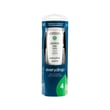
- Replace the water filter on schedule (use the correct refrigerator water filter EDR4RXD1)
- Keep food from blocking air vents in the fresh food and freezer sections
- Clean spills quickly to prevent odors and airflow restriction
- Check door closing and alignment; doors should self-close and seal evenly
- Inspect gaskets for gaps, rips, or hardened sections
“Repair or replace?” rule of thumb
Use this simple comparison to decide when a repair makes sense.
| Situation | What it usually means | Typical next step |
|---|---|---|
| Unit is under ~8 years old | Often worth repairing | Fix the failed part and maintain |
| 10 to 17 years old | Near typical end of life | Repair if cost is reasonable |
| Cooling is weak plus loud running | Heat removal or sealed system strain | Diagnose airflow, fans, condenser |
| Repeated ice/water issues | Wear in dispenser system | Service water/ice components |
Why it matters
A refrigerator that runs longer than it should (from dirty condenser coils, restricted airflow, or leaky door gaskets) wears out the compressor faster and increases energy use. Staying ahead of small issues is the easiest way to extend service life.
Last updated: February 2026
How to remove bottom grill from KitchenAid refrigerator?
On the KitchenAid KFIS25XVMS9 bottom-mount refrigerator, the bottom grill (toe kick) typically snaps onto the lower frame. We remove it by gripping the grill at the ends and pulling it straight forward to release the retaining clips; then lift it away from the frame.
Steps to remove the bottom grill (toe kick)
- Unplug the refrigerator or switch off power at the breaker (recommended).
- Open both fresh food doors for better access.
- Grip the grill firmly near the left and right ends.
- Pull the grill straight forward (not upward) to pop it off the lower frame clips.
- If it resists, work one side loose, then the other; avoid twisting the plastic.
- Set the grill aside where it will not get stepped on.
Reinstalling the grill
To reinstall, align the grill with the lower frame, then press evenly until it snaps back into place.
| What you feel/see | What it usually means | What to do |
|---|---|---|
| Grill will not budge | Clips are tight or you are pulling at the center | Pull from both ends, straight out |
| One side releases, other stays stuck | Clip is still engaged on one side | Re-grip the stuck end and pull forward |
| Grill pops off but seems loose after | Clip tabs not fully seated | Re-align and press until it snaps |
Why it matters
We remove the toe kick to access and clean the lower area (like the condenser area) and to reach components for troubleshooting. Pulling straight forward helps prevent broken tabs and keeps the grill fitting tightly afterward.
For model-specific illustrations and access notes, use the KFIS25XVMS9 owner's manual.
Last updated: February 2026
What is the most common problem with KitchenAid refrigerators?
The most common KitchenAid refrigerator problems are ice maker and water dispenser issues, cooling complaints (refrigerator too warm or freezer too warm), and water leaks. On the KitchenAid KFIS25XVMS9, these symptoms usually trace back to airflow problems, a restricted water supply, or a door seal that is not sealing tightly; use the owner's manual to match symptoms to the right checks.
Most common issues we see (and what they point to)
- Ice maker not making ice or dispensing poorly: restricted water flow, air in the water line, or an ice path obstruction
- Water tastes bad or flow is slow: a clogged water filter
- Fridge not cooling evenly: evaporator fan or airflow blockage (often from frost buildup)
- Puddles or leaks: defrost drain restriction or a water supply connection issue
- Noisy operation: condenser fan area issues or vibration from the cabinet/lines
Quick checks you can do first
- Confirm temperature settings and that vents are not blocked by food packages.
- Check door closing and gasket contact all the way around.
- If water or ice is slow, replace the filter and purge air from the dispenser.
- If you see frost on the back wall inside, focus on defrost and airflow.
- If you hear a new fan noise, inspect for ice buildup or a rubbing fan blade.
Parts that commonly solve these symptoms
| Symptom | Common fix | Example part for KFIS25XVMS9 |
|---|---|---|
| Slow water, bad taste, weak ice production | Replace water filter | Refrigerator water filter EDR4RXD1 |
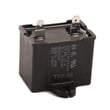
| Warm temps, poor cooling after a move/repair | Check sealed system airflow and components | Refrigerator condenser fan motor W11613295 |
| Frost buildup, warm fridge section | Check defrost circuit components | Refrigerator defrost bi-metal WP627985 |
| Doors not sealing, moisture/frost near edges | Inspect and replace gasket if torn/warped | Refrigerator gasket panel (gray) W10830055 |
Why it matters
Ice, water, and cooling problems often share the same root causes: restricted airflow, restricted water flow, or air leaks at the doors. Fixing the underlying cause protects food temperatures, reduces frost buildup, and helps the compressor run less.
Helpful DIY guidance
- Follow our step-by-step: how to replace the water filter in a KitchenAid refrigerator
Last updated: February 2026