Installation guide
 Owner’s manual
 Error Codes

What are the most common issues with PLHS69EGSS1?
The most common issues we see with the Frigidaire PLHS69EGSS1 side-by-side refrigerator involve cooling performance, ice and water dispensing, frost buildup, and door sealing. These problems usually trace back to airflow (fans and dampers), the defrost system, or water filtration and dispenser components.
Common problems and what they usually point to
- Warm refrigerator or freezer: restricted airflow, dirty condenser area, or a failing fan motor.
- Frost buildup on the back wall or poor cooling after a few days: defrost system trouble (defrost thermostat, heater circuit, or sensor).
- No ice, slow ice, or clumping in the bin: ice maker drive issues, auger problems, or temperature too warm.
- Water tastes bad or flow is slow: clogged water filter or air in the water line.
- Water leaking or puddles: defrost drain issues or water supply/dispenser leaks.
- Door not closing well or moisture around the door: worn or loose door gasket.
Parts that commonly relate to these symptoms
If your symptoms match, these model-compatible parts are often involved:
- Refrigerator defrost bi-metal thermostat 5303918214
- Refrigerator evaporator fan blade 5308000010
- Refrigerator condenser fan 240524102
- Refrigerator gasket 241786013 (fresh food door)
- Refrigerator freezer gasket 241786014 (freezer door)
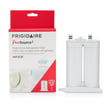
- Frigidaire puresource2 refrigerator water filter WF2CB
Quick checks we recommend before replacing parts
- Confirm controls are set correctly; typical targets are 37°F fresh food and 0°F freezer.
- Make sure vents are not blocked by food packages.
- Clean dust from the condenser area to improve heat removal.
- If the dispenser sputters after a filter change, purge air by dispensing several cups of water.
- Inspect door seals for gaps, tears, or areas that do not grip paper when closed.
Symptom-to-system guide
| Symptom | Most likely system | Common next step |
|---|---|---|
| Warm temps | Airflow or condenser cooling | Check fans, clean condenser |
| Heavy frost | Defrost system | Check defrost thermostat and drain |
| No ice/dispense issues | Ice maker/auger/dispenser | Check bin, auger, temps |
| Slow water | Filtration/water supply | Replace filter, purge air |
Why it matters
Catching airflow, defrost, and gasket problems early prevents food spoilage, reduces energy use, and helps avoid secondary failures like a strained compressor.
For model-specific operating details and care steps, use the PLHS69EGSS1 owner’s manual.
Last updated: March 2026
What does H1 mean on a refrigerator?
On the Frigidaire PLHS69EGSS1 side-by-side refrigerator, H1 indicates the refrigerator is sensing a too-warm temperature condition (a high-temp alarm). Start by confirming the temperature settings and making sure the doors are fully closing and sealing.
What to check first (fast fixes)
- Make sure both doors close tightly and are not held open by a bin or shelf.
- Confirm the controls were not accidentally set warmer.
- Allow 8 to 12 hours for temperatures to stabilize after changes or after loading groceries.
- Check for blocked air vents inside the fresh food and freezer compartments.
- Clean dust from the condenser area so the refrigerator can shed heat efficiently.
Recommended temperature targets
Use these common targets for Frigidaire side-by-side models like PLHS69EGSS1, then verify with a separate thermometer (some displays are reference-only).
| Compartment | Typical target setting | What to verify |
|---|---|---|
| Fresh food | 37°F | Thermometer reading near the center shelf |
| Freezer | 0°F | Thermometer reading between packages |
If H1 keeps coming back
If the doors are sealing and the settings are correct, the issue is usually airflow, defrost performance, or temperature sensing.
- Look for heavy frost on the freezer back wall (often points to a defrost issue).
- Listen for the evaporator fan running; weak airflow can cause warm temps.
- If temperatures swing or seem inaccurate, a temperature sensor can be involved.
Helpful model-specific references:
- Use the PLHS69EGSS1 owner’s manual to locate the control panel, understand alarm indicators, and follow the recommended control settings.
- For temperature-sensing concerns, the refrigerator sensor 240597220 is a common component tied to temperature feedback.
Why it matters
A high-temperature alarm protects food quality and helps prevent the refrigerator from running excessively long. Addressing door sealing, airflow, and control settings quickly usually clears the H1 condition and restores stable cooling.
Last updated: January 2026
What is the disadvantage of a side-by-side fridge?
A key disadvantage of a side-by-side refrigerator like the Frigidaire PLHS69EGSS1 is reduced usable width in each compartment, which makes it harder to store and access wide items (pizza boxes, party trays, large produce platters) compared with many French door designs.
Common side-by-side drawbacks (what we see most often)
- Narrow shelves can limit wide or bulky items in both the freezer and fresh-food side.
- More bending and reaching for fresh foods because the refrigerator section runs top-to-bottom.
- Freezer organization can feel “stacked,” so items get buried behind others.
- Door bins can become crowded, which increases door-open time and temperature swings.
- If doors do not close tightly, you can get warm spots, frost, or higher energy use.
Quick ways to reduce the downsides
We recommend these habits for the PLHS69EGSS1 layout:
- Keep frequently used fresh items at eye level; use crispers for produce only.
- Avoid blocking air vents; overcrowding makes the refrigerator run longer.
- Reduce door openings by grabbing everything you need at once.
- Keep the unit level so doors close tightly.
- Replace a worn door seal if you notice gaps, moisture, or the door popping open.
Side-by-side vs. French door: practical comparison
| Feature | Side-by-side (PLHS69EGSS1 style) | French door (typical) |
|---|---|---|
| Shelf width | Narrower | Wider |
| Fresh-food access | More bending/reaching | Often easier at eye level |
| Freezer access | Eye-level vertical | Lower drawer |
| Best for | Frozen-food users, tight kitchens | Wide platters, fresh-food heavy |
Why it matters
Narrow compartments and longer door-open time can affect temperature stability and efficiency. The owner guidance for this model emphasizes organizing to reduce door openings and not blocking cold air vents, which helps the refrigerator cool evenly and run efficiently.
Helpful references for this model
- Use the PLHS69EGSS1 owner’s manual for storage features (bins, crispers, humidity control) and efficiency tips.
- If you are installing or repositioning the refrigerator, follow the PLHS69EGSS1 installation guide for clearances and leveling so the doors close properly.
Last updated: January 2026