Installation guide
 Owner’s manual



What is the HF error on a Kenmore washer?
On a Kenmore washer, an HF (sometimes shown as FH) error means the washer is not filling with water correctly or is detecting a water flow problem. On Kenmore model 11021182013, the fix is usually restoring proper hot and cold water supply and pressure.
What to check first (fast fixes)
- Make sure both hot and cold faucets are fully open.
- Confirm the fill hoses are not kinked, crushed, or frozen.
- Verify the home water pressure is in a normal range; this model installs with 20 to 100 psi supply pressure.
- Clean debris from the inlet valve screens where the hoses connect to the washer.
- Reseat the hose connections and check for leaks or air being pulled in.
- Run a quick fill test cycle after corrections (per the installation guide).
Step-by-step: clear the most common causes
- Unplug the washer for safety.
- Turn off both water faucets.
- Remove the hot and cold hoses from the back of the washer.
- Inspect and rinse the small screens in the washer’s inlet ports.
- Reconnect hoses (hot to hot, cold to cold), turn water back on, and check for leaks.
If the washer still throws HF/FH after good water supply is confirmed, the water fill system may need a part replacement.
Parts that commonly relate to HF/FH (fill problems)
| Symptom | Most likely area | Example part for this model |
|---|---|---|
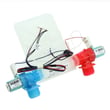
| No water enters at all | Inlet valve or supply | Washer water inlet valve assembly WPW10683603 |
| Slow fill, then error | Clogged screens or low pressure | Inlet screens, home plumbing |
| Fills but level seems wrong | Pressure sensing system | Washer water-level switch WPW10268912 and hose WP353244 |
Why it matters
HF/FH is a protection error; if the washer cannot fill correctly, it can stop mid-cycle, wash poorly, or run the pump longer than normal. Fixing the water supply and pressure first prevents unnecessary part replacement.
Last updated: February 2026
How to hard reset a Kenmore washing machine?
To hard reset (master reset) your Kenmore washer model 11021182013, we recommend a simple power reset: unplug the washer (or switch off the breaker) for 1 to 2 minutes, then restore power and start a cycle. This clears many control glitches without changing any installed parts.
Quick hard reset steps (power cycle)
- Press Power/Cancel to stop the current cycle.
- Unplug the washer from the grounded outlet.
- Wait 1 to 2 minutes.
- Plug the washer back in.
- Select a normal cycle and press Start.
If the washer still acts up after the reset
A hard reset fixes temporary control issues; if symptoms return, focus on the system tied to the symptom.
- Won’t start or lid won’t lock: check the lid latch and strike area; a failing lock can stop the cycle. Consider the washer lid lock assembly W10404050.
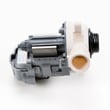
- Won’t drain or stops mid-cycle: check for a kinked drain hose, a clogged pump inlet, or a blocked standpipe. The washer drain pump assembly WPW10276397 is the common fix when the pump is seized or leaking.
- Won’t spin or makes a burning/rubber smell: inspect the belt and pulley area for wear or slipping. The washer drive belt WPW10006384 is a frequent replacement.
- Shakes or bangs: confirm the washer is level and all feet are firmly on the floor; suspension wear can also cause off-balance issues.
Leveling check (often mistaken for a “needs reset” problem)
If the washer is noisy, walking, or going off-balance, leveling usually solves it.
| What you notice | What to do | Tool typically used |
|---|---|---|
| Washer rocks on the floor | Adjust leveling feet until all 4 feet contact | 9/16 in. or 14 mm wrench |
| Loud vibration in spin | Recheck level side-to-side and front-to-back | Level |
| Repeated off-balance loads | Reduce load size; redistribute items evenly | None |
For the exact leveling procedure and safety steps (grounded outlet, no extension cord), follow the installation guide.
Why it matters
Resetting restores the control board to a clean operating state, but it does not correct mechanical problems like a slipping drive belt, a blocked drain pump, or a lid lock that is not engaging. Matching the fix to the symptom prevents repeat failures.
Last updated: February 2026
How to unclog drain hose on Kenmore washer?
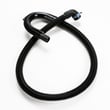
To unclog the drain hose on your Kenmore washer model 11021182013, unplug the washer, remove standing water, then disconnect the hose at the rear drain port and clear debris from the hose and pump inlet. Reinstall the hose and clamp using the routing rules in the installation guide.
Safety and prep
- Unplug the washer.
- Turn off both water faucets.
- Put towels and a shallow pan under the hose connection.
- Bail or vacuum out as much tub water as possible.
Steps to clear the clog
- Pull the washer forward to access the rear.
- Find the black drain port on the back of the cabinet.
- Use pliers to squeeze the clamp and slide it back.
- Twist and pull the black elbow end of the drain hose off the drain port.
- Clear blockage from:
- The elbow end of the hose
- The first 12 to 24 inches of hose
- The standpipe or laundry tub connection
- Flush the hose with water; push debris out with a small drain snake (do not puncture the hose).
- Reinstall the hose fully onto the drain port; reposition the clamp.
Setup details that prevent repeat clogs
Correct drain-hose placement helps the washer drain fast and avoids siphoning or backups.
| Drain setup item | What to do |
|---|---|
| Standpipe depth | Keep about 4.5 in. (113 mm) of hose inside the standpipe |
| Excess hose | Do not force extra hose down into the standpipe |
| Laundry tub | Do not lay the hose on the bottom of the tub |
If it still will not drain
- Listen for pump humming (often a jam).
- Check for kinks or a crushed hose behind the washer.
- Inspect the pump inlet for debris; replace the pump if it is seized or leaking (see washer drain pump assembly WPW10276397).
Why it matters
A restricted drain hose leaves water in the tub, causes long cycles, and can prevent a full-speed spin. Clearing the hose and setting the correct standpipe depth keeps the drain pump working efficiently.
Last updated: February 2026
How many cubic feet is a Kenmore washer 11021182013?
The exact cubic-foot capacity for Kenmore washer model 11021182013 is listed in the specifications section of the 11021182013 owner's manual. This model is a full-size top-load washer; most full-size top-load washers in this class are commonly about 3.5 to 4.8 cu. ft.
Where to find the exact capacity
Use the manual first; it gives the published spec for your exact configuration.
- Open the 11021182013 owner's manual
- Look for Specifications, Dimensions, or Capacity
- If the manual lists basket dimensions instead of cubic feet, use the calculation method below
How to calculate cubic feet from basket measurements
Measure the inside of the spin basket (not the outer tub). Convert inches to feet before calculating.
- Measure inside diameter (inches)
- Measure usable depth to the top of the perforations (inches)
- Convert to feet: inches ÷ 12
- Calculate: π × (radius²) × depth
| Item | What to measure | Tip |
|---|---|---|
| Inside diameter | Across the basket interior | Measure at the widest point |
| Usable depth | Bottom to top of perforations | Do not include the rim |
| Radius | Diameter ÷ 2 | Convert to feet before squaring |
Why it matters
Capacity affects load size, HE detergent dosing, and spin performance. Overloading increases vibration and speeds up wear on the suspension and drive system.
Parts that take the most stress when overloaded
Last updated: February 2026