Error Codes



How to identify a Kenmore washer model?
Your Kenmore washer model number is printed on the appliance’s model and serial tag. For Kenmore washers, it commonly starts with 110 (like 11092274100) and using the exact model number is the fastest way to match the correct parts and diagrams.
Where to find the model number tag
Check these common locations on Kenmore washers:
- Top-load washer: under the lid, around the tub opening
- Top-load washer: on the rear panel near the power cord
- Front-load washer: inside the door opening, along the door frame
- Front-load washer: behind the lower access panel (if equipped)
- Any style: on the back of the cabinet near the control console
What the model number looks like (Kenmore)
Kenmore model numbers are usually a string of numbers; many begin with a 3-digit prefix that identifies the manufacturer series.
| Example | What it tells you | Why it matters |
|---|---|---|
| 11092274100 | Kenmore 110-series style model number | Best match for parts lists and diagrams |
| 110.xxxxxxx | Same format with a dot | Often shown this way on stickers or receipts |
| Letters + numbers | Less common on older Kenmore washers | Still valid; enter it exactly as shown |
Tips to avoid ordering the wrong part
Use these quick checks before you buy a replacement part:
- Copy the model number exactly, including all digits
- Use the full model number, not just the 110 prefix
- If the tag is worn, take a photo and zoom in to confirm characters
- Match the symptom to the likely system (drain, spin, agitation) before choosing parts
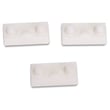
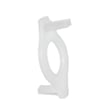
- When the washer will not agitate, common wear items include the agitator dog 80040 and the coupling 285753A
Why it matters
Kenmore washers often share similar looks across many years, but internal components (like the drive system, water pump, or timer) can vary by model. Using 11092274100 ensures we show parts that fit your exact Kenmore washer.
Last updated: February 2026
What does F33 mean on a washer?
On Kenmore washer model 11092274100, the F33 code indicates a problem in the drain pump circuit, most often a wiring connection issue between the drain pump and the main control, or a drain pump that is not running correctly. Focus on the pump wiring and drain performance.
What to check first (no parts)
- Unplug the washer for 1 minute, then try a Drain/Spin cycle.
- Make sure the drain hose is not kinked, crushed, or pushed too far down the standpipe.
- Check for a clog at the pump inlet and the tub-to-pump hose (coins, socks, lint).
- Listen during drain; a steady hum with little water flow points to a jammed pump or blockage.
- Inspect the wiring harness at the pump and at the control for loose, damaged, or corroded connectors.
Parts that commonly solve an F33 drain-pump circuit problem
If the drain path is clear and the wiring connections are tight, replacing the drain pump is the most common fix.
| What you observe | What it usually means | What to check/replace |
|---|---|---|
| Pump hums but little or no draining | Jammed impeller or blockage | Clear obstruction; then consider water pump WP3363394 |
| No pump sound and tub stays full | Open connection or failed pump | Harness connections; then water pump WP3363394 |
| Intermittent draining, code returns | Loose connector or weak pump motor | Reseat connectors; then water pump WP3363394 |
Why it matters
This washer must drain completely before it can advance the cycle and spin properly. When the control detects the pump circuit is not working as expected, it stops the cycle to prevent poor spinning and water left in the tub.
Safety notes
- Disconnect power before accessing the pump area.
- Keep towels and a shallow pan ready; hoses and the pump hold water.
- After repairs, run a short cycle and confirm strong, steady drain flow.
Last updated: February 2026
What is the average lifespan of a Kenmore washer?
A Kenmore washer typically lasts 10 to 15 years with normal household use. For the Kenmore 11092274100 top-load washer, staying near the high end of that range usually comes down to preventing overloads, keeping the tub balanced, and fixing small leaks or drain issues early.
Typical lifespan and what affects it
Most washers reach 10 to 15 years; the biggest factors are load size, installation, water quality, and how quickly worn parts are replaced.
Common life-shorteners include:
- Frequent overloading (stresses the drive system and suspension)
- Running unbalanced loads (wears suspension and drive components)
- Slow draining or clogs (overworks the pump)
- Small leaks left unchecked (can damage bearings and electrical parts)
- Hard water buildup (can affect valves and internal seals)
Parts that often decide whether a washer is “worth fixing”
On a direct-drive Kenmore top-load design like model 11092274100, these parts commonly show wear first and are often the most cost-effective repairs:
- Coupling 285753A (connects motor to transmission; common if washer won’t agitate or spin)
- Water pump WP3363394 (common if washer won’t drain or is leaking at the pump)
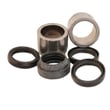
- Washer bearing and seal kit 285203 (common if you hear roaring/grinding during spin)
- Clutch 285785 (common if spin is weak or clothes come out wetter than normal)
- Valve 285805 (common if fill is slow, won’t fill, or won’t shut off)
Quick “repair vs. replace” guide
Use this as a practical rule of thumb for a Kenmore 11092274100:
| Situation | What it usually means | Typical next step |
|---|---|---|
| Won’t agitate/spin but motor runs | Drive connection issue | Check coupling/clutch |
| Won’t drain or drains slowly | Pump or blockage | Check pump and hoses |
| Loud roar in spin, tub play | Bearing/seal wear | Consider bearing/seal repair |
| Repeated out-of-balance shaking | Suspension wear or overload habits | Inspect springs, rebalance loads |
Why it matters
A washer that is maintained and repaired early often reaches the full 10 to 15-year lifespan. Waiting through symptoms like slow drain, leaks, or loud spin noise can turn a simple part replacement into a much larger repair.
Last updated: February 2026