View engine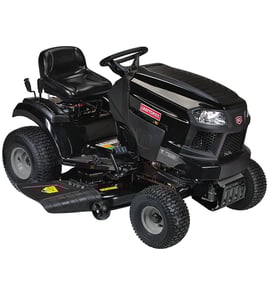


What size rear tires are on the PP20VA46-96046007900?
The Poulan PP20VA46-96046007900 front-engine lawn tractor uses 20 x 8-inch rear tires. That size is commonly written as 20x8.00-8 (20-inch overall diameter, 8-inch width, for an 8-inch rim).
How to confirm you have the right tire size
We recommend matching the numbers printed on the tire sidewall and confirming the rim size before ordering.
- Look for a sidewall marking like 20x8.00-8 or 20x8-8
- Confirm the rim diameter is 8 inches (the last number)
- Check whether your tire is tubeless or uses a tube
- Compare tread style to your needs (turf-friendly vs. more aggressive)
- Inspect the rim for damage; a bent rim can cause slow leaks and wobble
Rear tire size format (quick guide)
| Marking | What it means | What to match |
|---|---|---|
| 20x8.00-8 | 20 in diameter, 8 in width, 8 in rim | All three numbers |
| 20x8-8 | Same size, shortened format | Same as above |
Related parts that affect tire fit and tracking
If the tractor pulls to one side, wobbles, or won’t hold air, the tire may not be the only issue. These parts commonly contribute:
- Rear rim condition and bead seating
- Axle and hub wear
- Bearing wear at the front end (can feel like a rear tire issue)
- Tire pressure mismatch side-to-side
For front-end support parts, see the flange bearing 532009040 if you’re diagnosing looseness or wandering steering.
Why it matters
Using the correct rear tire size on the PP20VA46-96046007900 keeps the deck height consistent, improves traction, and helps protect the transaxle and differential from strain caused by mismatched rolling diameter.
Last updated: February 2026
How old is my Poulan Pro riding mower?
To estimate the age of your Poulan PP20VA46-96046007900 riding mower, we use the product identification label (usually under the seat or on the frame) and decode the serial number or date code printed on it. That label tells you the build date, which is the most accurate way to determine age.
Where to find the date information
Look for a manufacturer label in one of these common spots:
- Under the seat pan (lift the seat and look on the metal frame)
- On the rear frame near the hitch plate/drawbar area
- On the left or right side of the frame rail below the seat
- Near the engine compartment on the chassis (not on the engine itself)
If the label is dirty or faded, wipe it gently with a damp rag so the serial/date code is readable.
How to decode it (what to look for)
Poulan and Poulan Pro riding mowers commonly use a serial number or date code that includes a build date. On many units, the first digits can represent the month and year, but formats vary by production run.
Use this quick checklist:
- Find the serial number and any date or DOM (date of manufacture) field
- Write the serial number exactly as shown (letters and numbers)
- Look for a clear date stamp (month/day/year or month/year)
- If the code is numeric, check whether the first 2 digits look like a month (01-12)
Common label fields and what they mean
| Label field | What it tells you | Why it helps |
|---|---|---|
| Model number | Identifies the tractor family | Confirms you are decoding the right unit |
| Serial number | Production code | Often contains the build date |
| DOM / Date | Build date | Directly tells the mower’s age |
Why it matters
Knowing the build date helps us match the correct parts and diagrams for your mower, especially for wear items like belts, blades, and deck components that can change across production runs.
If you are also chasing a deck noise or vibration while you are checking the label, the most common related wear parts are the mandrel and pulleys; for this model, a frequent replacement is the lawn mower mandrel assembly 587819701.
Last updated: February 2026
What kind of oil does a Poulan Pro lawn mower take?
For a Poulan PP20VA46-96046007900 front-engine lawn tractor, we use 4-cycle engine oil (not 2-cycle mix). Most riding mowers like this run best on SAE 10W-30 for typical temperatures; use SAE 30 for consistently warm weather and 5W-30 for cold-weather starting.
Choose the right oil for how you mow
Use this as a practical guide for Poulan riding mowers and similar lawn tractors:
- SAE 10W-30: best all-around choice for spring through fall
- SAE 30: good for hot climates and steady summer mowing
- SAE 5W-30 (synthetic): easiest starting in colder temps
- Do not use 2-cycle oil unless your engine is a 2-stroke (most lawn tractors are 4-stroke)
- Check oil level before every mow; low oil can quickly damage the engine
| Your typical conditions | Recommended oil | Why it fits |
|---|---|---|
| Mixed temps (most regions) | SAE 10W-30 | Stable protection across a wide range |
| Hot weather mowing | SAE 30 | Holds viscosity better in heat |
| Cold starts | SAE 5W-30 (synthetic) | Faster lubrication at startup |
Quick oil-change tips (what we recommend)
- Park on level ground and let the engine cool.
- Drain oil fully, then refill slowly and recheck the dipstick.
- Replace the oil filter if your engine uses one.
- Wipe spills off the frame and deck to reduce smoke and odor on startup.
For seasonal maintenance steps that help oil stay clean longer, use our guide: how to tune up a riding lawn mower video.
Why it matters
Using the correct viscosity helps your Poulan engine lubricate properly at startup and under load. The wrong oil (or low oil) can cause hard starting, overheating, and accelerated wear.
Last updated: February 2026
What engine is in a Poulan Pro riding lawn mower?
For the Poulan PP20VA46-96046007900 front-engine lawn tractor, the exact engine make and model varies by build and is best confirmed from the engine ID label on your tractor (not just the mower deck size or series name). Once you match that ID, you can buy the correct tune-up and starting parts.
How to identify the engine on your PP20VA46-96046007900
Check these common locations for the engine identification label:
- On the blower housing (top or side of the engine shroud)
- Near the valve cover
- On the recoil starter housing (if equipped)
- On the engine block near the muffler or dipstick tube
- Stamped into a metal tag or printed on a sticker
Write down everything on the label (model, type, and code). That information is what parts lookups use.
Quick clues that help narrow it down
Even before you find the label, these details help you confirm you are shopping for the right engine family:
- Single-cylinder vs. V-twin layout
- Carbureted vs. fuel-injected (most are carbureted)
- Air filter style and housing shape
- Starter type and wiring (key start with solenoid is common)
- Horsepower rating shown on the hood or engine cover (marketing HP can differ from engine ID)
Common “no-start” and “click-no-crank” parts tied to the engine system
If your tractor clicks but will not crank, or cranks but will not start, these are the most common engine-starting items to check:
| Symptom | Most common checks | Related part on this model page |
|---|---|---|
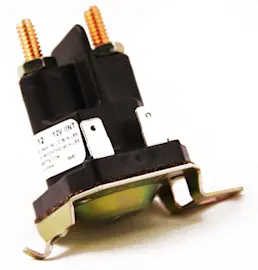
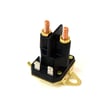
| Clicks once, no crank | Battery charge, cable connections, solenoid | Lawn tractor starter solenoid 582042802 |
| Cranks slowly | Weak battery, corroded terminals, bad ground | Battery and cables (match by size/CCA) |
| Cranks but will not start | Old fuel, dirty air filter, fouled plug | Tune-up items (match to engine ID) |
For step-by-step diagnosis, use riding lawn mower engine clicks but doesnt turn over video and riding lawn mower engine spins but wont start video.
Why it matters
Poulan model numbers identify the tractor chassis and deck; the engine is a separate component with its own model/type/code. Matching the engine ID prevents ordering the wrong ignition, carburetor, filter, or starter parts.
Last updated: February 2026
What are the parts of a lawn mower engine?
On the Poulan PP20VA46-96046007900 lawn tractor, the engine is built from fuel, air, ignition, and internal rotating parts that work together to create power. The exact layout varies by engine family, but the core components and what they do are consistent across most riding mowers.
Main engine components (what they do)
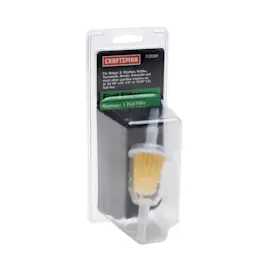
- Fuel tank and fuel line: stores and delivers gasoline to the carburetor
- Carburetor: mixes fuel and air for combustion
- Air filter: keeps dirt out of the engine intake
- Choke and throttle controls: help with cold starts and engine speed control
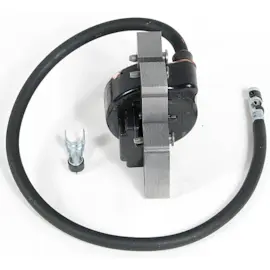
- Ignition system (spark plug, ignition coil, flywheel magnets): creates spark at the right time
- Starter system (starter motor or recoil starter, solenoid, battery): cranks the engine to start
- Crankcase and oil system: holds oil and lubricates internal parts
Internal engine parts (inside the engine)
- Cylinder and piston: compress the fuel-air mix and create power
- Connecting rod and crankshaft: convert piston motion into rotation
- Valves and camshaft (on OHV engines): control intake and exhaust flow
- Flywheel: smooths engine rotation and supports ignition timing
- Muffler: reduces exhaust noise
Quick “system view”
| System | Key parts | Common symptom when it fails |
|---|---|---|
| Fuel | tank, line, carburetor | starts then stalls, surging |
| Air | air filter, intake | runs rich, black smoke, low power |
| Spark | plug, coil, flywheel | cranks but will not start |
| Cranking | battery, solenoid, starter | clicks, slow crank, no crank |
Why it matters
Knowing which system you are dealing with speeds up troubleshooting. For example, a no-start is usually fuel or spark, while a click-no-crank points to the battery, cables, or solenoid.
Parts that are commonly involved in “won’t start” issues
If your tractor clicks or will not crank, these model-matched parts are often checked first:
- Lawn tractor starter solenoid 582042802 (switches battery power to the starter)
- Battery connections and ground cable condition
- Starter motor condition (if equipped)
For step-by-step diagnosis, we recommend riding lawn mower engine clicks but doesnt turn over video.
Last updated: February 2026