Owner’s manual
 Error Codes


Where is the model number on Kenmore Elite dryer?
On the Kenmore Elite dryer model 11065962401, the model number is on the model and serial number label at the top inside the dryer door well. Open the door and look along the upper edge of the door opening for the sticker/plate.
How to find it fast
- Open the dryer door fully.
- Look at the top inside lip of the door opening (the door well).
- Check the cabinet frame near the top corners if you do not see it immediately.
- Wipe dust off the label so the numbers are readable.
- Record both the model and serial numbers for parts lookup and service.
What the label typically includes
| Label item | What it’s used for |
|---|---|
| Model number (11065962401) | Matching the correct Kenmore parts diagrams and parts |
| Serial number | Identifying the production run for service and support |
| Electrical ratings | Confirming power requirements during troubleshooting |
Why it matters
We use the exact model number to match the correct drum, heating system, door switch, and other components for your dryer. Even small model-number differences can change which parts fit and which troubleshooting steps apply.
Where to confirm it in documentation
The location is listed in the product record section of the 11065962401 owner’s manual.
Last updated: February 2026
What is the life expectancy of a Kenmore dryer?
A Kenmore dryer typically lasts 10 to 13 years. With consistent care, many Kenmore Elite dryers like model 11065962401 run longer because routine lint removal and proper venting reduce heat stress on parts such as the heating element, motor, and drum support system.
Typical lifespan and what affects it
Most dryers fail early from overheating, restricted airflow, or wear in moving parts.
- Clean the lint screen every load (the manual warns not to wash it because wet lint is harder to remove).
- Remove lint from the exhaust vent about every 2 years (more often with heavy use).
- Have lint removed from inside the dryer cabinet about every 2 years by a qualified person.
- Avoid overloading; it strains the drive motor, idler pulley, and drum rollers.
- Use the correct vent material and routing described in the 11065962401 owner's manual.
Maintenance schedule (simple guide)
| Task | How often | Why it matters |
|---|---|---|
| Clean lint screen | Every load | Keeps airflow strong and drying times normal |
| Clean exhaust vent | About every 2 years | Prevents overheating and long dry times |
| Clean inside cabinet (qualified service) | About every 2 years | Reduces lint buildup near moving and heating parts |
| Check drum support wear/noise | As needed | Prevents drum drag and belt wear |
When replacing wear parts makes sense
If the dryer is otherwise in good shape, replacing common wear items can extend service life.
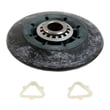
- Thumping or squealing: consider the support WPW10314173 (drum support roller) and related drum support parts.
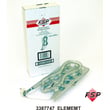
- No heat or weak heat: the dryer heating element WP3387747 and thermostats are common suspects.
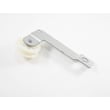
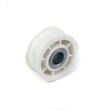
- Belt slipping or squeal: the dryer idler pulley 279640 is a frequent wear item.
Why it matters
A dryer that maintains proper airflow dries faster, runs cooler, and puts less load on the heating circuit and drive system. That directly improves reliability and helps you reach (or exceed) the typical 10 to 13 year life.
Last updated: February 2026
What are the codes for Kenmore Elite dryer?
On the Kenmore Elite dryer model 11065962401, the most common diagnostic codes include PF (power failure) and several F-codes that point to a failed control, keypad, heater relay, or temperature sensor (thermistor). Use the code to target the right checks and parts.
Common Kenmore Elite dryer codes and what they mean
- PF: Power failure or power interruption
- F:01: Main electronic control board failure
- F:02: Keypad or user interface failure
- F:20: Heater relay failure
- F:22 / F:23: Outlet thermistor failure
- F:24 / F:25: Inlet thermistor failure
Quick checks we recommend before replacing parts
- Reset power: unplug for 2 minutes, then restore power and retry the cycle.
- Confirm the dryer has correct power at the outlet (a weak or missing leg on 240V can cause odd behavior).
- Check for restricted airflow (packed lint screen, crushed vent, blocked exterior hood).
- Inspect wiring connections at the heater and sensors for loose terminals or heat damage.
- If the code returns immediately, run the diagnostic steps in the 11065962401 owner's manual.
What to do next (by code)
| Code | What to check first | Parts that are often involved |
|---|---|---|
| PF | House power, cord, breaker | None (usually power related) |
| F:20 | Heater circuit, wiring, airflow | Heating circuit components |
| F:22/F:23 | Outlet temperature sensing | Thermistor circuit |
| F:24/F:25 | Inlet temperature sensing | Thermistor circuit |
Why it matters
Error codes help us avoid guesswork. For example, a thermistor code can be triggered by a failed sensor or by overheating from poor venting, so fixing airflow can prevent repeat failures and protect the heating system.
For a no-heat complaint that accompanies an F-code, the heating element is a common wear item on this platform; the dryer heating element WP3387747 is the correct element listed for this model.
Last updated: February 2026
How do I know if my Kenmore dryer thermal fuse is blown?
If your Kenmore Elite dryer model 11065962401 won’t start, or it runs but produces no heat, a blown thermal fuse (or a related high-limit safety device) is a top suspect. We confirm it by unplugging the dryer and checking the fuse for continuity with a multimeter.
Quick symptoms to look for
- Dryer will not run at all (no motor, no tumbling)
- Drum tumbles but there is no heat (common when a house breaker is tripped on one leg for electric dryers)
- Cycle starts but stops quickly (overheat protection opening)
- Burning smell or very hot cabinet (often points to restricted airflow)
- Repeated heating problems after a recent repair (venting issue is likely)
How we test the thermal fuse (safe, accurate method)
- Unplug the dryer (or shut off the breaker).
- Access the fuse area using the disassembly steps in the 11065962401 owner’s manual.
- Remove at least one wire from the fuse terminal.
- Set a multimeter to continuity or lowest ohms.
- Test across the fuse terminals.
Interpreting the meter
| Meter result | What it means | What to do next |
|---|---|---|
| Beep or near 0 Ω | Fuse is good | Check airflow, thermostat, heater circuit |
| No beep or OL | Fuse is blown (open) | Replace the failed safety part and fix the overheating cause |
Why it matters (and what usually causes it)
A thermal fuse is designed to open when the dryer overheats. The most common cause is restricted airflow, which also leads to poor drying. The manual’s troubleshooting section calls out basics like checking power supply, cycle selection, and vent restriction symptoms.
What to check before replacing parts
- Clean the lint screen and make sure it seats fully
- Inspect the exhaust duct for crushing, kinks, or heavy lint buildup
- Check the outside vent hood for blockage
- Verify power supply: many electric dryers use two breakers or fuses (the drum can turn with no heat)
Parts that are often involved in “no heat” complaints
These are common heat-circuit parts for this model family; match by symptom and test results:
Last updated: February 2026
What does F1 mean on Kenmore dryer?
On Kenmore Elite dryer model 11065962401, an F1 (or F01) code points to a control sensing problem, most commonly a failed thermistor (temperature sensor) or an issue on the electronic control that reads it; the dryer may stop mid-cycle or refuse to start to prevent overheating.
What to do first (safe, quick checks)
- Unplug the dryer (or switch off the breaker) for 5 minutes, then restore power and try a timed cycle.
- Make sure the lint screen is clean and airflow is strong at the outside vent hood.
- Confirm the correct cycle is selected (avoid Air/No Heat if you expect heat).
- If the drum turns but there is no heat, check both household breakers or fuses (many electric dryers need two).
- If the code returns quickly, plan on testing the temperature-sensing circuit.
Why airflow matters with F1
Restricted venting can cause abnormal temperature readings that trigger sensor-related faults. The troubleshooting section in the 11065962401 owner's manual also emphasizes checking lint screen and exhaust vent restrictions when drying performance is poor.
Common causes and typical fixes
| Likely cause | What you may notice | Typical fix |
|---|---|---|
| Thermistor out of range | F1 appears early in cycle, heat seems erratic | Test thermistor resistance; replace if out of spec |
| Loose/burned wiring at heater/sensor | Intermittent F1, scorching smell, heat cuts out | Inspect and repair wiring/terminals |
| Control board input fault | F1 persists after sensor tests good | Replace electronic control (model-specific part) |
| Overheating from blocked vent | Very hot cabinet, long dry times | Clean/repair venting and internal lint buildup |
Parts that are often involved
If testing points to the heating circuit or overheating, these model-matched parts are commonly checked during diagnosis:
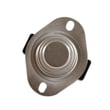
- Dryer operating thermostat WP3387134 (helps regulate operating temperature)
- Cut-off kit 279769 (thermal safety devices that open if overheating occurs)
- Dryer heating element WP3387747 (can short to ground and cause abnormal heating)
Why it matters
F1 is the dryer telling you it cannot reliably measure or control temperature. Fixing the root cause protects clothing, improves dry times, and helps prevent repeat shutdowns.
Last updated: February 2026
How to reset a Kenmore Elite dryer?
For the Kenmore Elite dryer model 11065962401, the most reliable “reset” is a power reset: turn the cycle control to OFF, unplug the dryer (or switch the breaker off) for 1 minute, then restore power and start a new cycle. See the 11065962401 owner's manual for the stop and restart steps.
Quick reset steps (power reset)
- Turn the Cycle Selector to OFF.
- Unplug the dryer (or turn both dryer breakers off).
- Wait 1 minute.
- Restore power.
- Close the door firmly.
- Select a cycle and temperature.
- Press PUSH TO START.
If it still will not start after resetting
These checks solve most “won’t run” complaints on this style of Kenmore dryer:
- Confirm the door is fully closed; a failed door switch can prevent starting.
- Check house power: many dryers use two fuses or breakers; reset both.
- Make sure the timer/cycle knob is set on a cycle (not between positions).
- If the drum light works but the motor will not run, inspect the belt and idler system.
- If the dryer runs but shuts off quickly, check airflow and lint buildup.
Common parts related to “won’t start” symptoms
| Symptom | What it often points to | Example part for this model |
|---|---|---|
| Door must be slammed to start | Door switch not closing consistently | Dryer door switch WP3406107 |
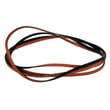
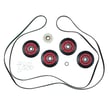
| Motor hums, drum does not turn | Belt/idler/roller wear | Dryer repair kit 4392067 |
| Runs but no heat (not a reset issue) | Heating circuit problem | Dryer heating element WP3387747 |
Why it matters
A “reset” clears a temporary control state and forces a fresh start, but it will not fix a mechanical failure (belt, idler pulley) or an electrical supply issue (one tripped breaker). Doing the quick checks above prevents repeat shutdowns and protects the motor and heater.
Last updated: February 2026