


How often should you change your edger blade?
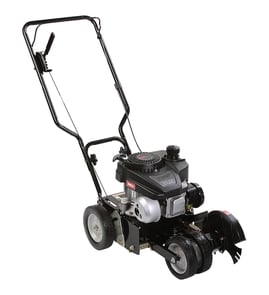
For the Craftsman 536871302 9-inch 3.5-hp edger/trimmer, we replace the edger blade when it is worn down enough that it no longer cuts a clean edge, typically when a 9-inch blade measures about 7-1/4 inches in diameter. In normal homeowner use, that often works out to about once per season, but wear rate depends heavily on soil and edging habits.
Quick replacement guidelines (what we use)
- Replace the blade if the edge looks rounded, chipped, or uneven and sharpening no longer restores a crisp cut.
- Replace the blade if the diameter has worn down to roughly 7-1/4 inches (common end-of-life point for a 9-inch blade).
- Replace sooner if you hit rocks, concrete edges, or metal landscape edging.
- Replace if the edger starts bouncing, vibrating, or leaving a ragged trench.
- Replace if you need to make multiple passes to get the same edge you used to get in one pass.
How to tell you are due (symptoms you will notice)
A worn blade usually shows up as poor cut quality and extra effort. Here are the most common signs:
- Ragged edge instead of a clean, straight line
- Excessive dust and tearing rather than slicing
- The edger “walks” or chatters along the edge
- You have to slow down a lot to keep it from skipping
- The blade looks noticeably smaller than when new
Typical blade life by conditions
| Your edging conditions | Typical blade life | What to do |
|---|---|---|
| Soft soil, light touch-ups | 1 season or longer | Sharpen occasionally; replace at wear limit |
| Mixed soil with some gravel | About 1 season | Inspect often; replace sooner if chipped |
| Rocky soil or frequent concrete contact | Multiple times per season | Replace when cut quality drops or blade is damaged |
Why it matters
A fresh, correctly sized blade helps your Craftsman 536871302 cut a clean edge with less vibration and less strain on the engine and belt/drive components. Waiting too long can turn a simple edging job into repeated passes and extra wear.
Finding the correct replacement blade
Use the model number 536871302 to match the correct blade style, center hole pattern, and hardware. Our best starting point is the model number help in how to find your appliance model number (and what it means for parts).
Last updated: February 2026
What size blade is a Craftsman 536871302 edger?
The Craftsman 536871302 9-inch 3.5-hp edger/trimmer uses a 9-inch edger blade. When you shop for a replacement, match the blade diameter (9 inches) and also confirm the center mounting hole pattern so it fits the blade hub correctly.
How to confirm you are buying the right 9-inch blade
Even with the correct diameter, edger blades can differ by arbor (center hole) style and thickness.
- Measure the blade diameter across the widest point: 9 inches
- Check the center mounting style (round hole, slotted, multi-hole pattern)
- Compare blade thickness to your old blade (most edger blades are roughly 0.090 to 0.125 inches thick)
- Inspect the blade hub and fasteners for wear (a worn hub can cause wobble)
- Replace any damaged washers, spacers, or the blade bolt if threads are worn
Quick fit checklist (what to match)
| What to match | Target for model 536871302 | Why it matters |
|---|---|---|
| Blade diameter | 9 inches | Sets the cutting path and guard clearance |
| Arbor / mounting pattern | Match existing blade | Prevents wobble and bolt loosening |
| Blade thickness | Match existing blade | Affects clamp force and alignment |
| Rotation direction | Match original setup | Keeps cutting efficient and safe |
Why it matters
Using the wrong arbor pattern or thickness can make the blade sit off-center, which leads to vibration, uneven edging, and premature wear on the blade hub and crankshaft area.
Helpful related info
If you are not 100% sure you have the correct model number before ordering, use our guide: how to find your appliance model number (and what it means for parts).
Last updated: February 2026
What engine is on a Craftsman edger?
For the Craftsman model 536871302 9" 3.5-hp edger/trimmer, the engine is a small gas walk-behind edger engine in the 3.5 HP class. This model page does not list a specific engine brand or CC rating, so we match parts by the exact model number and engine type.
How to identify the exact engine on model 536871302
The fastest way to confirm the engine make and spec is to read the engine ID information stamped on the engine itself.
- Look for an engine model/type/code label on the recoil starter housing, valve cover, or blower shroud
- Write down the engine model number and any type or spec numbers
- Check the carburetor and muffler area for a tag or stamped ID (often oily or dirt-covered)
- If the label is missing, record the shaft orientation (vertical vs. horizontal) and mount pattern
- Use the edger’s full model number 536871302 when searching parts so you get the correct diagrams
Common engine types you will see on Craftsman edgers
Craftsman edgers across different model families may use different engine suppliers, even when the edger size looks similar.
| Engine type | What it usually means | What you should check |
|---|---|---|
| 2-cycle gas | Mix oil + gas; lighter | Fuel mix ratio, primer bulb, spark arrestor screen |
| 4-cycle gas | Straight gas; heavier | Oil level, air filter, carburetor bowl, valve clearance |
| Older flathead-style small engine | Simple design; common on older units | Compression, ignition coil gap, carburetor condition |
Why it matters
The engine brand and spec determine the correct carburetor parts, air filter, spark plug, recoil starter, and governor linkage. Using the wrong engine spec is a top reason parts do not fit, even when the edger model looks close.
Helpful DIY reference
If you are having trouble matching the correct model and engine identifiers, use how to find your appliance model number (and what it means for parts) to confirm you are searching with the right numbers.
Last updated: February 2026
Can I convert trimmer to edger?
Yes, you can convert many string trimmers to work like an edger by rotating the cutting head to a vertical position and using a guide (wheel or edge guide) to keep a steady 90-degree cut along sidewalks and driveways. For a dedicated unit like the Craftsman 536871302 9" 3.5-hp edger/trimmer, the most reliable approach is using the edger setup the machine was designed for.
Best ways to convert a trimmer to an edger
- Swivel/rotating head (easiest): Rotate the trimmer head to vertical and edge with the guard facing you.
- Edger attachment kit: Some trimmers accept a manufacturer-specific edger attachment (often includes a wheel and blade).
- Manual edging technique: Hold the shaft so the string cuts vertically; walk slowly and let the tool do the cutting.
- Add a guide wheel (if compatible): A wheel helps keep depth and line consistent.
What to check before you try it
Use this quick checklist to avoid poor cuts and extra wear:
- Confirm the trimmer has a rotating head or supports an edger attachment.
- Make sure the guard can be positioned safely for vertical cutting.
- Verify you can maintain a stable stance; edging puts the tool closer to hard surfaces.
- Expect more string breakage if you edge against concrete frequently.
Quick comparison: converted trimmer vs dedicated edger
| Option | Cut quality | Control | Typical best use | |---|---|---| | Converted string trimmer | Good (with practice) | Medium | Light edging, touch-ups | | Dedicated edger (like Craftsman 536871302) | Very good | High | Crisp edges, longer runs |
Why it matters
Edging is all about control and consistency. A converted trimmer can work well for occasional touch-ups, but a dedicated edger setup typically tracks straighter, holds depth better, and produces a cleaner trench line along pavement.
For help identifying the exact model number before ordering accessories or replacement items, use how to find your appliance model number (and what it means for parts).
Last updated: February 2026
What does a Craftsman edger do?
A Craftsman edger like model 536871302 is designed to cut a clean, defined edge along sidewalks, driveways, and landscape borders by trimming turf that overhangs hard surfaces. Many edger/trimmer models also let you cut a shallow trench to help define beds or install edging.
What you can do with a 9-inch 3.5-HP edger/trimmer
- Edge along concrete: creates a crisp line where grass meets pavement
- Trim overgrowth: removes turf that creeps onto sidewalks and curbs
- Define landscape beds: sharpens the border between lawn and mulch/rock
- Cut a shallow trench (on many units): helps set plastic/metal landscape edging
- Clean up after mowing: finishes areas a mower deck cannot reach cleanly
How it works (simple overview)
Most walk-behind edgers use a spinning blade positioned vertically (or near-vertical) to slice the grass and soil at the lawn edge. Depth and angle are typically controlled by an edge guide and wheel height adjustments.
| Task | What you adjust | Typical result |
|---|---|---|
| Basic edging | Blade alignment and guide position | Straight, clean edge line |
| Heavier overgrowth | Slower pace, multiple passes | Less bogging, cleaner cut |
| Shallow trenching | Depth setting (if equipped) | Narrow groove along border |
Tips for cleaner edges and easier handling
- Make two light passes instead of one deep cut in thick turf.
- Keep the blade tracking the hard edge; do not force the tool sideways.
- Edge when soil is slightly dry; muddy soil clumps and can smear the edge.
- Clear rocks, sticks, and sprinkler heads before starting.
- If the cut looks ragged, inspect the blade for dulling or damage.
Why it matters
A properly edged lawn looks more finished, helps keep grass from spreading into beds, and reduces the amount of string trimming needed. It also makes routine mowing faster because borders stay defined longer.
For help confirming you have the correct model number before ordering parts for your Craftsman edger, use how to find your appliance model number (and what it means for parts).
Last updated: February 2026