Owner’s manual


How do I get my dryer out of lock mode?
To take your Kenmore Elite dryer model 11087761800 out of lock mode, press and hold CYCLE SIGNAL for 3 seconds. The Control Locked indicator light should turn off, confirming the controls are unlocked (the same button toggles lock on and off). See the 11087761800 owner's manual for the exact control panel behavior.
Quick steps to unlock (Control Locked)
- Make sure the dryer is powered on.
- Press and hold CYCLE SIGNAL for 3 seconds.
- Watch for the Control Locked indicator light to turn off.
- If a cycle is running and you need to stop it first, press STOP twice.
- Try the 3-second press again after stopping the cycle.
If it still seems locked
Sometimes the dryer is not “locked”; it is waiting for a valid start or a reset.
- Close the door fully, then press and hold START for about 3 seconds to begin a cycle.
- If you changed your mind mid-cycle, press STOP twice to clear the current cycle and settings.
- Re-select the cycle, then press and hold START.
- If buttons beep but won’t accept a choice, you may be selecting an unavailable option combination.
What the buttons do on this model
| What you see | What it usually means | What to do |
|---|---|---|
| Control Locked light on | Controls are locked | Hold CYCLE SIGNAL 3 seconds |
| Dryer won’t start | Not started yet or door not recognized | Close door; hold START 3 seconds |
| Need to cancel a cycle | Cycle is active | Press STOP twice |
Why it matters
Control lock prevents unintended cycle or option changes (for example, from bumping the panel during operation). Unlocking it restores normal control response so you can select cycles, dryness level, temperature, and options.
Last updated: February 2026
How do I tell if my dryer heating element is bad?
If our Kenmore Elite dryer model 11087761800 runs but won’t heat, takes much longer to dry, or trips the L2 (heater not turning on) diagnostic, the heating element is a top suspect. We confirm it by safely accessing the heater and checking the element for visible damage and proper electrical continuity.
Quick symptoms to look for
- Drum tumbles normally but clothes stay cool and damp
- Dry times suddenly get much longer on heated cycles
- A heated cycle never warms up (Timed Dry with heat is a good check)
- You see a broken coil, hot spot, or burn mark on the element
- The dryer shows L2 and continues tumbling (often a power supply issue, but it can present like “no heat”)
The most reliable test: continuity (multimeter)
- Unplug the dryer (electric shock risk) and let it cool.
- Access the heater housing (follow the access steps in the owner's manual).
- Remove at least one wire from the heating element terminal.
- Set your meter to ohms (Ω) or continuity.
- Measure across the element terminals.
What the readings mean
| Meter result | What it usually means | Next step |
|---|---|---|
| Continuity present; resistance typically ~10 to 50 Ω | Element is likely OK | Check airflow, thermostats, and power supply |
| No continuity; “OL” or infinite resistance | Element is failed (open) | Replace the element |
| Continuity from a terminal to the metal heater housing | Element is shorted to ground | Replace the element |
Don’t miss these common “no heat” causes
The manual notes several issues that can stop heat even when the drum turns:
- Tripped breaker or blown fuse (electric dryers use two fuses/breakers)
- Loose or incorrect 240-volt power supply connection
- Crushed or blocked venting (often tied to AF airflow warnings)
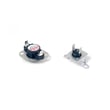
- Failed temperature controls such as the dryer high-limit thermostat WP8557403 or the dryer thermal cut-off fuse kit 279973
Why it matters
A bad heating element is common, but restricted airflow or a failed high-limit device can also prevent heat and can cause repeat failures if the venting problem is not corrected first.
Last updated: February 2026
Is it worth replacing the heating element in a dryer?
Yes. For a Kenmore Elite dryer model 11087761800, replacing a failed heating element is usually worth it because the repair cost is typically far less than replacing the dryer, and it often restores normal heat immediately when the rest of the dryer is in good condition. See the owner's manual for model-specific troubleshooting steps.
When replacing the heating element makes sense
We recommend replacing the heating element when the dryer runs but has no heat, and basic power and airflow checks look good.
- The drum tumbles normally but clothes stay cold or damp
- You have proper 240V power (many “no heat” calls are actually a power-supply issue)
- The vent is clear and airflow is strong
- The dryer is otherwise reliable (no major drum, motor, or control problems)
- You want to extend the dryer’s life instead of replacing the appliance
Check these first (common “no heat” causes)
Your manual notes that electric dryers require a 240-volt supply and typically use two fuses or two breakers; the drum can still turn even if one side trips.
- Reset both dryer breakers (or replace both fuses if applicable)
- Run a Timed Dry heated cycle (not Air Only)
- Confirm the door closes and latches firmly
- Inspect and clean lint buildup in the lint screen housing and venting
- If the display shows L2, treat it as a home power supply issue affecting the heater
Parts that are often replaced with (or instead of) the element
A heating failure is sometimes caused by a safety device opening due to overheating or restricted airflow.
| Symptom | Common related part | Example part for this model |
|---|---|---|
| No heat, dryer runs | Heating element | Dryer heating element WP8544771 |
| No heat after overheating event | Thermal cut-off / fuse | Dryer thermal cut-off fuse kit 279973 |
| Heat cycles erratically | Temperature sensor | Dryer thermistor WP8577274 |
Why it matters
A working heater depends on correct voltage and safe airflow. Fixing the root cause (like a blocked vent) helps prevent repeat failures and protects components such as the high-limit thermostat and thermal cut-off.
Last updated: February 2026
What is the life expectancy of a Kenmore dryer?
A Kenmore dryer like model 11087761800 typically lasts 10 to 13 years with normal household use. Regular airflow maintenance (lint screen and vent cleaning) and timely replacement of wear parts like rollers and the idler pulley can push real-world life closer to the high end.
Typical lifespan and what changes it
Most dryers fail early due to heat stress and restricted airflow, not because the cabinet or drum “wears out.” For the Kenmore Elite 11087761800, these factors matter most:
- Vent restriction (long runs, crushed flex duct, clogged exterior hood)
- Lint buildup inside the cabinet (the manual recommends periodic internal cleaning)
- Overloading (extra strain on the drive motor, belt, and drum supports)
- High-heat cycles used constantly (more stress on thermostats and the heating circuit)
- Worn drum support parts (noise, drag, longer dry times)
Maintenance schedule we recommend
Your owner's manual calls out key intervals that directly affect dryer life.
| Task | How often | Why it matters |
|---|---|---|
| Clean lint screen | Every load | Keeps airflow strong and drying efficient |
| Clean exhaust vent line to outside | About every 2 years (more with heavy use) | Prevents overheating and long dry times |
| Remove lint from inside dryer cabinet (qualified service) | About every 2 years | Reduces heat buildup and component stress |
| Inspect vent hood flap outside | Seasonally | Confirms air is actually leaving the home |
Parts that commonly extend dryer life
If your dryer is squealing, thumping, or taking longer to dry, replacing wear items early often prevents bigger failures.
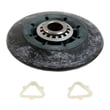
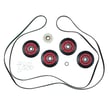
- Dryer repair kit 4392067 (common wear items bundled together)
- Support WPW10314173 (drum support roller style component)
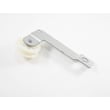
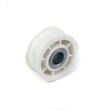
- Dryer idler pulley 279640 (keeps belt tension correct)
- Dryer thermistor WP8577274 (helps regulate temperature)
- Dryer thermal cut-off fuse kit 279973 (often involved after overheating events)
Why it matters
A dryer that runs hot or can’t move air efficiently runs longer per load. That extra runtime accelerates wear on the heating element, thermostats, motor, belt, and drum support system, shortening the overall service life.
Last updated: February 2026