Owner’s manual
 Error Codes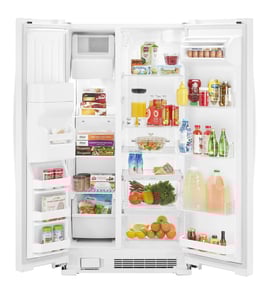


What is the average lifespan of a GE refrigerator?
Most GE refrigerators average about 12 to 15 years of service life in normal household use. For your GE GSE25HSHBHSS side-by-side refrigerator, consistent temperatures, clean airflow, and timely maintenance (like filter changes) are what most directly extend lifespan; see the GSE25HSHBHSS owner's manual for care and operating guidance.
Typical lifespan ranges (what we see most often)
- Average: 12 to 15 years
- Common overall range: 10 to 20 years
- Shorter lifespan is more likely when the unit runs hot (dirty condenser area, poor ventilation) or has chronic door seal leaks
- Longer lifespan is more likely with stable room temps, good door sealing, and regular cleaning
| Refrigerator type | Typical lifespan | What usually ends it first |
|---|---|---|
| Side-by-side (like GSE25HSHBHSS) | 12 to 15 years | Sealed system wear, airflow/defrost issues |
| Top-freezer | 13 to 17 years | Thermostat/control or sealed system |
| French door | 10 to 15 years | Ice maker/dispenser wear, airflow issues |
Maintenance that most improves lifespan
- Keep vents inside the fresh food and freezer sections unblocked
- Clean dust from the condenser area and ensure good clearance around the cabinet
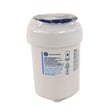
- Replace the water filter on schedule; for this model, use the refrigerator water filter MWFP
- Confirm doors close fully; fix gasket gaps and reduce frequent, long door openings
- Address temperature swings early (warm fridge, soft ice, heavy frost)
Why it matters
A refrigerator that runs warmer than normal or has restricted airflow typically runs longer and harder. That extra runtime increases wear on key components like the compressor, evaporator fan, and defrost system, which can shorten the overall life of the appliance.
Last updated: February 2026
What is the most common problem with a GE refrigerator?
The most common issue we see on GE refrigerators like model GSE25HSHBHSS is a cooling problem (fresh food warm, freezer not holding temperature, or temperatures swinging). It is usually caused by restricted airflow, a defrost system issue, or a failed cooling component; start with basic checks in the GSE25HSHBHSS owner's manual.
Quick symptoms and what they usually point to
- Not cooling or weak cooling: dirty condenser area, evaporator fan not running, frost buildup from a defrost failure
- Strange noises: evaporator fan hitting ice, worn fan motor, normal ice maker cycling sounds
- Ice maker not working: clogged filter, low water pressure, inlet valve issue, ice maker failure
- Water dispenser slow or not dispensing: clogged filter, dispenser lock enabled, frozen reservoir (on some models)
- Water leaking: clogged/iced defrost drain, loose water line, cracked reservoir
- Door not closing: gasket not sealing, bins/shelves blocking, cabinet not level
What to check first (fast, no tools)
- Confirm controls are set to a normal cooling setting (not OFF).
- Make sure vents inside both compartments are not blocked by food packages.
- If water flow is weak, replace the water filter and purge the line; a clogged filter is a common cause. Using the correct filter such as the refrigerator water filter MWFP helps restore flow and ice production.
- If the dispenser will not run, check whether the dispenser is locked (many GE models unlock by holding LOCK for 3 seconds).
- Listen for the evaporator fan; if the freezer is cold but the fresh food side is warm, airflow is often the issue.
Common problems and likely parts (at a glance)
| Symptom | Most likely system | Example part for GSE25HSHBHSS |
|---|---|---|
| Warm temps, poor airflow | Evaporator fan/air movement | Refrigerator evaporator fan motor WR60X10307 |
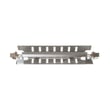
| Frost wall in freezer, warming | Defrost system | Refrigerator defrost heater WR51X10055; refrigerator defrost bi-metal thermostat WR50X10065 |
| No water, no ice | Water supply/filtration | Refrigerator water filter MWFP; refrigerator water valve WR57X33326 |
| Ice clumping at chute | Dispenser chute door | Refrigerator dispenser ice chute door kit WR17X11653 |
Why it matters
Cooling problems can quickly lead to food spoilage and can also trigger secondary issues like ice maker failures and excess frost. Catching airflow and defrost problems early usually prevents bigger repairs.
Last updated: February 2026
How wide is a 25.6 cubic foot refrigerator?
Most 25.6 cu. ft. side-by-side refrigerators are about 36 inches wide. For the GE GSE25HSHBHSS, the installation dimensions shown in the documentation list a 36-inch cabinet opening width; plan for small side clearances as well (see the GSE25HSHBHSS owner’s manual).
What to measure (so you get the right fit)
When we talk about “width,” there are a few different measurements that matter for installation and moving:
- Cabinet opening width: the space between cabinets or walls (commonly 36 inches for this size class)
- Refrigerator case width: the box itself, not counting extra clearance
- Door swing clearance: extra room so doors open fully without hitting walls
- Entryway width: the narrowest doorway or hallway the refrigerator must pass through
Clearances to plan around the width
The manual calls out small clearances for installation, airflow, and hookups. Typical guidance for this GE side-by-side style is:
| Location | Typical clearance to allow | Why it matters |
|---|---|---|
| Sides | 1/8 inch | Prevents rubbing and helps airflow |
| Top | 1 inch | Venting and easier positioning |
| Back | 1/2 to 1 inch | Room for cord, water line, and airflow |
Moving tip: door removal threshold
If you are trying to get the refrigerator into the kitchen, the manual notes that if an entrance is less than 38 inches wide, the doors must be removed. This is a common reason a “36-inch wide” refrigerator still will not fit through a tight doorway.
Why it matters
A refrigerator that is the right “capacity” can still be the wrong “fit.” Using the 36-inch width plus the recommended clearances helps prevent door alignment issues, poor airflow, and installation headaches.
Last updated: February 2026
Is GE Cafe considered high end?
Yes. GE Café is considered a premium, high-end appliance line within GE’s lineup. It’s positioned above standard GE models and is known for upgraded design options and feature sets; for model-specific care and feature details, use the GSE25HSHBHSS owner's manual.
Where GE Café fits in the GE lineup
GE generally tiers its kitchen brands like this (from mainstream to luxury):
| GE family | Typical positioning | What you usually get |
|---|---|---|
| GE (standard) | Mainstream | Core features, value-focused |
| GE Profile | Premium | More advanced features and performance |
| GE Café | High-end premium | Premium features plus elevated styling and customization |
| Monogram | Ultra-luxury | Built-in luxury designs and top-tier finishes |
What “high end” usually means with GE Café
When customers call Café “high end,” they typically mean a mix of design and capability:
- Distinctive styling and coordinated finishes
- Customizable hardware and a more built-in look
- Feature-rich controls and convenience options
- Higher price point than standard GE and many Profile models
- Strong focus on kitchen aesthetics (matching suite appeal)
How this relates to your GE GSE25HSHBHSS refrigerator
Your GE GSE25HSHBHSS is a GE-branded side-by-side refrigerator model, not a Café model. Even so, many ownership questions overlap across GE refrigerators, such as water filtration, dispenser operation, and ice maker performance.
If you’re comparing “high end” across refrigerators, we recommend focusing on:
- Cooling consistency (temperature stability)
- Dispenser and ice maker reliability
- Filtration needs and filter availability
- Noise level (evaporator fan and airflow)
- Repair part availability (filters, valves, sensors)
Why it matters
Knowing whether a line is “high end” helps set expectations for features, styling options, and long-term ownership costs (filters, accessories, and repair parts). For example, GE refrigerators often require a filter or bypass plug for the dispenser and ice maker to operate correctly; the manual explains those requirements.
Last updated: February 2026