Installation guide
 Owner’s manual


Are Whirlpool washer parts interchangeable?
Some Whirlpool washer parts are interchangeable, but only when the replacement part is listed as compatible with your exact washer model, such as Whirlpool WTW4800XQ0. The safest approach is to match by model number and the original part ID in the parts list or the WTW4800XQ0 owner's manual.
How to tell if a part will fit WTW4800XQ0
We recommend confirming fit using the model-specific parts list and the part’s ID, not just the brand name. Many Whirlpool washers look similar but use different revisions of belts, actuators, and controls.
- Match the appliance model number: WTW4800XQ0
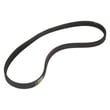
- Match the part ID and part name (example: washer drive belt WPW10006384)
- Compare the part’s location in the diagram (drive system, lid, drain, suspension)
- Replace related wear items together when appropriate (belt plus pulley components)
- Avoid “universal” substitutions for safety and performance-critical parts
Common parts that are often model-specific
These parts frequently vary by platform, production run, or wiring style, so we treat them as model-specific even within Whirlpool:
| Part area | What can differ | Example for WTW4800XQ0 |
|---|---|---|
| Drive system | Belt length/profile, pulley design | Washer drive belt WPW10006384 |
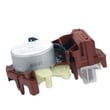
| Shifting/drive control | Connector style, calibration | Washer actuator WPW10006355 |
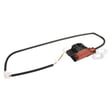
| Safety interlock | Latch style, harness, mounting | Washer lid lock assembly W10404050 |
| Drain | Pump housing, impeller, ports | Washer drain pump assembly WPW10276397 |
Why it matters
Using a part that is not confirmed for WTW4800XQ0 can cause symptoms like no spin, poor agitation, leaks, or lid lock errors. It can also create extra vibration or noise because the drive and suspension systems are tuned to specific components.
Quick fit-check tips before you order
- Use the model number on the washer’s tag and match it exactly to WTW4800XQ0
- If you already removed the old part, compare markings and connector shape
- For installation-related items (hoses, leveling, drain setup), follow the installation guide to prevent leaks and “washer walk”
Last updated: February 2026
What is the average lifespan of a whirlpool washer?
Most Whirlpool washers average 10 to 14 years of service life; a top-load model like WTW4800XQ0 typically lands in that range when it is installed level, used with correct loading habits, and maintained per the WTW4800XQ0 owner's manual.
Typical lifespan range (what to expect)
We see washer lifespan track closely with design type and how hard the machine is worked.
- Typical Whirlpool washer lifespan: 10 to 14 years
- Heavy use (large family, daily loads): closer to 10 years
- Light to moderate use: often 12 to 14 years
- Poor leveling or chronic overloading: shortens life by increasing vibration and drivetrain wear
| Usage pattern | What usually wears first | What you notice |
|---|---|---|
| Heavy, frequent loads | Drive system, suspension | Loud spin, shaking, slow/agitation issues |
| Normal household use | Drain components, lid lock | Not draining, won’t start/spin |
| Unlevel floor or weak flooring | Suspension, tub support | Walking, banging, off-balance spins |
Maintenance that extends life (high impact)
These steps protect the parts that most often fail on a top-load washer.
- Keep loads balanced; mix items and avoid packing the basket tight
- Level the washer to reduce vibration (the installation guide calls out leveling as critical for noise and vibration)
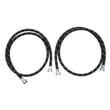
- Replace inlet hoses every 5 years and inspect for bulges, cracks, or leaks (this is a key preventive step)
- Use the right amount of detergent; excess suds can cause poor rinsing and extra strain
- Address drain issues early so the pump is not forced to run against restrictions
Why it matters
A washer that is out of level or routinely overloaded puts extra stress on the drive belt, gear case, and suspension. That stress shows up as vibration, noise, and spin problems, and it is one of the fastest ways to shorten the life of a Whirlpool top-load washer.
Parts that commonly come up as the washer ages
If performance changes over time, these model-matched parts are common fixes for WTW4800XQ0 symptoms:
- Washer drive belt WPW10006384 (slipping, weak spin/agitation)
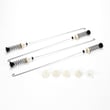
- Suspension W10780048 (banging, off-balance, walking)
- Washer lid lock assembly W10404050 (won’t start, won’t spin with lid closed)
- Washer drain pump assembly WPW10276397 (won’t drain, slow drain)
Last updated: February 2026
What is the most common problem with a washing machine top loader?
The most common top-load washer problem is an unbalanced load, which makes the washer bang, vibrate, or “walk” during spin. On a Whirlpool WTW4800XQ0, the fastest fixes are redistributing the load and leveling the washer using the setup steps in the installation guide.
Quick fixes we recommend first
- Pause the cycle and redistribute items evenly around the basket.
- Wash bulky items (blankets, jackets) with a few similar items, not alone.
- Confirm the washer sits solidly on all four feet; adjust feet until stable.
- Verify the floor is firm and level; a sloped floor increases vibration.
- Make sure the drain hose is secured and not pulling the washer off level.
If it still shakes or bangs: common causes and parts
If leveling and load size are correct, persistent vibration usually points to worn suspension or a drive issue.
| Symptom during spin | Most likely cause | What to check next |
|---|---|---|
| Tub hits cabinet, loud thumping | Worn suspension | Inspect and replace the suspension W10780048 if rods are weak or uneven |
| Washer “walks” forward | Not level, feet not planted | Re-level; confirm all feet contact the floor |
| Squeal, burning rubber smell | Worn belt | Inspect the washer drive belt WPW10006384 for glazing, cracks, or slack |
| Won’t spin and lid won’t lock | Lid lock issue | Check the washer lid lock assembly W10404050 and lid strike alignment |
Why it matters
Running a top-load washer out of balance can damage the suspension, belt, and gear case over time, and it can also cause poor spin performance (clothes come out wetter) and extra noise.
Model-specific setup notes that prevent vibration
For the Whirlpool WTW4800XQ0, proper installation reduces noise and “washer walk.” We follow these basics from the installation requirements:
- Use a level floor with minimal slope.
- Keep the washer within typical hose and outlet reach.
- Secure the drain hose so it cannot slip out or siphon.
Last updated: February 2026
What size is the Whirlpool WTW4800XQ0?
The Whirlpool WTW4800XQ0 is a 27-inch wide top-load washer. For installation, plan for the washer footprint plus the clearances and drain standpipe height requirements shown in the installation guide.
What “size” usually means for this washer
When customers ask about size, it typically includes one or more of these:
- Width: 27 inches (cabinet width)
- Installation space: room for hookups, drain hose routing, and service access
- Drain setup limits: standpipe height and diameter requirements
- Capacity (tub size): often listed separately from physical dimensions
Installation dimensions and clearances to plan for
The WTW4800XQ0 installation instructions allow 0 in. clearance on the sides (tested), but we recommend leaving extra space for easier service and reduced vibration transfer.
- Tested side clearance: 0 in.
- Noise and vibration reduction: add 1 in. on all sides
- Closet installs: door must have top and bottom ventilation openings
- Standpipe requirements: 2 in. minimum diameter
- Standpipe height: 39 in. minimum, 96 in. maximum (from bottom of washer)
Quick planning table
| Item | What to plan for | Why it matters |
|---|---|---|
| Washer width | 27 in. | Fit through doorways and into the laundry space |
| Side clearance | 0 in. tested; 1 in. recommended | Reduces noise, makes service easier |
| Standpipe height | 39 to 96 in. | Prevents siphoning and drain problems |
| Standpipe diameter | 2 in. minimum | Helps prevent overflow and slow draining |
Why it matters
A washer can be the right width but still be a poor fit if the drain standpipe is too short or too tall, or if the space is too tight to keep the unit level. Correct spacing and drain setup help prevent vibration, walking, and drain errors.
Last updated: February 2026