Owner’s manual
 Error Codes


What size is Kenmore refrigerator model 79573132411?
Kenmore Elite refrigerator model 79573132411 is a bottom-mount style refrigerator; its exact exterior dimensions (width, depth, height) are listed in the 79573132411 owner's manual. Most 33-inch-class bottom-mount units are roughly 33 in. wide, 30 to 34 in. deep, and 67 to 70 in. tall.
We recommend using the model-specific spec section in the manual and measuring your installation space before moving the refrigerator.
- Check the dimensions section in the 79573132411 owner's manual.
- Measure the cabinet opening: width, depth to the wall, and height to any overhead cabinet.
- Include door and drawer swing clearance; the manual calls out allowing about 24 inches in front to open doors.
- Plan for airflow clearance around the cabinet (tight spacing can reduce cooling performance).
- If you must move it through a narrow opening, the manual notes removing doors is the recommended procedure.
These ranges help you estimate fit while you confirm the exact numbers in the manual.
| Measurement | Typical range for this style | What to measure at home |
|---|---|---|
| Width | 32 to 34 in. | Smallest cabinet opening width |
| Depth | 30 to 34 in. | From back wall to front of doors/handles |
| Height | 67 to 70 in. | Floor to lowest overhead obstruction |
Correct sizing prevents door interference, poor ventilation, and installation surprises. It also helps avoid kinks in the water line if your unit has an ice maker and water filter.
Last updated: January 2026
What does DH mean on Kenmore Elite refrigerator?
On Kenmore Elite refrigerator model 79573132411, dH typically points to a defrost heating problem (the refrigerator is not sensing the expected temperature rise during defrost). This often shows up with frost buildup, warm temperatures, or poor airflow; use the 79573132411 owner's manual for model-specific display and troubleshooting guidance.
- Power reset: unplug the refrigerator for 5 minutes, then restore power.
- Make sure doors seal tightly and are not being held open by bins or food.
- Look for heavy frost on the freezer back wall (a common sign of a defrost issue).
- Confirm vents are not blocked by packages; blocked airflow can mimic defrost problems.
- If you recently had a power interruption, allow 24 hours for temperatures to stabilize.
A defrost heat problem is usually caused by one of these components not doing its job during the automatic defrost cycle:
| What can fail | What you may notice | What it affects |
|---|---|---|
| Defrost sensor | Frost returns quickly after a thaw | Defrost timing and temperature feedback |
| Main control board | Intermittent cooling or repeated error | Sends power to defrost circuit |
| Wiring/connector issue | Random symptoms, works after moving unit | Power delivery to defrost components |
If you see frost buildup and the refrigerator is warming, the defrost sensor is a common suspect on this style of Kenmore (LG-built) bottom-mount.
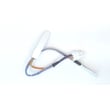
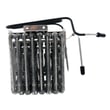
These are model-listed parts that can relate to temperature sensing and defrost symptoms:
When the defrost system does not clear frost from the evaporator, airflow drops. That can make the refrigerator section warm, reduce ice production, and force the compressor to run longer than normal.
Last updated: January 2026
Why is my refrigerator not getting cold at the bottom?
If your Kenmore Elite 79573132411 is warm at the bottom, the most common causes are restricted airflow (blocked vents or an iced-up return path), incorrect control settings, or a cooling system issue that prevents cold air from circulating from the freezer into the fresh-food section. Use the steps below and confirm settings in the 79573132411 owner's manual.
- Make sure food packages are not blocking the air vents between the freezer and refrigerator sections.
- Set temperatures to normal targets: 37°F for the refrigerator and 0°F for the freezer.
- Wait 24 hours after changing settings before judging results.
- Clean dust and pet hair from the condenser area (bottom/back, depending on your setup).
- Confirm the freezer is cold; this model moves cold air from the freezer to cool the refrigerator.
This refrigerator uses the refrigerator control as the thermostat for the whole appliance, and the freezer control adjusts airflow from the freezer to the fresh-food section. If vents are blocked or airflow is restricted, the bottom shelves often warm up first.
| What you notice | Most likely cause | What to do |
|---|---|---|
| Freezer is cold, bottom of fridge is warm | Airflow blocked or return vent restricted | Clear vents, rearrange food, check for frost buildup |
| Both sections are warm | Cooling system not running enough | Verify settings, listen for compressor/fan operation |
| Temps swing, moisture inside | Vents blocked or doors not sealing well | Clear vents, check door closure and gasket contact |
If airflow is clear and settings are correct but the bottom stays warm, a failed sensor, control, or sealed-system component can be involved.
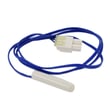
- If temperatures seem inaccurate or inconsistent, a sensor can be a suspect (example: refrigerator temperature sensor 6500JB2002X).
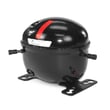
- If the unit is not cooling at all or struggles to maintain temperature, the compressor circuit can be involved (example: refrigerator compressor TCA38091801).
On bottom-mount designs like the Kenmore Elite 79573132411, the freezer is the cold-air source. Anything that reduces airflow from the freezer to the fresh-food section (blocked vents, frost restriction, fan or control issues) can leave the refrigerator bottom warm even when the freezer feels “okay.”
Last updated: January 2026
What are the common problems with Kenmore Elite refrigerators?
Common problems on the Kenmore Elite 79573132411 bottom-mount refrigerator include weak or no cooling, frost buildup or water leaks from a clogged defrost drain, dispenser and ice maker issues, and unusual compressor-related noises. Many fixes start with cleaning, airflow checks, and basic water-supply troubleshooting using the 79573132411 owner's manual.
- Not cooling or warm temperatures: dirty condenser coil, failed compressor start components, control or sensor issues, or airflow problems.
- Frost/ice buildup or water under drawers: defrost drain restriction; moisture entering from a door not sealing.
- Ice maker not making ice: water supply issue, inlet valve problem, ice maker failure, or a dispenser door not sealing.
- Water dispenser slow or tastes off: clogged water filter or low household water pressure.
- Buzzing/clicking/humming: compressor overload/relay cycling, fan noise, or ice maker/auger components binding.
- Confirm temperatures: set refrigerator to about 37°F and freezer to about 0°F, then allow 24 hours to stabilize.
- Check door sealing and loading: avoid overpacking; blocked vents can cause warm spots and frost.
- Clean and inspect airflow areas: keep the grille area clear and remove dust buildup where accessible.
- Inspect for defrost drain issues: if you see water after defrost, clear ice and debris from the drain path.
- Verify water supply (for ice and dispenser): make sure the shutoff valve is fully open and the line is not kinked.
| Symptom | Part that often relates | Example part for this model |
|---|---|---|
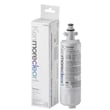
| Slow water, bad taste/odor | Water filter | Genuine Kenmore refrigerator water filter 9690 AGF80300801 |
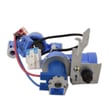
| No ice or weak fill | Water inlet valve | Lg refrigerator water inlet valve AJU72992601 |
| Water leaking inside, icing near drain | Drain tube | Refrigerator drain tube 5251JA3003D |
| Clicking, compressor won’t stay running | Overload protector | Refrigerator compressor overload protector 6750CL0001D |
Cooling, defrost, and water systems all interact. A clogged drain can look like a “leak,” a restricted filter can look like a “bad valve,” and poor airflow can mimic a sealed-system problem. Starting with the simple checks prevents unnecessary part replacements.
Last updated: January 2026