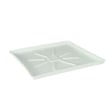
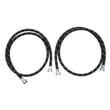
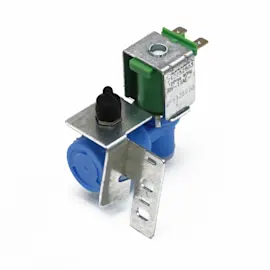
Installation guide
 Error Codes

How many cubic feet is a Kenmore washer 11026012012 series?
Kenmore washer model 11026012012 is a top-load washer, and washers in this Kenmore 110 platform typically fall in the about 3.2 to 4.0 cu. ft. range. For the exact capacity for your specific configuration, use the specifications section in the installation guide.
How to estimate capacity if you need a quick number
If you are comparing baskets or planning laundry loads, you can estimate tub capacity by measuring the inside of the wash basket.
- Unplug the washer for safety.
- Measure the inside diameter of the basket (in inches).
- Measure the usable depth from the bottom to the normal fill line (in inches).
- Convert inches to feet (divide by 12).
- Use the cylinder formula: π × radius² × depth.
Quick reference formula
| What to measure | What to do | Result |
|---|---|---|
| Basket diameter | Divide by 2 | Radius |
| Radius and depth | π × r² × depth | Volume (cubic feet) |
Why the “110” prefix does not equal one capacity
The “110” prefix identifies a Kenmore-built platform family, not a single tub size. Capacity can vary by:
- Basket diameter and depth
- Agitator vs. impeller design
- Model revision and production run
- Matching cabinet and suspension design
Related specs that affect real-world load size
Even when two washers have similar cubic feet, usable load size changes with setup and installation details. The installation guide covers key items that influence performance, including:
- Required clearances (including 0-inch side clearance testing and recommended extra space)
- Drain setup (standpipe, utility sink, overhead sewer)
- Leveling requirements (reduces vibration and improves spin)
Why it matters: Knowing capacity helps you choose the right cycle and load size, which improves cleaning and reduces out-of-balance spinning that can wear parts like the suspension W10780051.
Last updated: February 2026
What is the average lifespan of a Kenmore washer?
Most Kenmore washers, including model 11026012012, last 10 to 15 years with normal household use and basic maintenance. Consistent overloading, poor leveling, and unresolved draining or spinning problems shorten life by accelerating wear on the drive system, suspension, and controls.
Typical lifespan and what changes it
- 10 to 15 years is the normal range for a residential washer.
- Heavy weekly loads (large families) reduce lifespan faster than light use.
- Running unbalanced loads repeatedly stresses the basket support and suspension.
- Poor installation (not level, tight closet clearances) increases vibration and noise.
- Hard water and excess detergent increase residue buildup and component strain.
Quick maintenance that extends washer life
Use these habits to reduce wear on common failure points like the belt, splutch, lid lock, and drain pump:
- Keep loads balanced; mix items and avoid washing one heavy item alone.
- Do not overfill; leave space for items to move freely.
- Use the right amount of HE detergent (too much causes oversudsing and residue).
- Check pockets and remove coins, screws, and small items before washing.
- If you notice slow draining, address it early to protect the pump and motor.
Common “end-of-life” symptoms (and parts often involved)
If your washer is nearing the end of its service life, these symptoms usually show up first:
| Symptom | What it often points to | Example part for this model |
|---|---|---|
| Won’t spin or makes a grinding/clicking noise | Worn drive components | Washer drive pulley and splutch assembly W10721967 |
| Burning rubber smell, weak spin | Slipping or worn belt | Washer drive belt WPW10006384 |
| Won’t start or lid won’t lock | Lid lock failure | Washer lid lock assembly W10404050 |
| Won’t drain or leaves water in tub | Drain pump issue or blockage | Washer drain pump assembly WPW10276397 |
Why it matters
Knowing the typical 10 to 15 year lifespan helps you decide whether to repair or replace. If the washer is already in that age range and develops repeated spin, drain, or vibration issues, fixing the root cause early prevents secondary damage to the gear case, motor, and control board.
For installation factors that reduce vibration and noise (level floor, spacing, and setup), follow the installation guide.
Last updated: February 2026
How to read Kenmore washer model numbers?
Kenmore washer model numbers are structured so the first 3 digits identify the manufacturer behind the Kenmore brand, and the remaining digits narrow down the platform and exact variation. For Kenmore model 11026012012, the 110 prefix is the key that points you to the correct parts and documentation.
What each section of a Kenmore model number tells you
Most Kenmore washer model numbers break down like this:
- First 3 digits (prefix): manufacturer code (most important for parts matching)
- Next group of digits: base design or platform family
- Last digits: feature set, color, engineering revision, or production variation
Why the prefix matters for parts
The prefix helps us match your washer to the correct parts system and common component families (drive system, lid lock, drain pump, controls). For example, if your washer needs a drive or spin-related repair, these model-matched parts are commonly involved:
- Washer drive pulley and splutch assembly W10721967
- Washer drive belt WPW10006384
- Washer lid lock assembly W10404050
- Washer drain pump assembly WPW10276397
Quick check: confirm you have the right model number
Use this checklist before ordering parts:
- Match the model number exactly, including all digits (example: 11026012012)
- Verify the model/serial tag is from the washer (not a manual or receipt)
- If the tag is worn, clean it gently and use a flashlight to read it
- When in doubt, use the full model number to cross-check diagrams and part descriptions
Where to find the model number on the washer
On most Kenmore top-load washers, the model/serial tag is typically found in one of these places:
| Common location | What to look for |
|---|---|
| Under the lid | Sticker or metal tag around the opening |
| Rear of the control console | Label near wiring access area |
| Back panel | Model/serial label near the top |
Why it matters
Kenmore sold washers built by different manufacturers; the prefix prevents ordering a look-alike part that does not fit your exact drive system, lid lock style, or control configuration. For installation and spacing details tied to this washer platform, use the installation guide.
Last updated: February 2026
How to reset Kenmore washer model 11026012012 top loader?
To reset your Kenmore washer model 11026012012, we recommend starting with a simple power reset: unplug the washer for 1 minute, then plug it back in and try a normal cycle. This clears most control glitches; if the washer still will not start, focus next on lid-lock and drain issues.
Quick reset steps (safe and effective)
- Press Pause/Cancel (if your console has it) to stop the current cycle.
- Unplug the washer (or switch off the breaker).
- Wait 60 seconds.
- Plug back in (or turn breaker on).
- Lift and close the lid once, then select a cycle and press Start.
If it still will not run: what to check next
A “reset” will not fix a failed part. These checks target the most common no-start and no-spin causes on top-load Kenmore washers:
- Lid not locking: if the lid does not click/lock, the washer may not agitate or spin; check the washer lid lock assembly W10404050.
- Not draining: if water stays in the tub, the washer often will not spin; inspect the drain path and consider the washer drain pump assembly WPW10276397.
- Drive system slipping: burning rubber smell, weak spin, or intermittent agitation points to the belt and splutch; check the washer drive belt WPW10006384 and washer drive pulley and splutch assembly W10721967.
- Off-balance shaking: severe vibration can stop or interrupt cycles; inspect the suspension W10780051.
- Control issue: if the panel is unresponsive after a power reset, the control board can be involved.
Reset vs. recalibration: what’s the difference?
| Action | What it does | When to use it |
|---|---|---|
| Power reset (unplug 1 minute) | Clears temporary control glitches | Random stopping, stuck cycle, odd behavior |
| Cycle cancel (Pause/Cancel) | Stops the current cycle | Wrong cycle selected, need to restart |
| Part troubleshooting | Fixes the root cause | No drain, no lock, no spin, loud noise |
Why it matters
Resetting is a fast first step, but top-load washers rely on lid lock confirmation, proper draining, and a working drive system to run and spin safely. If any of those signals fail, the washer can appear “stuck” even after a reset.
For model-specific setup and safety steps (power, leveling, and first test cycle), use the installation guide.
Last updated: February 2026