 Owner’s manual

How to find AC tonnage with model number?
For Icp model N4A336AKB200, the easiest way to estimate tonnage from the model number is to look for the capacity code (often 18, 24, 30, 36, 42, 48, 60) that represents thousands of BTUs; divide that number by 12 to get tons (for example, 36,000 BTU ÷ 12 = 3 tons). Confirm the exact capacity on the unit data label and in the owner's manual.
How to decode tonnage from a model number
Many split-system outdoor units embed nominal capacity in the model number.
- Find a 2-digit number that matches common capacity codes: 18, 24, 30, 36, 42, 48, 60
- Treat it as BTU per hour in thousands (36 means about 36,000 BTU/h)
- Convert BTU/h to tons: BTU/h ÷ 12,000 = tons
- If you see multiple numbers, use the one that matches the common capacity codes above
- Verify using the rating plate (data label) on the outdoor unit cabinet
Quick conversion table
| Capacity code in model | Approx. BTU/h | Approx. tons |
|---|---|---|
| 18 | 18,000 | 1.5 |
| 24 | 24,000 | 2.0 |
| 30 | 30,000 | 2.5 |
| 36 | 36,000 | 3.0 |
| 42 | 42,000 | 3.5 |
| 48 | 48,000 | 4.0 |
| 60 | 60,000 | 5.0 |
Where to confirm the exact tonnage
Use the model and serial information from the outdoor unit’s data label, then cross-check details in the documentation.
- Outdoor unit rating plate (usually inside the service panel or on the cabinet)
- AHRI-style rating information (if listed)
- The specifications section in the owner's manual
Why it matters
Correct tonnage affects comfort and operating cost. An oversized system can short-cycle and struggle with humidity control; an undersized system can run constantly and still not keep up on hot days.
Last updated: February 2026
How many square feet will a 4 ton AC cool?
A 4-ton central air conditioner (about 48,000 BTU/hr) typically cools about 2,000 to 2,500 sq. ft. in an average home. For an Icp split-system like N4A336AKB200, the right size still depends on insulation, windows, ceiling height, and local climate; a Manual J load calculation gives the correct match.
Typical coverage range (what to expect)
Most homes land in a broad range because heat gain varies so much.
- Cooler climates, tight/insulated homes: often 2,300 to 2,800 sq. ft.
- Average conditions: often 2,000 to 2,500 sq. ft.
- Hot climates, older/less insulated homes: often 1,600 to 2,100 sq. ft.
- High ceilings, lots of glass, west-facing sun: expect the lower end
- Shaded home, good attic insulation, tight ductwork: expect the higher end
Quick sizing table
Use this as a planning guide, not a final sizing decision.
| Home situation | 4-ton coverage you’ll usually see |
|---|---|
| Well insulated, mild summers | 2,300 to 2,800 sq. ft. |
| Typical insulation, mixed sun exposure | 2,000 to 2,500 sq. ft. |
| Hot summers, leaky/older home | 1,600 to 2,100 sq. ft. |
Why it matters (oversized vs. undersized)
Correct sizing protects comfort and equipment life.
- Oversized systems cool fast but can leave humidity high and cycle on/off frequently.
- Undersized systems run long, struggle on the hottest days, and can drive up energy use.
What we recommend before you commit to a size
Even with the right tonnage, airflow and electrical health matter for performance.
- Review operating basics and homeowner checks in the owner's manual.
- Keep the return air filter clean; dirty filters are a common cause of poor cooling.
- Make sure the outdoor coil and fins stay clear of grass clippings and debris.
- If the outdoor unit will not start reliably, a failing contactor is a common culprit; match by model when replacing parts like the central air conditioner contactor 1172472.
Last updated: February 2026
Can I replace the indoor unit of split AC?
Yes; in many split-system setups you can replace the indoor unit (air handler/evaporator section) without replacing the outdoor condenser, as long as the replacement is properly matched for capacity and R410A compatibility on your Icp N4A336AKB200 system. Use the owner's manual to confirm the correct system configuration and service requirements.
What has to match for a successful indoor-unit replacement
To keep performance and reliability where it should be, we look for these basics to line up:
- Refrigerant type: your system is R410A, so the indoor coil and metering device must be R410A-rated
- Capacity match: indoor coil size must match the outdoor unit tonnage/BTU rating
- Metering device: TXV or fixed orifice must be correct for the outdoor unit and refrigerant
- Airflow: blower and ductwork must deliver proper CFM for the system size
- Electrical and controls: thermostat wiring and low-voltage controls must be compatible
What we recommend checking before you replace the indoor unit
The homeowner information for this split system emphasizes basic checks and having model and serial numbers available for both indoor and outdoor units when diagnosing issues. That same approach helps you avoid mismatched equipment.
- Confirm the indoor unit model and serial number (separate from N4A336AKB200, which is the outdoor model)
- Verify the indoor coil is approved for use with the existing outdoor condenser
- Inspect the return air filter and correct any airflow restrictions before condemning the indoor unit
- Check breakers and fuses, and verify the thermostat is set to COOL and below room temperature
- Make sure power is shut off to both indoor and outdoor units before any panel is removed
Quick decision guide
| Situation | Best next step |
|---|---|
| Indoor coil is leaking or badly corroded | Replace the indoor coil/air handler with a properly matched R410A-rated unit |
| System has chronic poor cooling but filter/coils are dirty | Clean/restore airflow first; dirty filters are a common cause of inadequate cooling |
| Outdoor unit is failing (compressor/fan issues) | Repair the outdoor unit or replace the full matched system depending on condition |
Why it matters
A split system only performs correctly when the indoor coil, metering device, airflow, and outdoor condenser are matched. A mismatch can cause low efficiency, poor comfort, and compressor stress.
Last updated: February 2026
What AC parts are most commonly replaced?
For the Icp N4A336AKB200 split-system air conditioner (R410A), the most commonly replaced items are electrical start/control parts and airflow parts, plus maintenance-related items like air filters. Keeping filters and outdoor coils clean helps prevent compressor and motor failures; see the owner's manual for routine care.
Most commonly replaced parts (what we see most often)
- Contactor: switches high voltage to the outdoor unit; pitted contacts can cause no-cool or intermittent cooling (example: central air conditioner contactor 1172472).
- Condenser fan motor and fan blade: worn bearings or a weak motor can stop airflow and overheat the system (examples: fan 1172714, motor,cond 1185924).
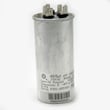
- Capacitors (run/start): a very common failure that prevents the compressor or fan motor from starting.
- Air filter (indoor return filter): the most common maintenance item; a dirty filter is a leading cause of poor cooling and compressor problems.
- Electrical connections: loose/corroded connections and grounding hardware can cause shutdowns or nuisance trips (example: lug ground 1172300).
Quick symptoms-to-part checklist
| Symptom | Commonly involved part(s) | What to check first |
|---|---|---|
| Outdoor unit will not start | Contactor, capacitor, breaker/fuse | Thermostat set to COOL; breakers/fuses; contactor pull-in |
| Outdoor fan not spinning | Fan motor, fan blade, capacitor | Power off; spin test for binding; capacitor bulge/leak |
| Runs but cools poorly | Dirty filter, dirty outdoor coil, fan issues | Replace/clean filter; clear debris from outdoor coil |
| Trips breaker | Shorted motor, wiring, capacitor | Inspect wiring; test components with a meter |
Why it matters
Your manual notes that dirty air filters are the most common cause of inadequate cooling and compressor failures, and that clogged outdoor coils reduce efficiency and can damage the compressor. Staying ahead of these basics reduces expensive repairs.
Before you replace anything (safe, high-impact checks)
- Turn OFF power to both indoor and outdoor units before opening panels.
- Confirm thermostat is set to COOL and below room temperature.
- Check and replace/clean the return air filter.
- Reset tripped breakers or replace blown fuses.
- Clear leaves, grass, and lint from the outdoor coil and fan area.
- If you’re testing electrical parts, use a meter and follow a proven method (see how to use a multimeter to test electrical parts video).
Last updated: February 2026
How much do AC spare parts usually cost?
AC spare parts for your Icp N4A336AKB200 split-system air conditioner range from low-cost electrical and hardware items to higher-cost motors and fan components. For this model, we commonly see small parts around $10 and major outdoor-unit parts in the $200 to $500+ range; labor is typically a separate cost.
Typical part cost ranges (what most homeowners see)
- Small electrical and mounting parts: $5 to $50
- Control parts (relays, contactors, capacitors): $50 to $200
- Fan blades and fan assemblies: $150 to $350
- Condenser fan motors: $200 to $600
- Major sealed-system parts (compressor, coils): often $800 to $3,000+ (part cost alone)
Real examples from N4A336AKB200 parts
These are examples of parts available for this exact model, which helps show the spread in pricing:
| Part type | Example part (model-specific) | Typical role | Price range you can expect |
|---|---|---|---|
| Grounding hardware | Lug ground 1172300 | Bonds cabinet to ground for safety | Low-cost |
| Control component | Central air conditioner contactor 1172472 | Switches high voltage to the outdoor unit | Mid-range |
| Air-moving component | Fan 1172714 | Moves air across the outdoor coil | Higher |
| Motor | Motor,cond 1185924 | Drives the condenser fan | Higher |
Why prices vary so much
AC part pricing is driven by a few factors:
- Part type and complexity (hardware vs. motor vs. sealed-system)
- Model-specific fit (exact-match parts for N4A336AKB200)
- Electrical rating and build (motors and controls cost more)
- What failed (a dirty filter can mimic a “bad part”)
Before you buy a part (quick checks that can save money)
Your owner's manual recommends these basic checks when the system is not cooling or not running:
- Verify thermostat is set to COOL and below room temperature
- Check and replace or clean the return air filter
- Check breakers and fuses
- Clear debris from outdoor coil and fan area (leaves, grass, lint)
Why it matters
Replacing the wrong part gets expensive fast. A dirty air filter or blocked outdoor coil can reduce cooling and even contribute to compressor damage, so confirming airflow and power issues first helps you spend money where it actually fixes the problem.
Last updated: February 2026