Owner’s manual
 Error Codes


How big is the LFC20760ST?
The LG LFC20760ST is a bottom-mount refrigerator; “how big” usually means its exterior dimensions (width, height, depth) and its storage capacity in cubic feet. For the exact measurements for your unit, use the specifications section in the LFC20760ST owner's manual.
What “big” can mean (and what to check)
Most customers want one or more of these:
- Width (to confirm it fits between cabinets)
- Height (to clear overhead cabinets)
- Depth (especially depth with doors and handles)
- Capacity (cubic feet of fresh food and freezer space)
- Door swing clearance (space needed to fully open doors and drawers)
Typical size range for LG bottom-mount refrigerators
If you are planning space before measuring, most LG bottom-mount units fall into these common ranges:
- Width: about 29 to 33 inches
- Height: about 67 to 70 inches
- Depth: about 33 to 36 inches (often more with handles)
How we recommend measuring your LFC20760ST
- Measure width at the widest point (usually the cabinet, not the doors).
- Measure height from floor to the top of the hinge cover.
- Measure depth three ways: cabinet only, with doors, and with handles.
- Add clearance for airflow and door swing.
Quick clearance checklist
- Leave space behind and above for ventilation
- Confirm the freezer drawer can pull out fully
- Verify the water line (if equipped) is not kinked
Planning guide (what to record)
| Measurement | What to include | Why it matters |
|---|---|---|
| Width | widest cabinet point | cabinet fit |
| Height | floor to top hinge cover | overhead clearance |
| Depth | with handles and doors | walkway and counter alignment |
| Door swing | full open position | drawer and shelf access |
Why it matters
Accurate dimensions prevent installation problems like doors hitting walls, drawers not opening fully, or poor airflow that can cause warm temperatures and longer compressor run times.
Last updated: January 2026
How much does a LG refrigerator compressor cost?
For the LG LFC20760ST bottom-mount refrigerator, a replacement compressor part typically costs a few hundred dollars; on this model’s parts list, the compressor is listed at $318.30. Total repair cost is usually higher because sealed-system labor and refrigerant handling add significant service charges.
What you should budget for (part vs. total repair)
- Compressor part price: the compressor itself (what you buy)
- Labor: sealed-system work is specialized and time-intensive
- Refrigerant work: evacuation, recharge, and leak checks
- Related parts: start components, mounts, or controls if needed
| Cost item | What it covers | Typical impact on total cost |
|---|---|---|
| Compressor part | The replacement compressor | Moderate |
| Sealed-system labor | Remove/install, brazing, pressure test | High |
| Refrigerant handling | Recover and recharge refrigerant | High |
| Extra parts (if needed) | Relay, mounts, sensors, etc. | Low to moderate |
Parts on this model that are commonly checked with a compressor issue
If the refrigerator is warm, clicking, or not starting, we often verify the start components and airflow before assuming the compressor is bad.
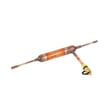
- Refrigerator compressor TCA35931726
- Compressor start relay (often replaced if it’s failed or heat-damaged)
- Condenser fan motor operation and condenser cleanliness
- Main control board symptoms (power to compressor circuit)
Why it matters
A compressor replacement is one of the highest-cost refrigerator repairs because it involves the sealed refrigeration system. Confirming the diagnosis first helps avoid replacing an expensive part when the real issue is a start relay, airflow problem, or control issue.
Where to confirm model-specific details
Use the LFC20760ST manual for model-specific operating checks (temperatures, control settings, and basic troubleshooting steps) before scheduling sealed-system service.
Last updated: January 2026
What is the most common problem with LG refrigerators?
Cooling problems are the most common issue we see with LG refrigerators, including the LG LFC20760ST; symptoms include a warm fresh-food section, a warming freezer, or temperatures that swing even though the unit is running. Many “not cooling” complaints trace back to airflow restrictions, defrost problems, or sealed-system/compressor issues.
What to check first (fast, no tools)
- Confirm the temperature settings are correct and allow 24 hours for changes to stabilize.
- Make sure vents inside the refrigerator and freezer are not blocked by food packages.
- Check that both doors close fully and the gaskets seal all the way around.
- Listen for the condenser fan and evaporator fan; unusual silence or loud grinding points to a fan issue.
- Look for frost buildup on the freezer back wall; heavy frost often indicates a defrost problem.
- Clean dust from the condenser area (unplug power first) to improve heat removal.
Common causes and the parts that often relate
If the lights or display behavior changes when you open and close the door, a failed door switch can contribute to cooling complaints (fans may not run as expected with the door open).
- Door sensing and interior light control: LG refrigerator door switch 6600JB1010A
- Defrost temperature feedback (frost buildup, warm temps): refrigerator defrost sensor assembly 6615JB2005C
- Water/ice symptoms that get mistaken for “cooling” issues (no ice, no water): refrigerator water valve AJU55759303
Symptom-to-likely-area guide
| Symptom | Most likely area to inspect | Typical next step |
|---|---|---|
| Fresh-food warm, freezer OK | Airflow/damper, blocked vents | Clear vents; check damper operation |
| Freezer frosted over, temps rising | Defrost system | Defrost inspection; test sensor/heater circuit |
| Both sections warm, compressor runs a lot | Condenser airflow or sealed system | Clean condenser; check fans; sealed-system service |
| Clicking, won’t start cooling | Start device/relay or compressor | Electrical diagnosis; replace failed component |
Why it matters
A refrigerator that cannot move air or complete defrost cycles will run longer, waste energy, and can spoil food quickly. Catching airflow and frost issues early can prevent bigger failures.
For model-specific operating details and temperature recommendations, use the LFC20760ST owner’s manual.
Last updated: January 2026
Why does my LG freezer keep icing up at the bottom?
Bottom-of-freezer ice in your LG LFC20760ST is almost always caused by a clogged or frozen defrost drain; defrost water cannot flow to the drain pan, so it refreezes into a sheet of ice. Clearing the drain and confirming proper door sealing typically stops it.
What to check first (fast, high-impact)
- Unplug the refrigerator before working around ice, wiring, or fans.
- Remove the freezer drawer and look for a solid ice slab on the freezer floor.
- Melt the ice with a hair dryer on low or by leaving the unit off with towels in place.
- Locate the drain opening under the evaporator area and clear it with hot water.
- Confirm the drain tube is not kinked, blocked, or iced over.
If the drain keeps refreezing or backing up, replacing the drain tube is a common fix on bottom-mount designs.
How to clear a frozen/blocked defrost drain
- Defrost the freezer floor until you can see the drain trough and drain hole.
- Flush the drain hole with hot water (a turkey baster works well).
- Push a flexible plastic line (not metal) a short distance into the drain to break up sludge.
- Verify water flows freely to the drain pan underneath.
For model-specific access steps and panel removal details, follow the LFC20760ST owner's manual.
Parts that commonly solve repeat icing at the bottom
If you clear the drain and the problem returns, these parts are often involved:
- Refrigerator drain tube 5251JA3003D (cracked, restricted, or icing at the outlet)
- Door alignment components (if the door is not closing consistently)
- Defrost system components (if heavy frost is building up behind the rear freezer panel)
Quick symptom guide
| What you see | Most likely cause | What usually fixes it |
|---|---|---|
| Ice sheet only on freezer floor | Drain hole/tube blocked | Clear drain, flush with hot water |
| Water puddles then ice later | Partial drain restriction | Clean drain tube and outlet |
| Heavy frost on back wall plus warm temps | Defrost problem or airflow issue | Diagnose defrost system, check fan/airflow |
Why it matters
When the defrost drain cannot carry water away, ice buildup can block airflow, reduce cooling performance, and lead to leaks during defrost cycles. Keeping the drain clear protects food temperatures and helps the compressor run more efficiently.
Last updated: January 2026