 Owner’s manual


What's the average lifespan of a Maytag washer?
Most Maytag washers average 10 to 13 years of service life with normal household use; with consistent care and timely repairs, many run longer. For your Maytag MAVT634AWW, following the operating and maintenance guidance in the MAVT634AWW owner's manual helps you get the longest life from the drive system, pump, and controls.
What affects washer lifespan the most
- Load size and balance: chronic overloading strains the drive belt, motor, and transmission.
- Water leaks: small leaks can damage bearings, wiring, and the floor.
- Drain performance: slow draining makes the pump work harder and can leave residue.
- Hose condition: aging inlet hoses are a common failure point.
- Routine cleaning: detergent buildup and residue shorten component life.
Maintenance habits that add years
Use these as a simple checklist for the MAVT634AWW:
- Keep loads below the top rim and distribute items evenly.
- Inspect fill hoses for bulges, cracks, and leaks; replace them on a regular schedule.
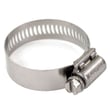
- If you see water under the washer, stop using it and check clamps and hoses; a loose hose clamp WP285655 is a common, quick fix.
- If draining is slow, check for kinks or damage in the washer drain hose WP22003410.
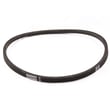
- Address unusual noises early; a slipping belt can worsen quickly (see washer drive belt WP22003483).
Typical lifespan by usage (quick guide)
| Usage pattern | Typical lifespan | What usually wears first |
|---|---|---|
| Light (1 to 3 loads/week) | 12 to 15 years | Hoses, lid switch, pump |
| Average (4 to 7 loads/week) | 10 to 13 years | Belt, pump, timer |
| Heavy (8+ loads/week) | 7 to 10 years | Drive components, suspension, pump |
Why it matters
Washer life is mostly about reducing stress and preventing water damage. A few minutes of routine checks can prevent a leak or drain issue from turning into a major repair.
Last updated: January 2026
What is the most common problem with a Maytag washer?
On the Maytag MAVT634AWW, the most common washer problem is a no-spin or no-drain condition caused by a lid-switch safety issue or a drain restriction. This model is designed not to spin or agitate with the lid open, so any lid-switch failure can look like a major breakdown.
Quick checks we recommend first
- Make sure the lid closes firmly and the washer is not stopping mid-cycle when the lid is bumped.
- If the washer fills but will not agitate or spin, suspect the lid-switch system first.
- If the washer drains slowly or leaves water behind, check for a kinked/clogged drain hose.
- If you hear the motor running but the tub will not spin, inspect the drive belt for wear or breakage.
- If the washer stops during spin and restarts only after closing the lid and pulling the dial out, focus on lid-switch operation.
Most common causes and what they look like
| Symptom | Most likely cause | Common related part |
|---|---|---|
| Fills but will not agitate or spin | Lid-switch system not proving “lid closed” | Washer lid switch WP22003804 |
| Won’t drain or drains slowly | Drain restriction or drain hose issue | Washer drain hose WP22003410 |
| Motor runs but basket won’t spin | Worn or broken belt | Washer drive belt WP22003483 |
| Stops when lid is opened (normal), but won’t resume reliably | Lid-switch actuator/plunger issue | Washer lid switch plunger WP22002754 |
Why the lid switch is so often the culprit on this model
This washer is built to pause spin and agitation when the lid is open. If the lid switch or its plunger is worn, misaligned, or broken, the washer can behave as if the lid is open even when it is closed. That commonly shows up as “won’t spin” or “won’t agitate.”
Why it matters
A no-spin/no-drain complaint can be caused by a simple safety interlock or a basic restriction, and checking those first helps avoid replacing bigger components like the motor, timer, or transmission unnecessarily.
For model-specific operating behavior and the “Before you call” troubleshooting steps, use the MAVT634AWW owner's manual.
Last updated: January 2026
How to get a Maytag washer to drain and spin?
On the Maytag MAVT634AWW, you can force a drain-and-spin by setting the control dial to a SPIN position and pulling the dial out to start. The washer will not spin or drain if the lid is open, and some cycles (like Soak Only on select models) require you to manually advance the dial to SPIN to drain the water (see the MAVT634AWW owner’s manual).
Quick steps to drain and spin
- Make sure the lid is fully closed; the washer is designed not to agitate or spin with the lid open.
- Turn the cycle selector to a SPIN setting.
- Pull the control dial out to start.
- If you opened the lid during spin, close the lid and pull the dial out again; the washer continues where it left off.
- If you used a soak-type cycle, manually advance the dial to SPIN to drain and spin.
If it still won’t drain or spin
These are the most common causes on this style of Maytag top-load washer:
- Kinked or restricted drain hose; straighten the hose and remove any pinches.
- Drain height too high; if the drain height is over about 8 feet, water may not be fully removed.
- Lid switch issue; a failed lid switch can stop spin/drain for safety.
- Unbalanced load; the washer can reduce spin speed when it detects imbalance.
What to check (fast diagnosis)
| Symptom | Most likely cause | What we recommend |
|---|---|---|
| Hums but won’t drain | Drain restriction | Check hose routing and standpipe for clogs |
| Won’t spin at all | Lid not closed or lid switch problem | Inspect lid strike/plunger and switch operation |
| Clothes wetter than normal | Unbalanced load or slow spin selection | Redistribute load; reset to SPIN |
Parts that commonly affect spin/drain on this model
If troubleshooting points to a failed component, these model-matched parts are common fixes:
- Washer lid switch WP22003804 (prevents spin/drain if the washer thinks the lid is open)
- Washer lid switch plunger WP22002754 (helps actuate the lid switch)
- Washer drain hose WP22003410 (fixes leaks, kinks, or internal restrictions)
Why it matters
A no-spin/no-drain condition is often a safety interlock (lid switch) or a drain path problem (hose height, kinks, clogs). Fixing the root cause prevents water left in the tub and reduces strain on the drive system.
Last updated: January 2026
What year did the Maytag Neptune come out?
Maytag introduced the Neptune washer line in 1997. Your Maytag MAVT634AWW is a different washer platform (a top-load design), so Neptune history does not change the parts or operating instructions for your specific model; use the MAVT634AWW owner's manual for model-specific details.
Neptune release overview
- 1997: Neptune line launches (Maytag’s early high-efficiency washer platform)
- Neptune is a product line name, not a universal label for all Maytag washers
- Model and serial identification is the reliable way to match parts and procedures
How to tell whether you have a Neptune model
Check the model tag on the washer and compare the full model number.
- Look under the lid or on the lid frame (common on top-load washers)
- Check the rear panel if you do not see it under the lid
- Match the model number exactly, including letters and suffixes
- Use the model number to select correct parts like a washer lid switch WP22003804 when troubleshooting lid-related issues
Why it matters
“Neptune” helps with general product history, but repairs depend on the exact model platform. Using the correct model number prevents ordering the wrong timer, belt, water valve, or lid switch.
| What you have | What it’s used for | Best source |
|---|---|---|
| Neptune (line name) | General history and broad platform references | Product literature and model tag |
| MAVT634AWW (model number) | Exact parts match and repair procedures | MAVT634AWW owner's manual |
Last updated: January 2026


