Owner’s manual


How to unclog drain hose on Kenmore washer?
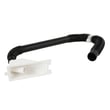
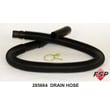
To unclog the drain hose on your Kenmore washer model 11020882990, we recommend unplugging the washer, draining any standing water, then removing the drain hose and flushing or clearing the blockage before reinstalling it securely. For panel access and hose routing details, use the 11020882990 owner's manual.
Safety first
- Unplug the washer before removing panels or hoses
- Turn off both water supply valves
- Keep a shallow pan and towels ready for spills
- Wear gloves; debris and sharp objects can be inside the hose
- Do not run the drain pump dry for long periods
Step-by-step: unclog the drain hose
- Empty the tub: If the washer is full of water, bail it out or lower the drain hose into a bucket to gravity-drain as much as possible.
- Access the hose: Pull the washer forward and locate the drain hose at the back (where it connects to the standpipe or laundry tub).
- Remove the hose: Loosen the clamp at the washer end (or pump end, depending on your setup) and carefully pull the hose off.
- Clear the clog:
- Run hot water through the hose
- Push out debris with a flexible brush or a small drain snake
- For stubborn clogs, gently work a straightened coat hanger through the hose (avoid puncturing it)
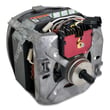
- Check the pump inlet: Look into the pump port for socks, lint, or coins. If the pump is jammed or leaking, replacement is common.
- Reinstall and test: Reattach the hose, tighten clamps, restore power, and run a Drain/Spin to confirm strong flow.
Parts that commonly relate to slow or no draining
| Symptom | Most common cause | Part to consider |
|---|---|---|
| Hums but won’t drain | Pump jammed or failed | Washer drain pump WP3363394 |
| Drains only with lid closed | Lid switch not closing circuit | Washer lid switch WP3949238 |
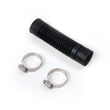
| Leaks at hose connection | Loose clamp or damaged hose | Inspect hose and clamps |
Why it matters
A restricted drain hose can cause slow draining, poor spin performance, and water left in the basket. Clearing the hose early helps protect the drain pump and reduces strain on the drive system.
Last updated: January 2026
What size is a Kenmore 90 series washer?
For Kenmore model 11020882990 (a Kenmore 90 Series top-load washer), the overall cabinet size is typically about 27 inches wide, 26 inches deep, and 43 inches tall; many versions are also described as Super Capacity Plus (around 3.2 cu. ft.). For the exact specs for your unit, use the 11020882990 owner's manual.
Typical dimensions you can plan around
Most Kenmore 90 Series direct-drive top-load washers in this family fit a standard laundry alcove.
- Width: about 27 inches
- Depth: about 26 inches (not counting hoses)
- Height: about 43 inches (to the top of the console)
- Clearance: plan extra space behind for hoses and the drain standpipe
- Capacity class: commonly listed as Super Capacity Plus for larger loads
Quick fit check (what to measure at home)
Use a tape measure and confirm these points before ordering a pedestal, moving the washer, or planning cabinetry.
| What to measure | Where to measure | Why it matters |
|---|---|---|
| Width | widest point of cabinet | Ensures it fits between walls/door trim |
| Depth | front edge to back panel | Prevents hose kinks and vibration contact |
| Height | floor to top of console | Confirms shelf and counter clearance |
| Doorway path | narrowest doorway/hall | Avoids getting stuck during moving |
Why it matters
Washer “size” affects more than fit. Correct dimensions help prevent crushed fill hoses, restricted drain flow, and excess vibration during spin, especially with larger loads.
Related model notes
Your 11020882990 manual highlights features commonly associated with this series, such as multiple water level settings and a Triple-Action agitator. For operating details and model identification info, rely on the 11020882990 owner's manual.
Last updated: January 2026
What is the average lifespan of a Kenmore washer?
A Kenmore washer typically lasts 10 to 15 years. For the Kenmore 11020882990 top-load washer, reaching the higher end of that range is common when the machine is kept level, not overloaded, and water fill and drain issues are corrected early using the care and operating guidance in the 11020882990 owner's manual.
Typical lifespan by washer type
Most Kenmore washers fall into these real-world ranges:
| Washer type | Typical lifespan | What usually ends it first |
|---|---|---|
| Top-load (direct-drive style) | 12 to 15 years | Drive system wear, leaks, lid switch issues |
| Front-load | 10 to 12 years | Bearings, door boot leaks, drain problems |
What shortens washer life fastest
We see these habits and conditions reduce lifespan more than anything else:
- Overloading the basket or washing heavy items repeatedly without balancing
- Using too much detergent (leads to residue, odors, and extra strain)
- Running with a slow drain or partial clog (pump works harder)
- Operating out of level (increases vibration and wear)
- Ignoring early symptoms like burning smell, grinding, or intermittent spin
Parts that commonly affect longevity on model 11020882990
When this washer stops spinning, agitating, or draining correctly, these parts are frequent culprits:
- Washer lid switch WP3949238 (washer may not spin or drain if the lid switch is failing)
- Washer drain pump WP3363394 (slow drain, no drain, or humming)
- Coupling 285753A (motor runs but washer will not agitate or spin)
- Agitator dog 80040 (weak or slipping agitation)
- Gear case 3360629 (oil leak, loud grinding, poor agitation/spin)
Why it matters
A washer that is draining slowly, vibrating heavily, or intermittently not spinning usually wears out other components faster. Fixing the root cause early often prevents secondary damage to the drive system, basket, and tub seals.
Last updated: January 2026
How to hard reset kenmore washer?
For Kenmore washer model 11020882990, a hard reset is simple: unplug the washer (or switch off the breaker) for 2 minutes, then restore power and select a normal cycle to test. For model-specific control and cycle details, use the 11020882990 owner's manual.
Hard reset steps (power reset)
- Turn the washer OFF.
- Unplug the power cord (or turn the circuit breaker OFF).
- Wait 2 minutes (this lets the control fully discharge).
- Restore power.
- Set the timer/cycle selector to a regular wash cycle.
- Start the washer and confirm it fills, agitates, drains, and spins.
If it still will not run after a reset
These checks solve the most common “won’t start” or “won’t spin” complaints on this style of Kenmore top-load washer.
- Confirm the outlet has power (try a lamp or phone charger).
- Make sure the lid closes firmly; a failed lid switch can stop spin and drain.
- If it fills but will not agitate or spin, the drive coupling is a common wear item.
- If it will not drain, check for a clog or a failing pump.
- If it spins poorly or slips, inspect the clutch.
Helpful model-matched parts:
Quick symptom-to-part guide
| What you see | What it usually points to | Common next step |
|---|---|---|
| Won’t start or won’t spin with lid closed | Lid switch issue | Test/replace lid switch |
| Motor runs but no agitation/spin | Drive coupling worn | Inspect coupling pieces |
| Water stays in tub | Drain pump or blockage | Check pump inlet and hose |
| Spins weak, smells hot | Clutch slipping | Inspect clutch and basket drive |
Why it matters
A hard reset clears temporary control “glitches” and restores normal operation after a power interruption. If the same symptom returns immediately, the washer is usually reacting to a real condition (lid switch, drain problem, or drive wear) that needs correction.
Last updated: January 2026