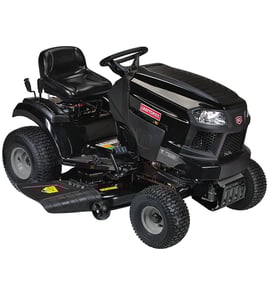
What engines do lawn mowers use?
Most lawn mowers use small gasoline internal-combustion engines; for a riding mower like the Murray 46300B front-engine lawn tractor, that typically means a 4-stroke single-cylinder (and sometimes V-twin) engine designed for steady torque and long run times. For model-specific engine details, use the model number to look up the correct engine parts and diagrams on Sears PartsDirect.
Common engine types you’ll see on lawn mowers
- 4-stroke gasoline engines: Most common on walk-behind mowers and riding tractors; separate oil sump.
- 2-stroke gasoline engines: Less common today; oil is mixed with fuel (often on older or specialty equipment).
- Battery-electric motors: Common on newer push mowers; no fuel system, carburetor, or spark plug.
- Rear-engine vs front-engine tractor layouts: Both are typically 4-stroke; layout affects belt routing and service access.
Quick comparison
| Mower type | Most common power source | What that means for maintenance |
|---|---|---|
| Push mower (rotary) | 4-stroke gas or battery-electric | Oil changes (gas) or battery care (electric) |
| Self-propelled push mower | 4-stroke gas or battery-electric | Drive belt/cable checks plus engine or battery upkeep |
| Riding lawn tractor (like 46300B) | 4-stroke gas (single-cylinder or V-twin) | Oil and filter service, air filter, fuel system, belts |
How to identify what engine your mower has
- Check the engine label on the blower housing or valve cover for the engine brand and model.
- Look for an oil fill/dipstick; that usually indicates a 4-stroke.
- If there’s a fuel-oil mix ratio label, it points to a 2-stroke.
- Match the mower’s model number (46300B) when selecting parts like air filters, spark plugs, carburetor parts, and starter components.
Why it matters
The engine type determines the correct fuel, oil routine, tune-up parts, and troubleshooting path (for example, carburetor and ignition checks on gas engines versus battery and wiring checks on electric mowers).
Last updated: February 2026
What are the parts of a lawn mower engine?
A typical lawn tractor engine on a Murray 46300B includes the fuel system, air intake, ignition, starting system, and internal rotating parts that create power. Knowing these core components helps us diagnose no-starts, rough running, smoking, or loss of power and then match the right replacement parts on Sears PartsDirect.
Main engine parts (what they do)
- Fuel tank and fuel line: stores and delivers gasoline to the carburetor
- Carburetor: mixes fuel and air for combustion (often includes jets and a bowl)
- Air filter and intake: keeps dirt out of the engine; restricted airflow causes rich running and power loss
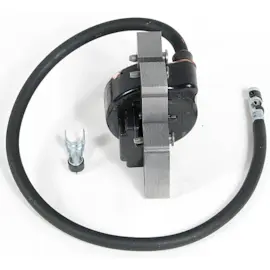
- Ignition system: ignition coil (armature), spark plug, and kill wire that create spark and shut the engine off
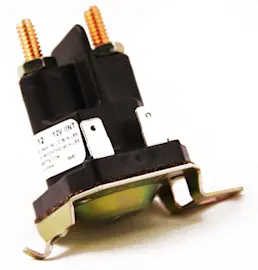
- Starter system: recoil starter (pull start) or electric starter motor with solenoid and battery
- Flywheel: stores rotational energy; magnets on the flywheel work with the ignition coil
- Crankshaft and piston: convert combustion pressure into rotation
- Crankcase and oil seals: houses internal parts and holds oil (on 4-stroke engines)
Quick symptom-to-part checklist
| Symptom | Most common engine-area parts to check | What we look for |
|---|---|---|
| Won’t start | Spark plug, ignition coil, carburetor, fuel line | No spark, stale fuel, clogged jet |
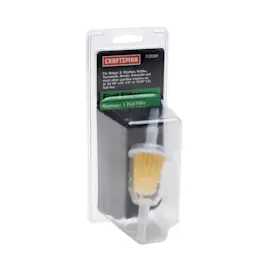
| Starts then dies | Fuel cap vent, carburetor, fuel filter (if equipped) | Fuel starvation after a few seconds |
| Runs rough/surges | Carburetor, air filter, intake gasket | Lean condition or dirty carb |
| Low power | Air filter, carburetor, muffler, governor linkage | Restricted air/fuel or exhaust |
Why it matters for parts lookup
Many “engine problems” are caused by a small service part (air filter, spark plug, carburetor components) rather than the whole engine. When you search parts for Murray 46300B, matching the exact engine-related diagram section (fuel system, ignition, starter) helps ensure the correct fit.
Helpful DIY tip for electrical checks
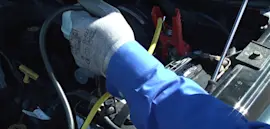
If you’re troubleshooting spark or a no-crank condition, a meter test saves time. Our guide how to use a multimeter to test electrical parts video walks through the basics we use to confirm power, grounds, and continuity.
Last updated: February 2026
Is it worth replacing a lawn mower engine?
Yes; replacing the engine on your Murray 46300B front-engine lawn tractor is worth it when the deck, frame, steering, and transmission are solid and the total cost stays well below a comparable new rider. If multiple major systems are worn, replacement is the better value.
Quick decision checklist
- Deck and frame are structurally sound (no cracks or rust-through)
- Transmission pulls smoothly under load (no slipping or grinding)
- Steering and front axle are tight (no severe play or bent spindles)
- Wiring and starting system are in good shape (no hacked harnesses)
- You can match key engine specs (shaft, mounting, charging)
When an engine swap makes sense
An engine replacement pays off most when the tractor is otherwise dependable and you want more seasons of service.
| Condition on the tractor | Replace engine? | Why it matters |
|---|---|---|
| Strong deck and drivetrain; engine has low compression or internal failure | Yes | Restores reliability without replacing the whole tractor |
| Engine smokes or burns oil; rest of tractor is maintained | Yes | Fixes power loss and hard starting |
| Deck is rusted through or spindles and pulleys keep failing | No | You will keep chasing expensive repairs |
| Engine plus transmission or steering also failing | No | Total cost and downtime climb quickly |
Specs to confirm before buying an engine
- Crankshaft diameter and length (plus keyway/threaded end)
- Base mounting bolt pattern
- PTO pulley alignment and belt routing compatibility
- Charging output for the battery and lights
Why it matters
A correct engine match protects the deck drive system (belts, pulleys, blade spindles) and prevents chronic belt throw, vibration, and poor cutting.
To look up diagrams and compare replacement options for Murray model 46300B, use the model parts list first, then search by model number on Sears PartsDirect.
Last updated: February 2026