Owner’s manual
 Error Codes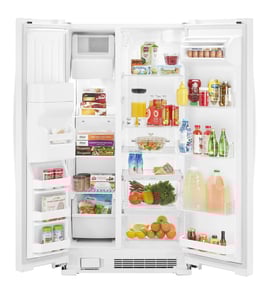


How wide is a 25.6 cubic foot refrigerator?
A 25.6 cu. ft. refrigerator is typically about 35 to 36 inches wide. For your GE GSS25SGSASS side-by-side, the exact cabinet width and door-clearance needs are listed in the owner's manual, and you should also plan for required installation clearances.
Most full-size refrigerators in the 25 to 26 cu. ft. range fall into these common width bands:
- Standard full-width: 35" to 36"
- Slightly narrower models: 33" to 34" (less common at 25.6 cu. ft.)
- Counter-depth styles: often 35" to 36" wide (depth changes more than width)
Even if the cabinet width fits, you still need space for airflow, water line routing, and door swing.
From the installation guidance for 23' and 25' models, plan for:
- Sides: 1/8" (4 mm)
- Top: 1" (25 mm)
- Back: 1" (25 mm)
| Location | Typical clearance to plan for | Why it matters |
|---|---|---|
| Sides | 1/8" | Prevents rubbing and helps installation |
| Top | 1" | Ventilation and easier positioning |
| Back | 1" | Airflow and room for water/electrical |
If you are measuring for a doorway or tight entry, the manual notes that if an entrance is less than 38" wide, the doors may need to be removed for moving the refrigerator in.
- Measure the narrowest point (trim, handrails, turns)
- Account for handles and hinges when planning moves
- Use a padded hand truck and strap without overtightening
Width is only one part of a successful install. Clearances and door swing determine whether your GE side-by-side cools properly, connects to the water line cleanly, and can be moved into place without damage.
Last updated: February 2026
What is the most common problem with a GE refrigerator?
The most common GE refrigerator complaint is not cooling properly (fresh food warm, freezer warming, or temperatures swinging). On your GE GSS25SGSASS side-by-side, the most frequent root causes are airflow issues, a defrost problem, or a temperature-sensing/control issue; our GSS25SGSASS owner's manual troubleshooting charts help narrow it down fast.
- Confirm the temperature controls are not set to 0 (off).
- Make sure the doors fully close and nothing is holding them open.
- Allow 24 hours after first plug-in or major loading for temperatures to stabilize.
- Listen for normal operating sounds (gurgling or sizzling during defrost can be normal).
- Check for heavy frost on the freezer back wall (points to a defrost/airflow issue).
- Verify the unit has power (outlet, breaker/fuse).
These are the issues we see most often when a GE side-by-side is warm:
| Symptom | Most likely area | Common parts involved (examples) |
|---|---|---|
| Freezer cold, fridge warm | Airflow from freezer to fresh food restricted | Evaporator fan, air passages, frost buildup |
| Both sections warm | Sealed system or compressor not running correctly | Compressor/start components, controls |
| Temps swing, runs a lot | Temperature sensing or control issue | Sensor/thermistor, control settings |
| Frost buildup, weak airflow | Defrost system problem | Defrost heater, defrost thermostat |
If troubleshooting points to a failed component, these model-matched parts are commonly involved:
- GE profile refrigerator temperature sensor WR55X10025 (temperature sensing issues)
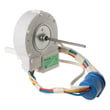
- Refrigerator evaporator motor WR60X10307 (poor airflow, fridge warm/freezer cold)
- Refrigerator defrost heater WR51X10055 (frost buildup, defrost failure)
- Refrigerator defrost thermostat WR50X10068 (defrost cycling problems)
A refrigerator that is not cooling can lead to food spoilage quickly, and a defrost or airflow problem can snowball into heavier frost buildup and longer run times. Catching the cause early helps protect the compressor and keeps temperatures stable.
Last updated: February 2026
How big is the GE AutoFill pitcher?
For the GE GSS25SGSASS side-by-side refrigerator, the owner’s documentation we have for this model does not list an AutoFill pitcher capacity. If your refrigerator includes an AutoFill pitcher accessory, most GE AutoFill pitchers are commonly around 60 oz; confirm the exact capacity for your unit in the GSS25SGSASS owner's manual.
- Check the “Additional features” or “Ice and water dispenser” section in the GSS25SGSASS owner's manual.
- Look for markings on the pitcher itself (often molded into the plastic near the base).
- If your dispenser has an AutoFill setting, verify the pitcher is the correct style for your door dispenser.
- If the pitcher is missing, match the refrigerator model number (GSS25SGSASS) before ordering any replacement accessory.
Pitcher size affects how AutoFill behaves (fill time, overflow risk, and how many bottles you can fill back-to-back). It also helps you set expectations for filtered-water usage and filter replacement intervals.
Even when the pitcher capacity varies by configuration, your filtration and dispenser setup still follows the same basics.
| Item | Typical value for this style of GE refrigerator | What you use it for |
|---|---|---|
| Pitcher capacity (AutoFill style) | About 60 oz | Daily drinking water volume |
| Filtered water system purge after filter change | About 3 minutes | Clears air and carbon fines |
| Rated filter flow (system spec) | 0.5 gpm | Dispenser flow expectation |
- Replace the water filter on schedule; a restricted filter is the most common cause.
- After installing a new filter, flush water for several minutes to clear the system.
- Check the household shutoff valve is fully open.
- Inspect the supply line for kinks behind the refrigerator.
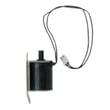
- If the dispenser still has weak flow, the inlet valve can be a cause; see the refrigerator water valve WR57X33326.
Last updated: February 2026
What is the average lifespan of a GE refrigerator?
A GE refrigerator typically lasts 12 years on average. With normal use and basic maintenance, many units run 10 to 15 years; the biggest lifespan drivers are compressor run time, airflow (clean coils), and keeping door seals tight. For model GSS25SGSASS, follow the care and operating guidance in the owner's manual.
- Average: about 12 years
- Common range: 10 to 15 years
- Often shorter when: coils are clogged, doors are opened frequently, or temperatures are set too cold
- Often longer when: condenser area stays clean and doors seal well
| What you’re measuring | Typical expectation | What shortens it fastest |
|---|---|---|
| Cooling system life | ~10 to 15 years | Dirty coils, poor ventilation, power issues |
| Day-to-day reliability | Best in first ~5 to 8 years | Heavy use, warm room temps |
| “Feels like it runs all the time” | Normal at times | Frequent door openings, warm loads |
Your refrigerator’s compressor may run longer than older models, especially with frequent door openings. That extended run time is often normal and helps maintain stable temperatures, but it also makes airflow and clean heat exchange more important for long-term life.
- Keep the condenser area free of dust and pet hair (improves cooling efficiency)
- Confirm doors close fully and gaskets seal all the way around
- Set temperatures and then wait 24 hours after changes for temperatures to stabilize
- Avoid overpacking; leave space for air to circulate
- Replace water filtration parts on schedule if you use the dispenser
If cooling becomes inconsistent, these model-compatible parts are common suspects:
- GE profile refrigerator temperature sensor WR55X10025 (temperature feedback)
- Refrigerator defrost heater WR51X10055 (prevents frost buildup on the evaporator)
- Refrigerator evaporator fan motor WR60X10307 (moves cold air through compartments)
- Refrigerator water filter MWFP (water quality and flow at the dispenser)
Last updated: February 2026