Installation guide
 Owner’s manual
 Error Codes
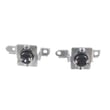


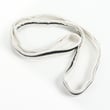
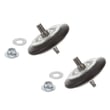
How do I know if my Kenmore dryer thermal fuse is blown?
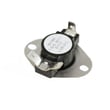
On the Kenmore Elite dryer model 79669278000, a blown thermal fuse commonly shows up as a dryer that will not start or runs but does not heat. The sure way to confirm is a continuity test with a multimeter after unplugging the dryer; an open (no continuity) reading means the fuse is blown.
- Dryer will not turn on even though the outlet has power
- Dryer tumbles but clothes stay cold and damp (no heat)
- Drying times suddenly get much longer (often from restricted venting that overheats the dryer)
- You recently had a clogged vent, crushed duct, or heavy lint buildup
- Unplug the dryer (or switch off the breaker).
- Access the fuse location using the steps in the 79669278000 owner's manual.
- Remove at least one wire from the fuse terminal.
- Set a multimeter to continuity (or lowest ohms).
- Test across the fuse terminals.
| Meter result | What it means | What to do next |
|---|---|---|
| Beep or near 0 ohms | Fuse is good | Keep troubleshooting heat or power issues |
| No beep or OL/infinite | Fuse is blown | Replace the thermal fuse and fix the overheating cause |
A thermal fuse typically opens because the dryer overheated. Before running the dryer again, we recommend:
- Clean the lint screen and lint screen housing
- Inspect the entire vent run for kinks, crushing, or long duct runs
- Clean lint buildup from the duct and outside vent hood
- Confirm the outside damper opens freely
- For electric models, confirm both breakers/fuses are good (some dryers can run without heat if one side trips)
The installation and venting checks in the 79669278000 installation guide are the fastest way to confirm airflow is correct.
Replacing a blown thermal fuse without correcting airflow problems often leads to repeat overheating, longer dry times, and additional failures such as a bad thermostat or heating circuit.
Last updated: February 2026
What are the codes for Kenmore Elite dryer?
For Kenmore Elite dryer model 79669278000, the display can show error codes that point to a specific problem area such as power supply, temperature sensing, or the electronic control. Use the code to guide quick checks first, then follow the troubleshooting steps in the 79669278000 owner's manual.
- PF / PS: Power issue (power failure or incorrect power cord wiring; PS is commonly noted for electric dryers)
- TE1 / TE2: Temperature sensing failure (thermistor circuit problem)
- F:01: Main electronic control board failure
- F:02: Keypad or user interface failure
- F:20: Heater relay failure
- F:22 / F:23: Outlet thermistor failure
- F:24 / F:25: Inlet thermistor failure
- Reset power: Unplug the dryer (or switch off the breaker) for 1 minute, then restore power.
- Confirm correct power supply: A loose cord, tripped breaker, or wiring issue can trigger PF/PS.
- Check airflow basics: Clean the lint filter and make sure the vent is not crushed or blocked.
- Run a timed dry test: If the dryer heats in Timed Dry but fails in Auto Dry, a sensor or thermistor issue is more likely.
If you’re seeing TE1/TE2 or thermistor-related codes, these model-compatible parts are often involved in diagnosis or repair:
| Code family | What it points to | Example model-compatible part |
|---|---|---|
| TE1 / TE2 | Temperature sensing circuit | Dryer thermistor AGM30045804 |
| F:22-F:25 | Inlet or outlet thermistor sensing | Dryer thermistor AGM30045804 |
| Overheat symptoms | Safety temperature limit opened | Dryer high-limit thermostat 6931EL3003D |
Using the correct code meaning helps you avoid replacing the wrong part. For example, a thermistor code often traces back to airflow restriction (lint buildup, vent blockage) before the sensor itself fails.
Last updated: February 2026
What is the life expectancy of a Kenmore dryer?
A Kenmore dryer typically lasts 10 to 13 years with normal household use. For the Kenmore Elite 79669278000, consistent airflow maintenance (lint filter and venting) and basic cleaning are the biggest factors that help it reach, and often exceed, that range; see the 79669278000 owner's manual for the recommended care routine.
Most dryers fail early due to overheating, restricted airflow, or wear in drum support parts.
- Clean the lint screen before every load and keep the lint screen area clear.
- Keep the exhaust vent run short, smooth, and free of lint buildup.
- Avoid overloading; heavy loads strain the drum belt, rollers, and motor.
- Use the right cycle and temperature; Auto Dry uses moisture sensing to prevent over-drying.
- Wipe the door opening and seal area to prevent lint and dust buildup.
If your 79669278000 is nearing the 10 to 13 year mark, these symptoms often point to normal wear items.
| Symptom | Common wear area | Example model-matched part |
|---|---|---|
| Squealing, thumping, rumbling | Drum support and drive system | Dryer drum support roller 4581EL2002L |
| Drum not turning, burning rubber smell | Belt or idler pulley | Dryer drum belt 4400EL2001F |
| Long dry times, hot cabinet | Airflow restriction or heat control | Dryer lint screen by lg 5231EL1001C |
A dryer that is kept clean and venting properly runs cooler and more efficiently. That reduces stress on the heating system, motor, and drum support components, which is the most reliable way to get the full expected service life from a Kenmore Elite dryer.
Last updated: February 2026
Where is the model number on Kenmore Elite dryer?
On the Kenmore Elite dryer model 79669278000, the model number is printed on the identification plate inside the dryer door opening. Open the door and look along the cabinet frame just inside the opening; that label also typically lists the serial number.
- Open the dryer door and inspect the cabinet frame inside the opening
- Check the upper portion of the door opening first
- Scan both the left and right sides of the opening
- Look for a rectangular rating or identification label (model and serial)
- Wipe dust off the label so the numbers are readable
Most Kenmore Elite dryer ID plates list more than just the model number, which helps when ordering parts or checking specifications.
| Label item | What it’s used for |
|---|---|
| Model number | Matching the correct parts list for your dryer |
| Serial number | Identifying production run details for service |
| Electrical rating | Confirming power requirements |
For the exact wording and examples of where the identification plate is shown for this series, use the 79669278000 owner’s manual.
Using the full model number (for example, 79669278000) prevents ordering the wrong Kenmore dryer parts like a heating element, door switch, or drum belt. Even small model-number differences can change the correct part fit.
Last updated: February 2026
Why is my Kenmore Elite dryer not tumbling?
If your Kenmore Elite dryer model 79669278000 powers on but the drum will not tumble, the most common causes are a broken or slipped drum belt, a failed door switch, or a drive system problem (idler pulley, rollers, or motor). Use the 79669278000 owner's manual to confirm the correct start and pause behavior.
- Make sure the door fully closes; a dryer will not tumble if the door switch is not being engaged.
- Press START/PAUSE firmly; opening the door or pressing START/PAUSE pauses the cycle.
- If you start a cycle and do not restart it within about 4 minutes, the dryer can shut off and lose cycle settings.
- Try a Timed Dry cycle to rule out sensor-cycle confusion.
- Reduce the load size; overloading can strain the belt and drive components.
| Symptom | Most likely cause | What to do next |
|---|---|---|
| Dryer runs but drum does not move | Broken/slipped belt | Inspect and replace the dryer drum belt 4400EL2001F |
| Hums, then stops; drum hard to turn by hand | Seized roller or idler pulley | Check rollers and idler; replace worn parts |
| Starts only with door held/pressed | Door switch not closing | Test door switch for continuity |
| No motor sound at all | Motor or control issue | Verify power supply, then test motor circuit |
- Unplug the dryer.
- Try turning the drum by hand.
- Very easy and free-spinning often points to a broken belt.
- Stiff, scraping, or thumping often points to rollers or an idler pulley.
- If you open the cabinet, look for belt fragments, glazing, or a belt that has jumped off the idler.
A non-tumbling dryer usually cannot move air through the load correctly, so drying times increase and heat can build up in the wrong places. Fixing the belt or drum support parts restores normal airflow, protects the motor, and helps prevent repeat breakdowns.
Last updated: February 2026