Owner’s manual
 Error Codes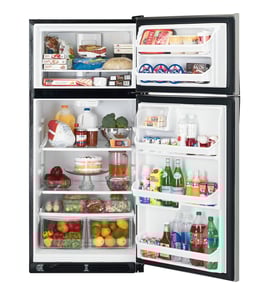




Is Kenmore Elite high end?
Yes. Kenmore Elite is Kenmore’s premium line, and the Kenmore Elite refrigerator model 10674216402 is positioned as a higher-end option compared with standard Kenmore models, typically offering upgraded design, features, and performance.
What “high end” usually means for Kenmore Elite refrigerators
When customers call a refrigerator “high end,” they usually mean it delivers stronger everyday performance and a more premium ownership experience.
- More feature-focused designs (ice and water options, improved storage layouts)
- Better temperature management for fresh food and freezer sections
- Quieter operation compared with many entry-level models
- More emphasis on fit and finish (doors, shelves, bins, trim)
- Support for long-term maintenance with replaceable parts (gaskets, sensors, fans)
How to judge “high end” for your exact model
The fastest way to confirm what makes your 10674216402 an Elite model is to compare its feature list and maintenance guidance to what you need in your kitchen. We recommend checking the 10674216402 owner's manual for the exact features, care steps, and operating instructions.
Quick comparison (typical positioning)
| Line | Typical positioning | What you usually get |
|---|---|---|
| Kenmore (standard) | Value and basics | Core cooling, simpler controls |
| Kenmore Elite | Premium | More features, upgraded storage and performance |
Why it matters
“High end” is most useful when you are deciding whether to repair or upgrade. If your Elite refrigerator is otherwise in good shape, replacing common wear items like door gaskets can restore efficiency and door sealing without replacing the whole unit.
Last updated: January 2026
What is the average lifespan of a Kenmore Elite refrigerator?
Most Kenmore Elite refrigerators average 10 to 15 years of service life with normal household use; with consistent maintenance, many reach the upper end of that range. For your Kenmore Elite 10674216402 top-mount refrigerator, following the care and cleaning guidance in the 10674216402 owner's manual helps reduce wear on key cooling and door-seal components.
Typical lifespan and what affects it
A refrigerator’s life is usually determined by how hard the sealed cooling system and airflow components have to work.
- Keeping condenser coils clean helps the compressor run cooler and longer.
- Good door gasket sealing reduces run time and frost buildup.
- Stable temperatures (37°F fresh food, 0°F freezer) reduce cycling stress.
- Proper leveling helps doors close fully and protects hinges and gaskets.
- Quick response to symptoms (warm temps, loud fan noise, leaks) prevents bigger failures.
Common “end-of-life” symptoms to watch for
These issues often show up as a refrigerator approaches the later years of service:
- Compressor runs constantly or struggles to start
- Freezer is cold but refrigerator section is warm (airflow problem)
- Heavy frost on the evaporator cover (defrost issue)
- Water leaking inside or under the unit
- Doors not sealing, sweating around the frame, or sticking gaskets
Quick part-related examples for this model
If troubleshooting points to a specific failure, these model-matched parts are commonly involved:
| Symptom | Often involved part | Example part for 10674216402 |
|---|---|---|
| Warm refrigerator section | Evaporator fan not moving air | Evaporator motor WP2315539 |
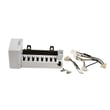
| No ice production | Ice maker not cycling/filling | Ice maker assembly 4317943 |
Why it matters
A refrigerator that runs longer than necessary uses more electricity and puts extra strain on the compressor and airflow system. Simple upkeep (cleaning, sealing, correct temps) is the most reliable way to reach the typical 10 to 15-year lifespan.
Last updated: January 2026
Is it worth replacing the ice maker on a refrigerator?
Yes, it’s usually worth replacing the ice maker on your Kenmore Elite 10674216402 if the refrigerator cools well and you use ice regularly; an ice maker replacement is typically far less expensive than replacing the entire refrigerator.
Quick decision checklist
- The refrigerator and freezer temperatures are normal, but ice production is weak or stopped.
- You hear the fill “buzz” at times, but the ice bin never fills.
- The ice maker is physically damaged (cracked mold, broken shutoff arm).
- You’ve already confirmed the ice maker is turned on (wire shutoff arm down).
- You’re comfortable doing a basic repair with power disconnected.
What “normal” ice production looks like on this model
Your manual describes these typical refill times for the ice storage bin:
| Mode | Typical time to refill the ice bin | What to do if it’s slow |
|---|---|---|
| Normal ice production | 15 to 20 hours | Adjust freezer control 1 degree colder; wait 24 hours |
| Maximum ice production (if equipped) | 9 to 13 hours | Use the max/accelerated ice feature (if your model has it) |
If you are outside these ranges after temperature adjustments, replacing the ice maker becomes a strong value move.
Before you buy an ice maker: 5 checks that can save you money
- Confirm it’s on: wire shutoff arm must be lowered.
- Give it time: allow 24 hours for the first batch after changes.
- Discard early ice: discard the first three batches after startup.
- Check water quality: avoid softened water if possible; it can damage ice maker parts and reduce ice quality.
- Flush if needed: if you recently serviced the water system, flush and clear air from the line per the 10674216402 owner’s manual.
When replacement is the best next step
Replace the ice maker when the freezer is cold enough but the ice maker won’t cycle, won’t fill, or won’t harvest ice consistently. For this model, the correct replacement is the ice maker assembly - refrigerator ice maker by whirlpool 4317943.
Why it matters
A failing ice maker can waste water, create clumps or overflow in the bin, and make troubleshooting harder because ice production depends on temperature, water supply, and the ice maker’s internal motor and mold.
Last updated: January 2026
What are the common problems with Kenmore Elite refrigerators?
Common problems on the Kenmore Elite 10674216402 top-mount refrigerator include warm temperatures from blocked airflow or control settings, moisture buildup from frequent door openings, doors that will not close fully due to package interference or gasket issues, and normal operating noises. Our 10674216402 owner's manual walks through these symptoms and the quickest checks.
Most common symptoms and what usually causes them
- Not cooling or warming up: blocked air vents, controls set incorrectly, or a cooling system issue
- Interior moisture buildup: doors opened often, humidity, or airflow blocked
- Doors will not close completely: food packages blocking the door, unstable leveling, or door alignment
- Doors are hard to open: dirty or sticky door gaskets
- Unusual noises: many sounds are normal during operation (fans, refrigerant movement, ice maker cycling)
Quick checks we recommend first (in order)
- Make sure air vents are not blocked by food; keep space around vent openings for proper circulation.
- Confirm the temperature controls match your kitchen conditions; if you have digital controls, power-cycle the refrigerator to reset.
- Reduce door-open time; organize food so you can grab items quickly.
- Check for packages preventing the door from sealing; rearrange shelves and bins if needed.
- Clean the door gasket and the surface it seals against; if it still sticks, apply a thin coat of paraffin wax after cleaning.
When a part is commonly involved
If the symptom points to a specific component, these are frequent suspects on top-mount designs:
| Symptom | Common part involved | Example part for this model |
|---|---|---|
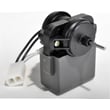
| Warm fridge, weak airflow | Evaporator fan motor | Evaporator motor WP2315539 |
| Door not sealing, frost, moisture | Door gasket | Gasket panel (white) 2159061 |
| No ice or poor ice production | Ice maker | Ice maker assembly 4317943 |
Why it matters
Cooling complaints are often caused by airflow and door sealing, not just “a bad compressor.” Fixing vent blockage, control settings, and gasket sealing helps temperatures stabilize, reduces frost and moisture, and keeps the refrigerator from running longer than necessary.
Last updated: January 2026