 Installation guide
 Owner’s manual





What is the average lifespan of a GE dishwasher?
A GE dishwasher typically lasts about 10 years with normal household use and basic care. For your GE DDT575SSF6SS, consistent cleaning, correct loading, and fixing small issues early helps you reach (and often exceed) that average.
What affects dishwasher lifespan most
- Hard water and mineral buildup (can reduce cleaning and strain the pump)
- Food debris left in the tub and filter area (can lead to clogs and odors)
- Overloading or blocking spray arms (reduces wash performance and increases rewash cycles)
- Heat and drying performance issues (often tied to the heating circuit)
- Leaks or overfill conditions (can trigger safety shutoffs and damage components)
Maintenance checklist (simple, high impact)
- Run a monthly cleaning cycle using a dishwasher cleaner; wipe the door gasket and tub edge.
- Confirm the spray arms spin freely and the holes are not clogged.
- Use the right detergent amount; too much can cause residue, too little can reduce cleaning.
- Keep the drain path clear; avoid kinks and pinches in the drain hose.
- If you see standing water, address it quickly to prevent pump strain.
Common “wear items” and what they do
| Part area | What you may notice | Example part for DDT575SSF6SS |
|---|---|---|
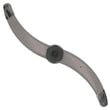
| Wash system | Poor cleaning, debris left behind | Dishwasher spray arm, lower WD22X33499 |
| Drying/heating | Dishes not drying, cool water | Dishwasher heating element (model-specific part varies) |
| Draining | Water left in bottom, slow drain | Dishwasher drain pump (model-specific part varies) |
Why it matters
A dishwasher that is kept clean and draining properly runs fewer repeat cycles, maintains better water flow through the spray arms, and puts less stress on the circulation and heating systems. That directly supports a longer service life.
For model-specific care and operating guidance, follow the DDT575SSF6SS owner's manual.
Last updated: January 2026
What is the rough opening for a GE dishwasher?
For the GE dishwasher model DDT575SSF6SS, we install it in a rough cabinet opening that is at least 24 inches deep, 24 inches wide, and about 34-1/2 inches high (floor to underside of countertop). These dimensions help the dishwasher fit square, level, and fully enclosed.
Rough opening and clearance basics
Use these as your starting point before you slide the dishwasher into place; confirm details in the DDT575SSF6SS installation guide.
- Minimum opening: 24 in. wide
- Minimum opening: 24 in. deep
- Height target: approximately 34-1/2 in. (floor to underside of countertop)
- Keep the wall area behind the unit clear of pipes and wiring
- Make sure the enclosure is square and plumb so the door and tub do not twist
Quick reference table
| Measurement | What to measure | Target |
|---|---|---|
| Width | Inside cabinet opening, left to right | 24 in. minimum |
| Depth | Front of opening to back wall | 24 in. minimum |
| Height | Floor to underside of countertop | About 34-1/2 in. |
Installation checks that prevent fit and door issues
After positioning the dishwasher, we recommend these checks (they prevent door rubbing and panel damage):
- Confirm the dishwasher is square and level at the top and bottom
- Verify all 4 legs are firmly contacting the floor
- Make sure the drain hose is not pinched behind the unit
- Check that tub trim does not contact the door at any point
- Open and close the door to confirm it swings smoothly and does not hit adjacent cabinets
Why it matters
A cabinet opening that is too small or out of square can cause door interference, poor sealing, vibration, and installation stress on the tub and frame. Getting the rough opening right helps the dishwasher wash and drain properly and keeps the door operating smoothly.
Last updated: January 2026
Can a clogged drain cause an FTD error?
Yes. On the GE DDT575SSF6SS dishwasher, a clogged or restricted drain can trigger an FTD error because the dishwasher needs to drain properly between steps; standing water in the tub can prevent the next fill and wash actions from starting normally.
What to check first (fast, no-parts steps)
- Cancel the cycle and let the unit drain; then open the door and confirm the tub is empty.
- Check the sink/disposer connection; make sure the disposer drain plug was removed during installation.
- Inspect the drain hose under the sink and behind the dishwasher for kinks, crushing, or sagging.
- If you have an air gap, check for a clog in the air gap cap and outlet.
- Confirm the drain setup meets the install rules (high loop or air gap as required).
Drain setup rules that affect FTD
Your drain installation matters because siphoning, backflow, or excessive lift can leave water in the tub.
| Item to verify | Typical requirement | Why it matters |
|---|---|---|
| Total drain hose length | 12 ft max | Too long reduces drain performance |
| Max drain connection height | 72 in max above dishwasher base | Too much lift can cause slow or no drain |
| Air gap vs high loop | Air gap required in some installs | Prevents siphoning and backflow |
For the exact routing method and measurements, follow the DDT575SSF6SS installation guide.
When a part is likely involved
If the hose and plumbing are clear but the dishwasher still will not drain, the issue is usually in the drain system.
Common suspects include:
- Drain pump not running or jammed (look for humming with no water movement)
- Debris in the sump area restricting flow
- A failed float switch that is confusing the fill and drain logic
If you suspect a drain pump problem, the model uses a dedicated drain pump; see dishwasher drain pump WD19X25187.
Why it matters
FTD is often a symptom, not the root problem. Restoring normal drain flow prevents repeat errors, improves cleaning, and helps avoid water left in the tub at the end of the cycle.
Related help: GE electronic dishwasher error codes.
Last updated: January 2026
What is the most common problem with GE dishwashers?
The most common issue we see with GE dishwashers like model DDT575SSF6SS is a no-start or won’t-run condition. In many cases, the root cause is simple (power interruption or the door not latching), but it can also involve the door latch, user interface, or main control.
Quick checks first (fastest fixes)
- Confirm the dishwasher has power (breaker on, outlet powered if applicable).
- Make sure the door closes fully and latches; a mis-latched door prevents starting.
- Cancel and restart the cycle to clear a stuck selection.
- Check for standing water in the tub; some faults prevent a new cycle if it cannot drain.
- Look for an error code or flashing pattern and match it to the guide.
Parts that commonly cause “won’t start” on DDT575SSF6SS
If basic checks do not help, these parts are frequent suspects on electronic GE dishwashers:
- Door latch/lock: if the latch switch does not prove “door closed,” the control will not run. Consider the GE dishwasher door latch lock WD21X10490.
- User interface: unresponsive buttons or dead display can point to the UI. Consider the user interface WD21X31910.
- Electronic control board: if the unit has power but will not begin a cycle, the main control can be involved. Consider the dishwasher electronic control board WD21X24899.
Error codes: the fastest way to narrow it down
Use the error code list to decide whether you are dealing with a door, drain, fill, or heating problem:
Symptom-to-cause cheat sheet
| Symptom | Most likely area | Common next step |
|---|---|---|
| Lights on, won’t start | Door latch, UI, control | Verify latch engagement; then test latch/UI |
| Starts then stops | Drain, float, control | Check for drain restriction; look for error code |
| Won’t drain | Drain hose, drain pump | Inspect hose routing; check pump operation |
| Not drying | Heating circuit | Check heater and rinse aid use |
Why it matters
A GE dishwasher that won’t start is often protecting itself. The control needs a confirmed door latch and normal conditions (no drain or flood fault) before it will run, so quick checks can prevent unnecessary parts replacement.
For model-specific operating and safety details, follow the DDT575SSF6SS installation guide.
Last updated: January 2026





