Owner’s manual
 Error Codes



What is the average lifespan of a Kenmore Elite refrigerator?
Most Kenmore Elite refrigerators, including model 79578543806, typically last 10 to 15 years with normal household use. Regular maintenance (especially keeping airflow clear and cleaning condenser coils) helps you reach the high end of that range and avoid premature cooling-system wear.
A refrigerator’s life is mostly determined by how hard the sealed system and fans have to work day to day.
- Maintenance habits: cleaning condenser coils, keeping door gaskets sealing, and replacing filters on schedule
- Usage patterns: frequent door openings, warm kitchens, and overpacking can increase run time
- Airflow and cleanliness: blocked vents and dusty coils raise operating temperatures
- Water and ice system care: mineral buildup and leaks can create secondary problems
- Repair economics: major sealed-system repairs often influence whether owners repair or replace
Your 79578543806 Use & Care Guide notes that compressor run time changes with conditions; at normal room temperatures, it’s common for the motor to run a significant portion of the time, and it can run even more in warmer rooms or with frequent door openings. See the 79578543806 owner’s manual for the care and cleaning schedule and operating tips.
| Scenario | Typical outcome | What to do now |
|---|---|---|
| Coils kept clean, doors seal well | Often reaches 12 to 15 years | Clean coils, confirm gasket seal, keep vents clear |
| Coils dusty, doors not sealing | Shorter life, higher energy use | Clean coils, correct door alignment, replace gasket if needed |
| Heavy ice maker/water use with poor filtration | More service calls over time | Replace filters, inspect tubing and valve for leaks |
A refrigerator that runs longer than necessary (from dirty coils, warm air leaks, or restricted airflow) puts extra load on the compressor and fans. Reducing run time is one of the most practical ways to extend service life and stabilize temperatures.
- Vacuum and brush condenser coils on a regular schedule
- Check door gaskets for gaps, tears, or hardened sections
- Keep interior vents unblocked for proper cold-air circulation
- Replace water filters on schedule and flush the dispenser after changes
- Address water leaks quickly to prevent corrosion and ice buildup
Last updated: January 2026
What year did the Kenmore Elite come out?
Kenmore Elite launched as a premium Kenmore line in the late 1990s (commonly cited as 1999). For your specific Kenmore Elite bottom-mount refrigerator model 79578543806, the most accurate “year” is the unit’s manufacture date, which you can confirm by decoding the serial number using the 79578543806 owner's manual.
The “Kenmore Elite” name spans many years and multiple manufacturers, so the model’s serial number is the best way to pin down the build date.
- Find the model and serial label (commonly inside the fresh food compartment, on a side wall, or near the crisper area).
- Write down the full serial number exactly as shown.
- Use the serial format guidance in the 79578543806 owner's manual to interpret the date code.
- If the label is damaged, take a clear photo and compare characters carefully (0 vs O, 1 vs I).
- Keep the serial number handy when ordering parts like a door gasket or ice maker kit.
Kenmore Elite is a product line, not a single model. The line’s introduction date tells you when the branding started, but it does not identify when your refrigerator was built.
| What you’re asking | What it tells you | Best way to confirm |
|---|---|---|
| When Kenmore Elite came out | When the premium line launched | General history (late 1990s) |
| When your 79578543806 was made | Your refrigerator’s actual age | Serial number date code |
Knowing the manufacture year helps us match the correct revision of parts and troubleshooting steps for your refrigerator, especially for common wear items like door seals, ice maker components, and water system parts.
If you are chasing a display or cooling issue, the Kenmore 795 model bottom freezer refrigerator error codes guide can help you narrow the problem before replacing parts.
Last updated: January 2026
What are the common problems with Kenmore Elite refrigerators?
For Kenmore Elite model 79578543806, the most common problems we see are poor cooling (often from dirty condenser coils or an airflow issue), frost or ice buildup from doors not sealing or closing fully, and unusual noises or vibration from leveling problems or normal operating sounds. See the 79578543806 owner's manual troubleshooting section for model-specific checks.
- Not cooling well: dirty condenser coils, doors not fully closed, or the unit being in a defrost cycle.
- Frost or ice crystals on frozen food: freezer door not closing properly or frequent door openings.
- Water puddles or water in the drain pan: normal during defrost, or slow evaporation in humid conditions.
- Doors will not close completely: refrigerator not level, food packages blocking the door, bins or shelves out of position, or sticky gaskets.
- Lights do not work: loose bulb, burned-out bulb, or power supply issue.
- Clean the condenser coils (dirty coils reduce heat transfer and make the compressor work harder).
- Push doors firmly shut; confirm shelves, pans, and door bins are fully seated.
- Level the refrigerator so it sits solidly on the floor (reduces vibration and helps doors seal).
- Clean the door gaskets and the surfaces they touch; then apply a thin coat of paraffin wax to reduce sticking.
- If ice tastes or smells off, discard old ice, clean the bin, and check food wrapping.
| Symptom | Part that may be involved | What it affects |
|---|---|---|
| Door ajar alarms, interior light issues | Refrigerator door switch 6600JB1010A | Detects door position for lights and controls |
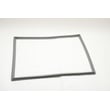
| Frost from air leaks, warm freezer | Refrigerator door gasket MDS64172919 | Seals the door to prevent humid air entry |
| Warm temps, weak airflow, noise | Lg refrigerator evaporator fan motor 4681JB1027C | Circulates cold air through compartments |
Cooling, frost, and noise complaints often trace back to airflow and sealing. Keeping coils clean, doors aligned, and gaskets sealing helps the compressor run less, protects food temperatures, and reduces ice buildup.
Last updated: January 2026
What size is Kenmore refrigerator model 79578543806?
Kenmore Elite refrigerator model 79578543806 is a 33-inch-class bottom-mount refrigerator. For the exact exterior dimensions and required clearances for your installation, use the dimension and installation section in the 79578543806 owner's manual.
We recommend measuring your unit and the opening before moving it into place:
- Measure width at the widest point (typically door edges)
- Measure height from the floor to the top hinge cover
- Measure depth two ways: cabinet only and with handles
- Allow extra space behind the unit for the water line and airflow
- Confirm the freezer drawer has room to pull out fully
These are the planning dimensions most customers use for Kenmore 795 bottom-freezer designs; confirm your exact numbers in the manual.
| Measurement | Typical planning size |
|---|---|
| Width | about 33 in. |
| Height | about 70 in. |
| Depth (with handles) | about 35 to 38 in. |
Even when the cabinet fits, clearances prevent door swing and cooling issues:
- Side clearance for door swing
- Top clearance for hinge cover and ventilation
- Rear clearance for cord and water tubing
- Front clearance for freezer drawer pull-out
Correct sizing prevents delivery and installation problems such as doors hitting walls, the freezer drawer not clearing, or the refrigerator sitting too close to the wall once the water line is connected.
Last updated: January 2026