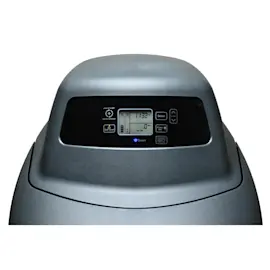
Owner’s manual
 Error Codes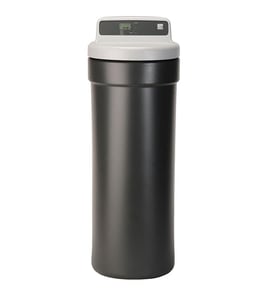





What is the average lifespan of a water softener?
Most residential water softeners last 10 to 15 years. For the Kenmore 625388460, lifespan depends most on water hardness, iron content, and routine care (keeping salt in the brine tank and keeping the unit clean); our 625388460 owner's manual outlines the maintenance steps that help you reach the full service life.
Typical lifespan ranges (what to expect)
- Average: 10 to 15 years
- With excellent maintenance and stable water conditions: up to ~20 years
- Common early-life issues: salt bridging, clogged venturi/nozzle, worn valve seals, or drive/motor problems
| Component | Typical wear pattern | What you may notice |
|---|---|---|
| Resin bed | Gradual loss of softening capacity | Hard water returns sooner between regenerations |
| Valve seals/rotor | Wear and leakage over time | Water leaking at the valve, constant drain flow |
| Drive motor/gears | Mechanical wear | Stalling during regeneration, clicking, error codes |
What shortens (or extends) water softener life
- Very hard water or high iron increases regeneration demand and resin fouling
- Running out of salt can reduce softening performance and lead to troubleshooting cycles
- Sediment in the water can clog screens and valve passages
- Freezing conditions can crack tanks/valves if the unit is not protected
- Regular cleaning and correct programming helps the system regenerate efficiently
Maintenance habits that help the most
Use these as a simple routine for the Kenmore 625388460:
- Keep salt above the water line in the brine tank; break up crusting if it forms
- Check for salt bridging (a hard crust that leaves an empty space below)
- Clean the nozzle/venturi area if brine draw seems weak
- Confirm timer settings after power outages
- Watch for small leaks early; valve seal wear is easier to address before it worsens
Why it matters
A softener that is near end-of-life often still runs, but it uses more salt and water, regenerates more often, and delivers inconsistent soft water. Tracking hardness, iron, and regeneration behavior (as described in the manual) helps you decide whether maintenance or repair is the best next step.
Last updated: January 2026
Is it worth repairing a water softener?
Yes, repairing a Kenmore water softener like model 625388460 is usually worth it when the problem is isolated (leaks at the valve, a stuck regeneration, hard water due to a clogged venturi) and the unit is otherwise in good condition. If the resin tank is failing or repairs are stacking up, replacement often makes more sense.
Quick decision checklist
- Repair when the issue is a single, common wear item (seals, valve motor, rotor/disc, venturi parts).
- Repair when you have hard water but the softener still powers on and cycles.
- Repair when you see a small valve-area leak (often seal-related).
- Replace when the resin tank is damaged or the system has repeated major failures.
- Replace when repair cost approaches about half the cost of a comparable new softener.
What we check first on model 625388460
Start with the basics in the 625388460 owner's manual. The manual’s troubleshooting section focuses on power, correct time display, bypass position, and inlet/outlet plumbing orientation.
- Confirm the display has power and shows the correct time.
- Make sure the bypass valve is fully in the service position.
- Verify inlet and outlet plumbing are connected correctly.
- Check for a salt bridge (packed salt that prevents brine making).
- Clean the nozzle and venturi if you are getting hard water.
Common repairs that are typically “worth it”
These are frequent fixes that can restore soft water without replacing the whole unit:
| Symptom | Likely area | Example part for this model |
|---|---|---|
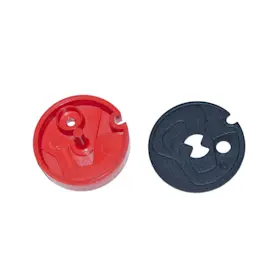
| Leaking at valve area | Worn seals | Kenmore water softener seal kit 7185487 |
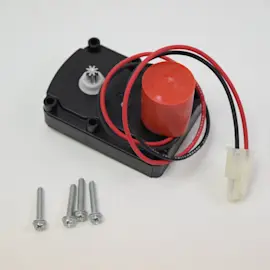
| Stuck in regeneration or won’t advance | Drive motor or cam/gear | Rep'l motor 7286039, gear cam 7283489 |
| Hard water after regeneration | Nozzle/venturi plugged, flow restriction | Water softener venturi gasket 7204362, water softener flow plug 1148800 |
Why it matters
A properly working softener protects plumbing and water-using appliances (water heater, dishwasher, washer) from scale buildup. Fixing a single failed valve component or a clogged venturi often restores performance faster and cheaper than replacing the entire system.
Last updated: January 2026
What water softeners do plumbers recommend?
Plumbers typically recommend water softeners that are correctly sized for the home, use a proven control valve, and have easy-to-service parts. If you already own a Kenmore water softener like model 625388460, the best “recommended” choice is keeping it properly set up, salted, and maintained using the 625388460 owner's manual.
What plumbers usually look for (and why)
- Correct capacity for your household water use and hardness level
- Reliable regeneration controls (timer or demand-initiated)
- Easy access to common wear parts (seals, rotor/disc, valve motor)
- Straightforward bypass and plumbing connections
- Clear troubleshooting and error-code support
How to choose the right softener for your home
Most plumbers start with water quality and sizing, not brand names. A basic selection checklist:
| What to check | What it affects | What to do first |
|---|---|---|
| Water hardness (grains per gallon) | How often it regenerates | Test hardness, then set hardness in the controls |
| Iron level | Resin fouling and staining | Use iron-handling salt or resin cleaner if needed |
| Household size and usage | Capacity and salt use | Size for peak demand and daily gallons |
| Installation location | Freeze risk and drain routing | Keep unit and piping protected from freezing |
If you already have Kenmore 625388460
We focus on keeping your existing system delivering soft water. The manual notes the softener removes hardness minerals and “clear water” iron up to its limits, and it needs salt for every regeneration. In humid areas, keeping the salt tank about one-quarter to one-half full helps reduce salt bridging.
Common maintenance items plumbers service
- Keep salt in the storage tank; do not let it run empty
- Use pellet or nugget salt for best salt monitor accuracy
- Periodically disinfect the softener when your water supply needs it
- Protect the softener and piping from freezing
- Clean or service the nozzle/venturi and screens if performance drops
If you are chasing a leak or loss of soft water, worn internal seals are a common cause; the Kenmore water softener seal kit 7185487 is a frequent repair part for this model family.
Why it matters
A “recommended” water softener is the one that matches your water conditions and is maintained correctly. Proper salt level, correct settings, and timely replacement of wear parts prevent hard-water symptoms and protect water-using appliances.
Last updated: January 2026