Owner’s manual
 Error Codes


How to reset Kenmore washer model 11020602991 top loader?
To reset your Kenmore washer model 11020602991, we recommend doing a simple power reset, then restarting the cycle using the timer knob. This clears many “stuck” conditions after a pause, lid opening, or an interrupted cycle; it does not change mechanical settings.
Quick reset steps (power reset)
- Push the Cycle selector (timer) knob in to stop the washer.
- Turn the knob to OFF.
- Unplug the washer (or switch the breaker off).
- Wait 2 to 5 minutes.
- Restore power.
- Select a cycle, then pull the timer knob out to start.
If the washer still will not start or resume
These checks fix the most common “no start” or “won’t resume” complaints on this style of Kenmore top-load washer:
- Confirm the lid is fully closed.
- Make sure the timer knob is pulled out (pushed in = stopped).
- Reduce the load size if the basket is packed tight.
- If the tub looks off-center, center the tub before starting.
- If the washer is vibrating or walking, level it (rear legs self-adjust when you tilt the washer forward and set it back down).
What “reset” can and cannot do
| Situation | What a reset helps | What to do next |
|---|---|---|
| Cycle paused or interrupted | Clears a stuck timer position | Re-select cycle and pull knob out |
| Won’t spin after draining | Normal “neutral drain” behavior | Let it finish draining; spin starts after |
| Won’t drain or spins poorly | Sometimes clears control confusion | Check drain hose for kinks/clogs; reduce suds |
Why it matters
A quick reset is the fastest way to recover from an interrupted cycle, but repeated no-start, no-drain, or no-spin symptoms usually point to a load issue, leveling problem, or a drain/drive component that needs attention.
For model-specific operating details (starting, stopping, and restarting with the timer knob), use the 11020602991 owner's manual.
Last updated: February 2026
What is the average lifespan of a Kenmore washer?
Most Kenmore washers average 10 to 15 years of service life. For your Kenmore 11020602991 top-load washer, regular care (proper loading, keeping it level, and addressing leaks or unusual noises early) is what most often determines whether it lands closer to 10 years or pushes past 15. See the owner's manual for model-specific care and operating guidance.
Typical lifespan and what affects it
A washer’s lifespan is mainly driven by mechanical wear, water quality, and how heavily it’s used.
- Loads per week: more cycles equals faster wear on the drive system and pump
- Overloading: strains the motor, clutch, coupling, and gear case
- Out-of-balance loads: increases vibration and suspension wear
- Detergent and residue: excess suds and buildup can contribute to odors and component stress
- Small problems left alone: minor leaks or slow drains often become major repairs
Maintenance that extends life (high impact)
These steps are simple and make the biggest difference over time.
- Keep the washer level to reduce vibration and suspension wear
- Avoid overloading; loads should move freely during wash
- Use the right water level and temperature for the load
- Periodically inspect hoses and connections for seepage
- If draining slows, check for clogs before the pump is damaged
Parts that commonly wear as the washer ages
If performance changes, these are frequent wear items on many Kenmore top-load designs.
| Symptom | Common wear area | Example part on this model |
|---|---|---|
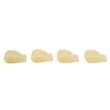
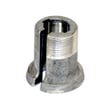
| Agitator moves poorly or “ratchets” | Agitator drive components | Agitator dog 80040 |
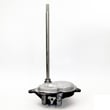
| Washer won’t spin or agitates weakly | Drive coupling | Coupling 285753A |
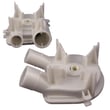
| Won’t drain or drains slowly | Drain pump | Washer drain pump WP3363394 |
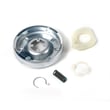
| Spin issues, burning smell, poor engagement | Clutch/drive train | Clutch 285785 |
Why it matters
Knowing the typical 10 to 15 year lifespan helps you decide when routine maintenance is enough versus when a larger repair (for example, a drive-train issue) is worth pricing out against the washer’s age and condition.
Last updated: February 2026
How many cubic feet is a Kenmore Model 11020602991 washer?
The tub capacity for Kenmore washer model 11020602991 is listed in the specifications information in the 11020602991 owner's manual. This model is a one-speed, top-load, direct-drive style washer; once you locate the spec line in the manual, use that cubic-foot value for load sizing.
Where to find the capacity in the manual
Use these spots first because they are the fastest way to get the exact cubic-foot number:
- Specifications / product data section (often near the back of the manual)
- Any feature and benefits or washer dimensions pages that list “capacity”
- The model and serial number plate reference pages; confirm you are matching the correct manual to your exact model
If you need a same-day estimate (measure the basket)
If you are trying to size loads immediately, you can estimate capacity by measuring the inside of the wash basket.
- Measure inside basket diameter (inches)
- Measure usable depth (inches) to the bottom of the basket
- Calculate cubic inches: 3.14 × (diameter ÷ 2)² × depth
- Convert to cubic feet: cubic inches ÷ 1728
| Method | What you get | Best for |
|---|---|---|
| Manual specification | Exact cubic feet | Correct load sizing and comparisons |
| Basket measurement | Close estimate | Quick planning when specs are not in front of you |
Why it matters
Using the correct capacity helps prevent overloading, improves cleaning and spin performance, and reduces tangling around the agitator (a common issue noted in the manual’s troubleshooting guidance).
Last updated: February 2026
How to unclog drain hose on Kenmore washer?
To unclog the drain hose on your Kenmore washer model 11020602991, unplug the washer, remove standing water, then straighten the hose and clear debris from the hose and drain pump path. Reinstall the hose with the correct height and an air gap to prevent repeat drain problems (see the 11020602991 owner's manual).
Safety and prep
- Unplug the washer.
- Turn off both water faucets.
- Keep towels and a shallow pan ready.
- If the tub is full, bail water out or use a wet/dry vac at the standpipe.
Step-by-step: clear the clog
- Check the external hose: Follow the drain hose to the standpipe or laundry tub and remove kinks.
- Inspect the hooked end: Pull it from the standpipe/tub and remove lint, coins, socks, or sludge.
- Flush the hose: Run water through the hose to push debris out.
- Check the pump area: If the hose is clear but it still will not drain, inspect the pump inlet and impeller area for jams.
- Reinstall correctly: Push and twist the straight end onto the washer drain connector until it seats fully, then secure the clamp.
Drain hose setup checks (prevents siphoning)
| Check | Correct setup |
|---|---|
| Height limit | Hose is below 96 in (2.4 m) above the floor |
| Minimum height | Hose is at least 39 in above the floor |
| Air gap | Hose is not taped or sealed into the standpipe |
| Standpipe fit | Hose sits loosely, not jammed tight |
When a part is the real problem
A clear hose with poor draining often points to a jammed or failing pump.
Why it matters
A clogged or incorrectly routed drain hose can cause won’t drain, won’t spin, wet loads, or a washer that seems to keep filling and draining. Correct hose routing also helps protect floors from leaks.
Last updated: February 2026