

How do I tell what model my Kenmore dryer is?
Your Kenmore dryer’s model number is printed on the appliance’s rating label; for Kenmore model 11070857990, you will see 11070857990 on that label. On most Kenmore gas dryers, the label is easiest to spot when you open the door and look around the door opening.
Where to look for the model number label
Check these common locations in this order:
- Inside the door opening on the front panel (around the rim)
- On the door itself (edge or inner surface)
- Behind the lint screen housing area (near the lint filter opening)
- On the back panel of the dryer cabinet
- Inside the lower front access area (if your model has a lower panel)
What the model number looks like (and why it matters)
Kenmore model numbers are usually a long string of digits. For parts lookup and compatibility, we recommend matching the full model number exactly, character for character.
| What to record | Example for this dryer | Why we need it |
|---|---|---|
| Model number | 11070857990 | Identifies the exact Kenmore gas dryer design |
| Serial number | (varies) | Helps confirm production run details |
| Type | Gas dryer | Ensures you get gas-specific parts like igniters and valve coils |
Quick tips to avoid mix-ups
- Write the model number exactly as shown (no spaces)
- Take a clear photo of the label before ordering parts
- Use the model number, not the cycle knob label or color, to match parts
- If you are troubleshooting, match symptoms to the correct platform (110-series vs other series)
Why it matters
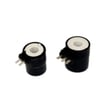
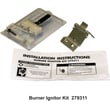
The model number is the key to getting the right Kenmore dryer parts and troubleshooting steps. For example, gas-dryer heating components such as the igniter 279311 and dryer valve coil kit 279834 must match the exact burner assembly used on your model.
Last updated: February 2026
What size is a Kenmore Model 11070857990 dryer?
Most Kenmore gas dryers like model 11070857990 are full-size units that measure about 27 inches wide, 27 to 29 inches deep, and 43 to 44 inches tall. For an exact fit (especially depth), we match the dimensions to your specific configuration and door style.
Typical dimensions you can plan around
These are the most common exterior size ranges for a standard 27-inch Kenmore 110-series style dryer:
- Width: ~27 inches
- Height: ~43 to 44 inches
- Cabinet depth: ~27 to 29 inches
- Depth with door open: often 45 inches or more
- Weight: typically 100 to 140 lb for a gas dryer
How to measure your dryer accurately
Use a tape measure and record the largest outside-to-outside measurement.
- Measure width across the front of the cabinet
- Measure height from floor to the top of the cabinet
- Measure depth from the back panel to the front edge (exclude knobs unless they stick out)
- Measure depth with door open if the dryer sits in a tight walkway
- Confirm whether the dryer has a rear exhaust elbow that adds depth
Space planning checklist (what to allow behind and around it)
Even if the cabinet is about 27 to 29 inches deep, the installed depth is often larger.
| Location | What to allow | Why |
|---|---|---|
| Behind dryer | 4 to 6 inches (typical) | Venting and gas line clearance |
| Sides | 0 to 1 inch each side | Reduces vibration contact |
| Above | 1 inch or more | Easier installation and airflow |
Why it matters
Correct dimensions help prevent crushed venting (long dry times), kinked gas connections, and doors that cannot fully open. If you are stacking, recessing into a closet, or replacing an older Kenmore unit, measuring first avoids a costly mismatch.
If you are also troubleshooting performance issues while planning a replacement, our gas dryer wont heat troubleshooting video can help you rule out airflow and burner problems.
Last updated: February 2026
Where is the part number on a Kenmore dryer?
On Kenmore gas dryer model 11070857990, the model and serial tag (where you will find the identifying numbers you need to look up parts) is most often located on the dryer frame just inside the door opening. Once you find that tag, you can match the correct replacement part for your exact model.
What to look for on the ID tag
The tag typically includes several lines of information. Use these items when searching for parts:
- Model number (for this dryer: 11070857990)
- Serial number (helps confirm production run)
- Type (gas dryer)
- Electrical rating (volts and amps)
- Sometimes a manufacturing code or date code
Common locations to check
If you do not see the tag immediately inside the door opening, check these other common spots:
- On the front panel around the door opening (left or right side)
- On the door itself (edge or inner surface)
- Behind the lower front access panel (if your version has one)
- On the rear panel near where the cord and vent connect
Model number vs. part number (quick comparison)
Use this table to avoid ordering the wrong item.
| Number type | What it identifies | Example from this dryer page |
|---|---|---|
| Model number | The exact dryer design | 11070857990 |
| Part ID | The catalog identifier used to select a part | WP3406107 |
| Part number | The manufacturer’s number for the part | 3406107 |
Why it matters
Kenmore dryers often share similar-looking parts across different model numbers. Using the ID tag information helps us match the correct door switch, belt, thermostat, or gas ignition parts for 11070857990 without guesswork.
Example of a part you can match after confirming the model
If you are troubleshooting a dryer that will not start when the door is closed, a common related part is the dryer door switch WP3406107.
Last updated: February 2026
What are common problems with Kenmore dryers?
Common problems we see on Kenmore dryers like model 11070857990 include no heat, long dry times, the drum not turning, and unusual noises. Most issues trace back to airflow restrictions (lint and venting) or normal wear on drive and heating components.
Most common symptoms and likely causes
- Dryer will not heat (gas dryer): failed gas ignition parts such as the dryer valve coil kit 279834, a weak igniter, or a failed sensor or thermostat
- Long drying times: clogged lint screen, restricted vent duct, crushed flex vent, or a failing blower wheel
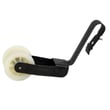
- Drum will not turn: broken belt, worn idler pulley, or a failing drive motor
- Loud squealing, thumping, or rumbling: worn drum support parts, a damaged belt, or a loose blower wheel
- Dryer will not start: door switch failure, timer/control issue, or motor problem
Quick checks we recommend first (fast and high value)
- Clean the lint screen and confirm strong airflow at the outside vent hood
- Inspect the vent run for kinks, long runs, or heavy lint buildup
- Listen for the motor running with no drum movement (often a belt or idler issue)
- If heat starts then stops, suspect gas ignition components (coils or sensor)
- If the door must be slammed to start, check the door switch and latch alignment
Parts that commonly fix these problems on 11070857990
| Symptom | Common part to check | Example from available parts |
|---|---|---|
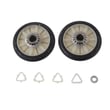
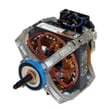
| Drum not turning | Belt, idler pulley, motor | Dryer drum belt 341241, idler pulley WP691366, motor 279827 |
| No heat or heat cuts out | Gas ignition parts, thermostats | Dryer valve coil kit 279834, igniter 279311, dryer operating thermostat WP3387134 |
| Long dry times | Airflow parts | dryer blower wheel WP694089 |
| Won’t start | Door switch, timer | dryer door switch WP3406107, dryer timer WP3976576 |
Why it matters
Airflow problems make any dryer run hotter and longer, which increases wear on thermostats, sensors, and the motor. Catching a restricted vent early also helps prevent repeat no-heat and long-dry-time complaints.
Related help: gas dryer wont heat troubleshooting video, gas dryer wont start troubleshooting video, and Kenmore 110 series electronic control model dryer error codes.
Last updated: February 2026
How to replace a Kenmore dryer thermistor?
On Kenmore gas dryer model 11070857990, a “thermistor” is typically part of the temperature-sensing and safety circuit on the blower housing or exhaust duct area. Replacement is a straightforward remove-and-reinstall job once you have safe access to the sensor location and wiring.
Safety first (gas dryer)
- Unplug the dryer from the wall outlet.
- Shut off the gas supply valve to the dryer.
- Let the dryer cool completely.
- Work in a well-ventilated area.
- If you smell gas at any point, stop and have a qualified technician check the installation.
How we replace the temperature sensor (thermistor-style) on a Kenmore gas dryer
- Remove the lint screen.
- Remove the rear access panel (or lower front access panel, depending on cabinet style).
- Locate the temperature sensor on or near the blower housing or exhaust duct; it is a small sensor with a wire connector.
- Take a quick photo of the wire routing and connector position.
- Disconnect the wire harness from the sensor.
- Remove the mounting screw(s), then remove the sensor.
- Install the new sensor, secure it with the screw(s), and reconnect the harness.
- Reinstall panels, restore gas and power, then run a timed heat cycle to confirm normal operation.
Parts that are commonly confused with a thermistor on this model
On many Kenmore gas dryers, “no heat” or “overheating” symptoms are more often tied to thermostats or burner components than a true thermistor.
| Symptom | More common suspect | Example part for 11070857990 |
|---|---|---|
| Dryer runs but no heat | Gas valve coils | Dryer valve coil kit 279834 |
| Heats briefly then stops | Radiant sensor or coils | Dryer radiant sensor WP338906 |
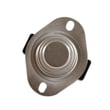
| Overheats or cycles oddly | Operating thermostat | Dryer operating thermostat WP3387134 |
Why it matters
A failed temperature-sensing component can cause long dry times, overheating, or heat that cuts in and out. Replacing the correct sensor and confirming good airflow (clean lint screen, clear venting, strong blower) helps protect the burner system and improves drying performance.
For step-by-step diagnosis before replacing parts, we use the troubleshooting steps in gas dryer wont heat troubleshooting video.
Last updated: February 2026