Installation guide
 Error Codes



What is the most common problem with a KitchenAid refrigerator?
For KitchenAid built-in refrigerators like model KSSC42QKS02, the most common issues we see are ice maker problems (no ice, slow ice, small cubes) and cooling complaints (warm refrigerator section, frost buildup). These symptoms are often tied to airflow, defrost, or water-supply related faults.
Most common symptoms and what they usually point to
- Ice maker not making ice: water supply restriction, frozen fill tube, or a failing ice maker assembly
- Slow ice production: freezer temperature too warm, dirty condenser area, or airflow restriction
- Fridge warm but freezer cold: evaporator airflow problem or a stuck air baffle
- Frost on back wall / heavy frost: defrost system issue (heater, defrost bi-metal, or sensor)
- Noisy operation: fan blade rubbing ice, worn fan motor, or condenser fan issues
Quick checks we recommend first (before buying parts)
- Confirm temps: 0°F in the freezer and 37°F in the fresh food section.
- Make sure vents are not blocked by food packages.
- Clean dust from the condenser area (restricted heat release can cause warm temps and weak ice production).
- If the dispenser or ice maker recently stopped after a filter change, purge air and verify water flow.
- Review model-specific access and shutoff steps in the KSSC42QKS02 installation guide.
Parts that commonly relate to these problems on KSSC42QKS02
| Problem area | What fails | Example part for this model |
|---|---|---|
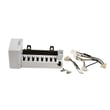
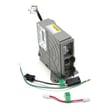
| Ice production | Ice maker module or assembly | Ice maker assembly 4317943 |
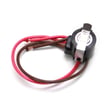
| Frost buildup | Defrost safety/termination device | Refrigerator defrost bi-metal WPW10225581 |
| Temperature control | Sensor reporting wrong temp | Refrigerator thermistor WP2188820 |
Why it matters
Ice maker and cooling problems usually get worse over time: warm temps can spoil food, and frost buildup can block airflow and strain the compressor. Catching the root cause early helps prevent repeat failures.
Related DIY help
Last updated: January 2026
How to fix e2 error code KitchenAid refrigerator?
On a KitchenAid built-in refrigerator model KSSC42QKS02, an E2 error is often cleared by resetting power: turn the breaker off (or unplug) for 1 minute, restore power, then watch the display for 1 minute to confirm the code stays off.
Step-by-step reset (safe first fix)
- Turn the refrigerator OFF at the circuit breaker (or unplug it).
- Wait 1 full minute.
- Turn power back ON.
- Monitor the display for 1 minute.
- Confirm normal operation: cooling resumes and the dispenser/ice maker responds.
If the E2 code comes back
E2 typically points to a control sensing a problem that can be caused by a door switch issue, temperature sensing issue, or a cooling-airflow problem. Use these quick checks before replacing parts:
- Make sure both doors fully close and the gaskets seal.
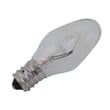
- Check that interior lights turn off when doors close (a stuck switch can confuse controls).
- Verify vents are not blocked by food packages.
- If the unit is warm, listen for fans running (evaporator and condenser airflow matters).
- If the code repeats after a reset, follow the diagnostic steps in the installation guide.
Parts that commonly relate to “sensor/door/fan” symptoms
If you’re also seeing warm temperatures, odd cycling, or the unit thinks a door is open, these model-matched parts are often involved:
| Symptom you notice | What to inspect | Model-matched part example |
|---|---|---|
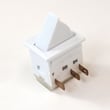
| Lights stay on or door-open behavior | Door switch operation | Refrigerator light switch W11384469 |
| Temperature swings or false readings | Temperature sensor circuit | Refrigerator thermistor WP2188820 |
| Warm fridge section, weak airflow | Evaporator fan area | Refrigerator evaporator fan blade WP2169142 |
Why it matters
When E2 repeats, the refrigerator may protect itself by changing run times or disabling certain functions. Clearing the code and confirming stable operation helps prevent food-temperature issues and reduces strain on the compressor.
Last updated: January 2026
Does KitchenAid make a 33 inch wide refrigerator?
Yes. KitchenAid makes 33-inch wide refrigerators (most commonly freestanding French door and bottom-freezer styles). Your KitchenAid built-in refrigerator model KSSC42QKS02 is a wider built-in unit, so a 33-inch model is a different product line and installation footprint.
How this relates to model KSSC42QKS02
KSSC42QKS02 is a built-in side-by-side refrigerator; built-in models are typically wider and require specific ventilation and cabinet clearances.
- Use the cabinet opening and clearance requirements in the KSSC42QKS02 installation guide
- Do not assume a “33-inch” freestanding refrigerator will fit a built-in cutout
- Plan for door swing and handle clearance in addition to cabinet width
- Confirm electrical and water supply locations before choosing a replacement
What “33-inch wide” means when shopping
A “33-inch” refrigerator is designed around a 33-inch cabinet opening, but the actual case width and required side clearance vary by model.
| Measurement to check | What to measure | Why it matters |
|---|---|---|
| Opening width | Wall-to-wall at front and back | Prevents binding during install |
| Door swing clearance | Door and handle arc | Ensures doors open fully |
| Depth | Case depth plus doors/handles | Avoids sticking out too far |
| Height | Floor to overhead cabinet/soffit | Prevents hinge/top trim interference |
Why it matters
Mixing built-in and freestanding sizing causes the most fit problems. Built-in refrigerators like KSSC42QKS02 depend on correct ventilation and cutout dimensions, while 33-inch freestanding models are built for standard kitchen openings.
Helpful related guidance (water and ice)
If you are choosing a 33-inch model because you want water and ice features, these resources help reduce common issues:
- How to replace the water filter in a KitchenAid refrigerator
- How to prevent water dispenser and ice maker problems
- Common refrigerator ice maker problems and solutions
Last updated: January 2026