Owner’s manual
 Error Codes



How to tell cubic feet of Kenmore refrigerator by model number?
For Kenmore Elite refrigerator model 79572123210, the most reliable way to get cubic feet is to look up the capacity in the model specifications section of the 79572123210 owner's manual. Model numbers can hint at size, but they do not consistently encode exact capacity.
Best ways to find cubic feet (in order)
- Check the specifications section in the 79572123210 owner's manual.
- Look for the rating plate (model and serial tag) inside the fresh food section (often on a side wall) or in the freezer; some versions list capacity.
- Measure interior space and calculate an estimate (helpful when labels are missing).
- Use the model number to confirm you are reading the correct spec sheet for 79572123210 (avoid using only “795” family info).
Quick capacity estimate (if you must calculate)
If you cannot access the spec listing, you can estimate cubic feet by measuring usable interior dimensions.
- Measure width x height x depth (in inches) of the main compartments.
- Multiply to get cubic inches.
- Convert to cubic feet: divide by 1,728.
| What you measure | Formula | Notes |
|---|---|---|
| Fresh food section | W x H x D (in³) / 1,728 | Subtract shelves, bins, and air channels for a closer “usable” estimate |
| Freezer section | W x H x D (in³) / 1,728 | Drawer systems reduce usable space vs. raw dimensions |
| Total | Fresh food + freezer | This is an estimate, not the published capacity |
Why model number alone is not enough
Kenmore model numbers (including the 795 prefix used on many bottom-mount units) identify a platform and feature set, but published capacity is a spec, not a guaranteed code embedded in the model number. Using the manual avoids mixing up similar-looking models.
Related maintenance tip
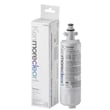
If you are checking specs because you are ordering filtration parts, match by model and part ID. For this model, a common filter option is the genuine Kenmore refrigerator water filter 9690 AGF80300801.
Last updated: February 2026
How to tell if a Kenmore refrigerator compressor is bad?
If your Kenmore Elite refrigerator model 79572123210 has a failing compressor, you typically see poor cooling even though the unit runs a lot, along with unusual noises, overheating at the compressor area, or repeated breaker trips. Confirm basic airflow and power checks first using the 79572123210 owner's manual.
Quick signs the compressor is the likely problem
- Refrigerator and freezer temperatures keep rising even after 24 hours of operation
- Compressor runs almost constantly with little or no cooling improvement
- Clicking, buzzing, or hard-start sounds from the rear lower area
- Compressor shell is very hot to the touch (hot is normal; extremely hot plus no cooling is not)
- Circuit breaker trips or the outlet GFCI trips when the compressor tries to start
- Frost pattern looks abnormal (for example, only a small patch of frost on the evaporator)
Rule out common look-alikes first (fast checks)
Before blaming the compressor, we check these because they cause the same “warm fridge” symptoms:
- Condenser airflow: clean dust from the condenser area and confirm the condenser fan runs (if equipped)
- Evaporator fan: listen for the fan in the freezer; a failed fan can stop cooling circulation
- Door sealing: verify gaskets seal and doors close squarely
- Defrost issues: heavy frost buildup can block airflow; a failed sensor can contribute (see refrigerator defrost sensor assembly 6615JB2005C)
- Controls and sensors: a bad thermistor can misread temperature (see refrigerator thermistor 6500JB2002T)
What the symptoms usually mean
| Symptom | Most common cause | What we do next |
|---|---|---|
| Runs constantly, warm temps | Dirty condenser, airflow issue, sealed system issue | Clean and verify fans, then check frost pattern |
| Repeated clicking every few minutes | Start device/overload, compressor struggling | Check power, listen for start attempts |
| Breaker trips on start | Shorted compressor or wiring | Inspect cord/outlet, then test components |
| Freezer cold, fridge warm | Air damper/airflow problem | Check vents, fan operation, frost buildup |
Why it matters
A true compressor failure is less common than airflow, defrost, or sensor problems, but it is more expensive and time-consuming to repair. Doing the quick checks above prevents replacing major components when a simpler fix restores cooling.
Last updated: February 2026
What are the common problems with Kenmore Elite refrigerators?
Common problems we see on Kenmore Elite bottom-mount refrigerators like model 79572123210 include weak cooling, ice maker or water dispenser issues, water leaks, unusual noises, and door sealing problems. Many of these trace back to airflow, defrost, or water-supply components and can be diagnosed with a few quick checks in the 79572123210 owner's manual.
Most common symptoms and what usually causes them
- Not cooling well (fresh food or freezer): blocked vents, dirty condenser coils, evaporator fan issues, or a defrost problem
- Ice maker not making ice: low water pressure, frozen fill tube, failed ice maker, or a control/temperature issue
- Water dispenser slow or not dispensing: clogged water filter, kinked water line, or a weak inlet valve
- Water leaking or puddles: clogged/iced drain system, cracked drain tube, or door left ajar causing excess frost
- Lights not working or staying on: door switch problem
- Noisy operation: fan motor noise, vibration, or ice buildup contacting the fan
Quick checks we recommend before replacing parts
- Confirm temperatures: 37°F for the refrigerator and 0°F for the freezer.
- Make sure vents are not blocked by food packages.
- Clean condenser coils and verify the condenser fan area is clear.
- If you have a dispenser, replace the filter and flush several gallons.
- Look for frost buildup on the freezer back panel (often points to a defrost issue).
- Check door closure and gasket contact all the way around.
Parts that commonly solve these problems on 79572123210
| Symptom | Common part to inspect | Example part for this model |
|---|---|---|
| Slow water, bad taste/odor | Water filter | Genuine Kenmore refrigerator water filter 9690 AGF80300801 |
| No ice | Ice maker assembly | Lg refrigerator ice maker assembly model AEQ72909603 AEQ72909603 |
| Lights issues, alarm, warm temps from door ajar | Door switch | Refrigerator door switch 6600JB1010A |
| Puddles under crisper/freezer | Drain tube | Refrigerator drain tube 5251JA3003D |
| Frost buildup, warm temps | Defrost sensing | Refrigerator defrost sensor assembly 6615JB2005C |
Error codes and why they matter
If your display shows an error code, it narrows troubleshooting fast and helps you avoid replacing the wrong part. Use our Kenmore 795 model bottom freezer refrigerator error codes reference to match the code to likely causes (cooling, fan, defrost, or sensor related).
Why it matters
Cooling and water/ice problems often share root causes (temperature control, airflow, or water restriction). A simple fix like clearing airflow or replacing a clogged filter can prevent food spoilage and reduce strain on the compressor.
Last updated: February 2026
What is the average lifespan of a Kenmore Elite refrigerator?
Most Kenmore Elite refrigerators, including model 79572123210, typically last 12 to 15 years with normal household use. Consistent temperature control, clean condenser airflow, and timely replacement of wear items (like water filters) help you reach the high end of that range.
Typical lifespan and what affects it
A refrigerator’s service life is mainly driven by compressor run time, airflow, and how hard the sealed system has to work.
- 12 to 15 years is the normal lifespan range for full-size refrigerators
- Hot kitchens, tight built-ins, and dusty coils can shorten life
- Frequent door opening and overpacking reduce cooling efficiency
- Poor door sealing increases run time and frost buildup
- Water and ice issues can create secondary damage (leaks, icing, fan noise)
Maintenance that extends life (high impact)
Use these habits to reduce strain on the compressor, evaporator fan, and defrost system.
- Clean dust from the condenser area regularly (follow the 79572123210 owner's manual)
- Keep vents inside the fresh food section and freezer unblocked
- Set stable temps (commonly 37°F fresh food, 0°F freezer)
- Replace the water filter on schedule; a restricted filter can reduce flow and stress the water system
- Fix leaks and puddles quickly to prevent icing and corrosion
Quick reference: what to replace vs. when to repair
| Situation | What it usually means | Best next step |
|---|---|---|
| Cooling is weak but unit runs constantly | Airflow or dirty coils | Clean coils, check door seal, verify temps |
| Water tastes bad or flow is slow | Filter restriction | Replace genuine Kenmore refrigerator water filter 9690 AGF80300801 |
| No ice or small cubes | Water supply or ice maker issue | Check supply, then test ice maker |
| Frost buildup, warm freezer | Defrost or fan issue | Inspect airflow, consider sensor/fan diagnosis |
Why it matters
A refrigerator near the end of its lifespan often shows up as longer run times, temperature swings, and recurring ice or water problems. Preventive maintenance costs less than major repairs and helps protect food safety.
Last updated: February 2026
What size is Kenmore refrigerator model 79572123210?
Kenmore Elite bottom-mount refrigerator model 79572123210 is a full-size unit; use the exact exterior dimensions and required clearances from the Dimensions/Installation section of the 79572123210 owner's manual to confirm fit in your kitchen opening.
What “size” usually means for a refrigerator
When customers ask for size, they typically need one or more of these measurements:
- Overall width (often widest at doors or hinges)
- Overall height (floor to top hinge cover)
- Overall depth (cabinet only vs. with handles)
- Door swing space so doors and freezer drawer open fully
- Ventilation clearance behind, above, and at the sides
How to measure your space so the refrigerator fits
Measure the opening first, then compare to the manual specs.
- Measure the opening width at the front and back
- Measure height from floor to the lowest cabinet/soffit point
- Measure depth from back wall to counter edge; add room for handles
- Confirm a nearby water line location if you have an ice maker/dispenser
- Plan a path for delivery (doorways, turns, and stairs)
Quick planning table
Use this as a checklist while you compare your measurements to the manual.
| What to check | Where you measure | Why it matters |
|---|---|---|
| Width | Wall-to-wall opening | Prevents rubbing on cabinets |
| Height | Floor to soffit/cabinet | Avoids hinge cover interference |
| Depth | Back wall to counter edge | Ensures doors close and handles clear |
| Clearance | Sides/top/back | Keeps airflow and cooling normal |
Why it matters
Correct dimensions and clearances help the refrigerator cool efficiently, keep ice production steady, and prevent door alignment issues or pinched water lines.
Last updated: February 2026
Where do I find the model number on a Kenmore Elite refrigerator?
On Kenmore Elite refrigerator model 79572123210, the model number is typically printed on a rating label inside the fresh food (refrigerator) compartment. Most often, you will find it on a side wall near the crisper drawers or on the ceiling area near the light housing; check your 79572123210 owner's manual for the exact label location.
Common places to check first
- Inside the refrigerator compartment on the left or right side wall (often near the crisper area)
- On the frame just inside the refrigerator door opening (hinge side)
- Behind or above the crisper drawers (you may need to slide drawers out)
- On the ceiling of the fresh food section near the lamp cover
- Behind the lower front toe grille (kick plate) area
What the label looks like (and what to write down)
The rating label usually includes several identifiers. We recommend recording these exactly:
- Model number (for example, 795.72123210 may appear with a dot)
- Serial number
- Electrical ratings (volts/amps)
- Manufacturing code/date (varies by brand)
| You see on the label | What it’s used for |
|---|---|
| Model number | Matching parts diagrams and correct replacement parts |
| Serial number | Confirming production variation and compatibility |
| Electrical ratings | Verifying safe replacement of electrical components |
Why it matters
Kenmore Elite refrigerators can have multiple versions that look similar. Using the exact model number helps us match the correct parts (like a door switch, ice maker assembly, or water filter) and avoid returns due to fit or wiring differences.
Last updated: February 2026
Why is my Kenmore Elite refrigerator leaking water out of the bottom?
Water leaking from the bottom of your Kenmore Elite refrigerator model 79572123210 is usually caused by a defrost drain that is clogged or frozen, water supply tubing that is leaking, or a drain tube that is loose or cracked. Start by checking for ice or debris in the drain path and for drips at the filter and tubing connections; see the 79572123210 owner's manual for your model’s drain and water system locations.
Quick checks that solve most bottom leaks
- Look for a sheet of ice on the freezer floor; that points to a frozen defrost drain.
- Check the fresh food section for water under crisper drawers; that often tracks back to the drain.
- Inspect the water filter area for wetness, especially right after a filter change.
- Check the water line behind the refrigerator for slow drips or a kink.
- Confirm doors close fully; warm air intrusion increases frost and can overwhelm the drain.
Most common causes and what to do
| What you see | Most likely cause | What we recommend |
|---|---|---|
| Water appears after defrosting, puddle under freezer | Clogged or frozen defrost drain | Thaw the drain area, then flush the drain with hot water and clear debris |
| Water near filter housing, worse after filter change | Filter not fully seated or housing leak | Reinstall the filter and check the filter head for cracks |
| Water trails from rear/bottom, steady drip | Supply line or connection leak | Tighten fittings, replace damaged tubing, verify line is not pinched |
| Water inside, then leaks out front | Drain tube issue | Inspect and replace the drain tube if split or loose |
Parts that commonly relate to this symptom
If you find the leak source, these model-compatible parts are often involved:
- Refrigerator drain tube 5251JA3003D (cracked, loose, or restricted drain outlet)
- Genuine Kenmore refrigerator water filter 9690 AGF80300801 (leaks if not seated or if O-rings are damaged)
- Refrigerator water filter head assembly ADQ36011715 (leaks at the housing or fittings)
Why it matters
Bottom leaks can lead to recurring ice buildup, poor cooling airflow, and water damage around the refrigerator. Fixing the drain path or water connection early prevents repeat puddles and helps the defrost system work normally.
Last updated: February 2026
Why is my refrigerator not getting cold at the bottom?
When a Kenmore Elite 79572123210 is warm at the bottom, the most common causes are restricted airflow (blocked vents or overpacked shelves), frost buildup from a defrost problem, or a weak evaporator fan that is not pushing cold air down into the fresh food section. Use the owner's manual to locate vents and access panels safely.
Quick checks that fix most “warm bottom” complaints
- Set temperatures to typical targets: 37°F fresh food, 0°F freezer
- Make sure food packages are not blocking air vents (especially the return vents low in the compartment)
- Confirm the doors close fully and are not held open by bins or shelves
- Clean condenser coils and make sure the toe grille and rear airflow area are not blocked
- Listen for the evaporator fan: you should hear a steady fan sound when the compressor is running
What to check next (in order)
1) Airflow and frost pattern
If the freezer is cold but the refrigerator bottom is warm, cold air is not circulating correctly.
| What you notice | Likely issue | What to do |
|---|---|---|
| Frost/ice on the back freezer panel | Defrost system problem | Defrost the unit and check defrost components |
| No fan sound from freezer area | Evaporator fan not running | Inspect wiring, fan blade obstruction, motor |
| Temps swing, bottom warms first | Air damper or airflow restriction | Clear vents, check damper movement |
A failed defrost sensor can cause heavy frost that blocks airflow; on this model, a common related part is the refrigerator defrost sensor assembly 6615JB2005C.
2) Evaporator fan performance
A weak or stalled evaporator fan reduces cold air delivery to the refrigerator section (often felt most at the bottom drawers).
- Check for ice contacting the fan blade
- Check for a clicking or grinding noise (fan hitting frost)
- If the fan runs intermittently, inspect the harness and connectors
For repair guidance, use how to fix your evaporator cooling fan.
3) Drain and ice buildup issues
If water is pooling and then freezing, it can contribute to ice buildup that restricts airflow.
- Look for ice at the bottom of the freezer compartment
- Clear the drain path and inspect the drain tube
A commonly replaced part for drainage issues is the refrigerator drain tube 5251JA3003D.
Why it matters
A warm bottom section is usually an airflow problem, not a “low refrigerant” problem. Restoring proper circulation protects food safety, reduces compressor run time, and prevents repeat frost and ice buildup.
Last updated: February 2026