Installation guide
 Owner’s manual
 Error Codes





How long do KitchenAid gas ranges last?
KitchenAid gas ranges typically last 13 to 15 years with normal household use and basic care. For your KitchenAid KGSS907SSS00 gas range, consistent cleaning, proper burner flame, and avoiding overheating events help you reach the full expected lifespan; see the KGSS907SSS00 owner’s manual for model-specific care and operating guidance.
Typical lifespan and what affects it
A gas range’s life is mostly driven by heat exposure, cleaning habits, and how hard key components work.
- Daily cooking load (multiple meals per day shortens life faster)
- Spillovers and grease (can clog burner ports and stress igniters)
- Ventilation (poor airflow increases heat stress on controls)
- Power quality (surges can damage the control board and touch panel)
- Maintenance (keeping burners clean and flames steady reduces wear)
What usually fails first (and what it looks like)
These are common wear items on many KitchenAid gas ranges, including the KGSS907SSS00.
| Component | Common symptom | Typical fix |
|---|---|---|
| Bake igniter | Oven won’t heat or heats slowly | Replace igniter (often range oven igniter WP9760229) |
| Broil igniter | No broil flame | Replace igniter (often range oven igniter WP8054129) |
| Oven temperature sensor | Oven temperature swings, over/underheats | Test/replace sensor |
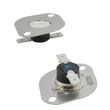
| High-limit thermostat | Oven shuts down or won’t maintain heat | Replace thermostat |
Care steps that extend range life
- Wipe cooktop and burner areas after cooking; keep burner ports clear.
- Keep flames blue and steady; yellow, lifting, or noisy flames need cleaning or adjustment.
- Avoid slamming the oven door; it stresses hinges, liners, and door alignment.
- Use self-clean only as needed; high heat can shorten the life of electronics and sensors.
- If the oven takes longer to ignite, address it early to prevent extra strain on the gas valve and controls.
Why it matters
A range that is maintained to reach the 13 to 15 year window typically has fewer ignition problems, steadier baking temperatures, and less heat damage to the touch controls and wiring.
Last updated: February 2026
What are the parts on a gas stove called?
On the KitchenAid KGSS907SSS00 gas range, the main “gas stove” parts are the cooktop burner components (burner head, igniter, valve, grates/caps) plus the oven system parts (bake/broil igniters, temperature sensor, safety controls, and electronic controls) that regulate flame and temperature. See the KGSS907SSS00 owner’s manual for the full parts and features layout.
Common gas stove parts (cooktop)
These names are the ones customers most often use when ordering parts or troubleshooting ignition and flame issues:
- Burner head (where the flame ports are)
- Burner cap (sits on top of the burner head on many designs)
- Igniter / spark electrode (creates the spark for lighting)
- Burner valve (controls gas flow when you turn the knob)
- Orifice (meters gas into the burner; size differs for natural gas vs LP)
Model-matched examples for KGSS907SSS00
| What you call it | What it does | Example part for this model |
|---|---|---|
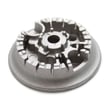
| Burner head | Shapes and stabilizes the cooktop flame | Burner head WPW10406243 |
| Burner valve | Opens/closes gas to a surface burner | Cooktop burner valve WP4456817 |
| Orifice | Sets gas flow rate (especially important for LP conversion) | Cooktop holder orifice WP9761639 |
Common gas stove parts (oven section)
The oven has its own ignition and temperature control parts that affect baking and broiling:
- Bake igniter (lights the bake burner)
- Broil igniter (lights the broil burner)
- Oven temperature sensor (tells the control how hot the oven is)
- High-limit thermostat (safety device that can open if overheating occurs)
- Oven control board / touch panel (sets temperature and manages functions)
Why it matters
Using the right part name helps you match symptoms to the correct system. For example, a weak or delayed oven light-off often points to an oven igniter, while uneven cooktop flames can point to burner head ports, valve issues, or an orifice mismatch after an LP conversion.
Quick tip: natural gas vs LP terminology you may see
The installation instructions for this range emphasize checking burner flames and adjusting settings after conversion.
- Natural gas: steady blue flame, typically no yellow tips
- LP gas: may show a slightly yellow tip; correct orifice sizing is critical
- “LO” adjustment: some burners need the low-flame setting adjusted
For conversion and flame-check steps, use the KGSS907SSS00 installation guide.
Last updated: February 2026
Where is the model number on a KitchenAid gas range?
On a KitchenAid gas range like model KGSS907SSS00, the model number is printed on the appliance’s rating label. You’ll typically find that label around the oven door area (often on the frame behind the door or along the door opening).
Common places to check on KGSS907SSS00
Look for a sticker or metal tag that lists model and serial information in these spots:
- Along the oven door frame when you open the door
- On the front frame around the oven opening
- On the side trim just inside the door opening
- Near the storage/warming drawer opening (if your range has one)
- Occasionally on the back panel of the range
For diagrams and the exact label location guidance for your series, use the KGSS907SSS00 owner’s manual.
What the label looks like and what to write down
The rating label usually includes:
- Model number (example: KGSS907SSS00)
- Serial number
- Gas type and pressure information
- Electrical rating
Write the model number exactly as shown (including all letters and numbers). That ensures you get the correct KitchenAid parts, such as an oven sensor or igniter, for your specific build.
Quick troubleshooting if you cannot find it
If the label is hard to spot:
- Use a flashlight and check the frame with the oven door fully open
- Wipe grease or residue off the frame edge so the print is readable
- Check both the oven door opening and the drawer opening
Why it matters
KitchenAid ranges often have multiple versions within the same series. The full model number on the rating label is what matches you to the correct parts diagrams, installation details, and replacement parts.
| What you need | Where it’s used | Example |
|---|---|---|
| Model number | Selecting correct parts and diagrams | KGSS907SSS00 |
| Serial number | Identifying production run details | (varies) |
Last updated: February 2026